
Annual Tune-Up
Annual garage door tune up in Winnipeg: a yearly check-up that catches small issues before they fail. Lubrication, hardware tightening, balance check, auto-reverse test, manual release verification, about an hour on site.
What This Covers
Garage doors have moving parts under load every day, in every weather, doing more cycles than almost anything else mechanical in your house. An annual garage door tune up in Winnipeg catches the small problems (a loose roller bearing, a worn hinge, a sensor drifting out of alignment, a frayed strand on a cable) before they cascade into a broken spring or a door off the tracks on a Sunday morning.
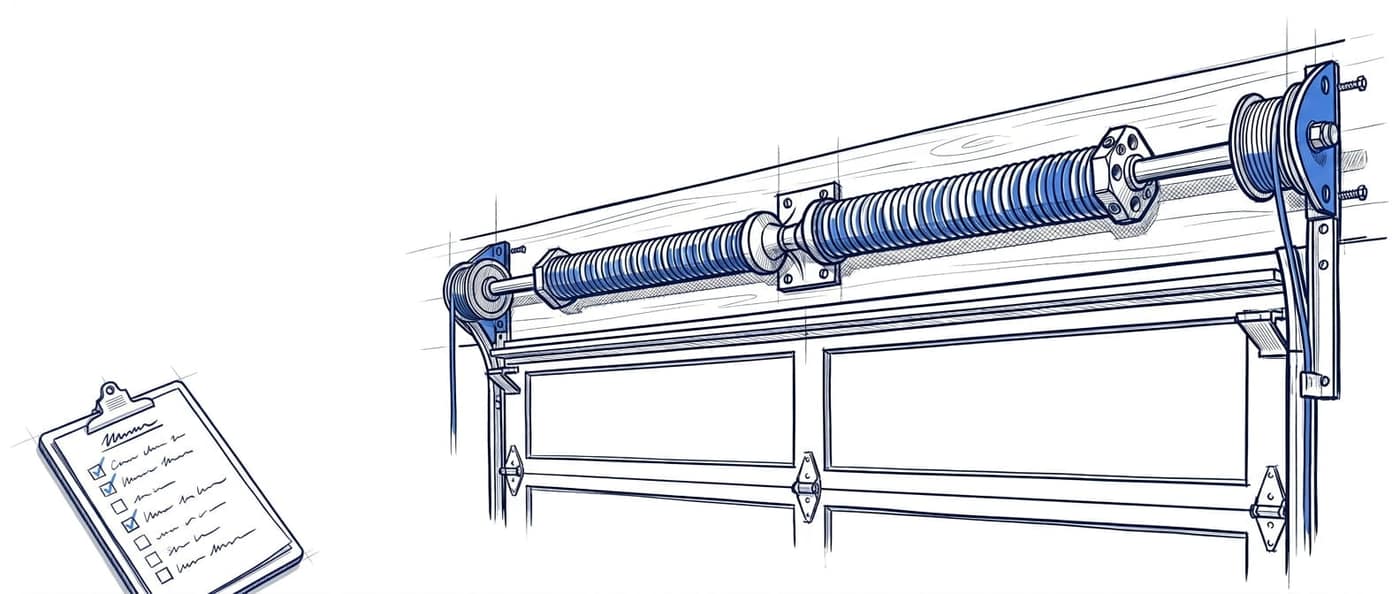
What we actually do, working off DASMA's published checklist (TDS 167): lubricate the right parts with silicone or white-lithium spray, tighten hardware that's loosened from cycle vibration, check spring balance by hand, test the auto-reverse with a 2x4 under the door, verify the manual emergency release pulls cleanly, clean and align the photo eye sensors (which collect snow, grit, and cobweb fast through Winnipeg winters), and inspect cables, rollers, hinges, tracks, and weather seals. You get a short written summary of what we did and anything we'd watch on the next visit.
The right cadence for most homes is once a year, ideally heading into fall before the deep cold hits. Heavier-use households (multi-car families, doors opened a dozen times a day) benefit from twice yearly, spring and fall, to stay ahead of the wear curve. If it's been more than two or three years since the last service (or ever), a tune-up usually turns up a few things to address, which we'd rather catch on a scheduled visit than on an emergency call.
Signs You Need This Service
- Door is louder than it used to be (grumbling, popping, or squeaking)
- Hinges, rollers, or hardware look rusty, dry, or dirty
- It's been more than a year (or you can't remember) since the last service
- Door is sluggish to start moving, especially in cold weather
- You've never tested whether auto-reverse actually triggers when something is under the door
- Photo eye lenses are caked with snow, dust, or cobwebs
- Manual release cord has never been tested or feels stiff
- Door shudders or bounces through its travel
How It Works
Step 1: Book a one-hour service window, typically same week
Step 2: Full inspection: springs, cables, rollers, hinges, tracks, seals, sensors, opener
Step 3: Lubricate the right parts; tighten hardware loosened by cycle vibration; clean the photo eye lenses
Step 4: Manually check door balance, test the auto-reverse safety with a 2x4, and verify the manual emergency release works smoothly
Step 5: Short written summary of what we did and anything to keep an eye on
Common Questions
How often should this be done?
- Once a year for most households, ideally before the deep cold hits in the fall. Heavy-use doors (multi-car families, doors used more than five or six times a day, small businesses) benefit from twice yearly, spring and fall.
Can I do this myself?
- Some of it, yes: lubrication, visual inspection, the auto-reverse test, and the balance test are all homeowner-friendly. The lubrication guide and the maintenance checklist walk through them. We'd put spring balance adjustment, cable inspection, and any torsion work firmly in the don't-DIY category, since springs and cables under tension store thousands of pounds of force and have caused serious injuries during DIY maintenance. If you do tackle the lubrication yourself, use a silicone or white-lithium spray on hinges, roller bearings, and the torsion spring coils. Spray the coils lightly along their full length and don't let it drip. The lubricant to avoid is the original blue-can WD-40 multi-use product: Clopay and Garaga both say to keep it off door hardware, since it attracts dirt and isn't made for the job. WD-40's separate Specialist line (silicone and white-lithium variants) is fine for garage doors; it's the original multi-use formula in the blue can that doesn't belong on your hinges.
Will it actually make my door quieter?
- Almost always, yes. Most door noise comes from dry hinges, dry roller bearings, loose hardware, or a door that's gone slightly out of balance, all of which a tune-up addresses. If the rollers themselves are at end of life (worn flat or with seized bearings), we'll flag that as a follow-up replacement; lubrication only does so much for worn parts.
My door still works fine. Why bother?
- Most spring breaks and cable failures don't come out of nowhere. They come at the end of months of small warnings (fraying, sluggishness, slight imbalance) that are easy to miss day to day. A yearly check-up catches those signals and lets you schedule the fix instead of having a stuck door on the morning you need to leave for work. One more reason worth flagging: the auto-reverse safety can quietly fail and the door will still appear to work normally. Testing it once a year (a 30-second check with a 2x4 under the door, exactly what DASMA's TDS 167 publishes) has prevented some genuinely bad outcomes.
What's not included in a tune-up?
- Replacement parts beyond minor consumables (lubricants, the odd bolt) aren't included. If we find a roller, hinge, cable, or spring that needs replacing, we quote it separately and you decide whether to do it then or schedule a follow-up. We also don't dig into the opener's internals (logic board, motor); we test that it's working correctly and flag anything off, but opener repair is its own visit when it's needed.
Guides for this repair
Plain steps for what you can safely do yourself, and the signs that mean it's time to call.
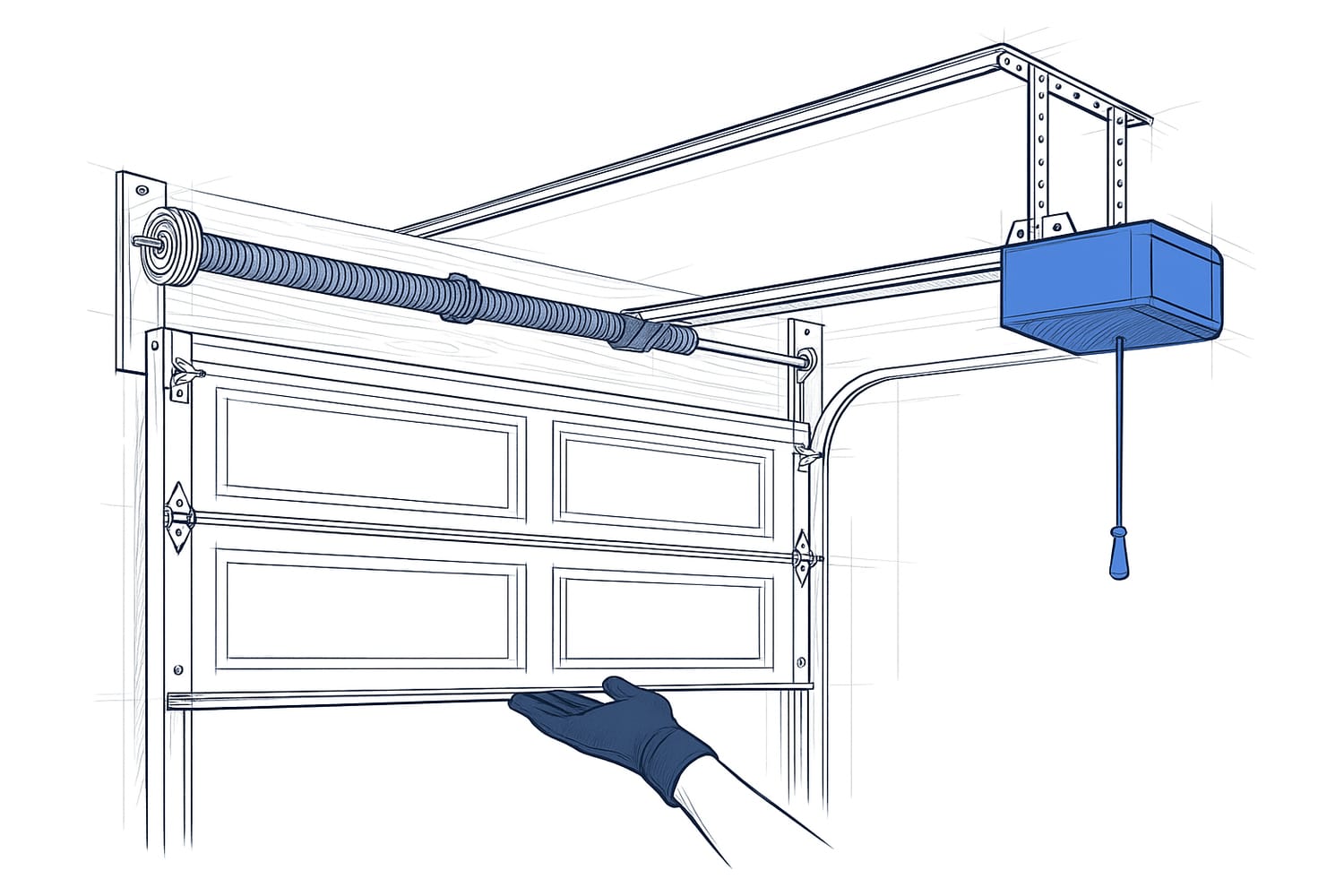 How to Test Your Garage Door's BalanceClose the door, pull the red release cord, lift the door by hand to about waist height, and let go. A balanced door stays put or drifts slowly. A door that drops or shoots up has a spring problem, and the opener has been covering for it.Read the guide
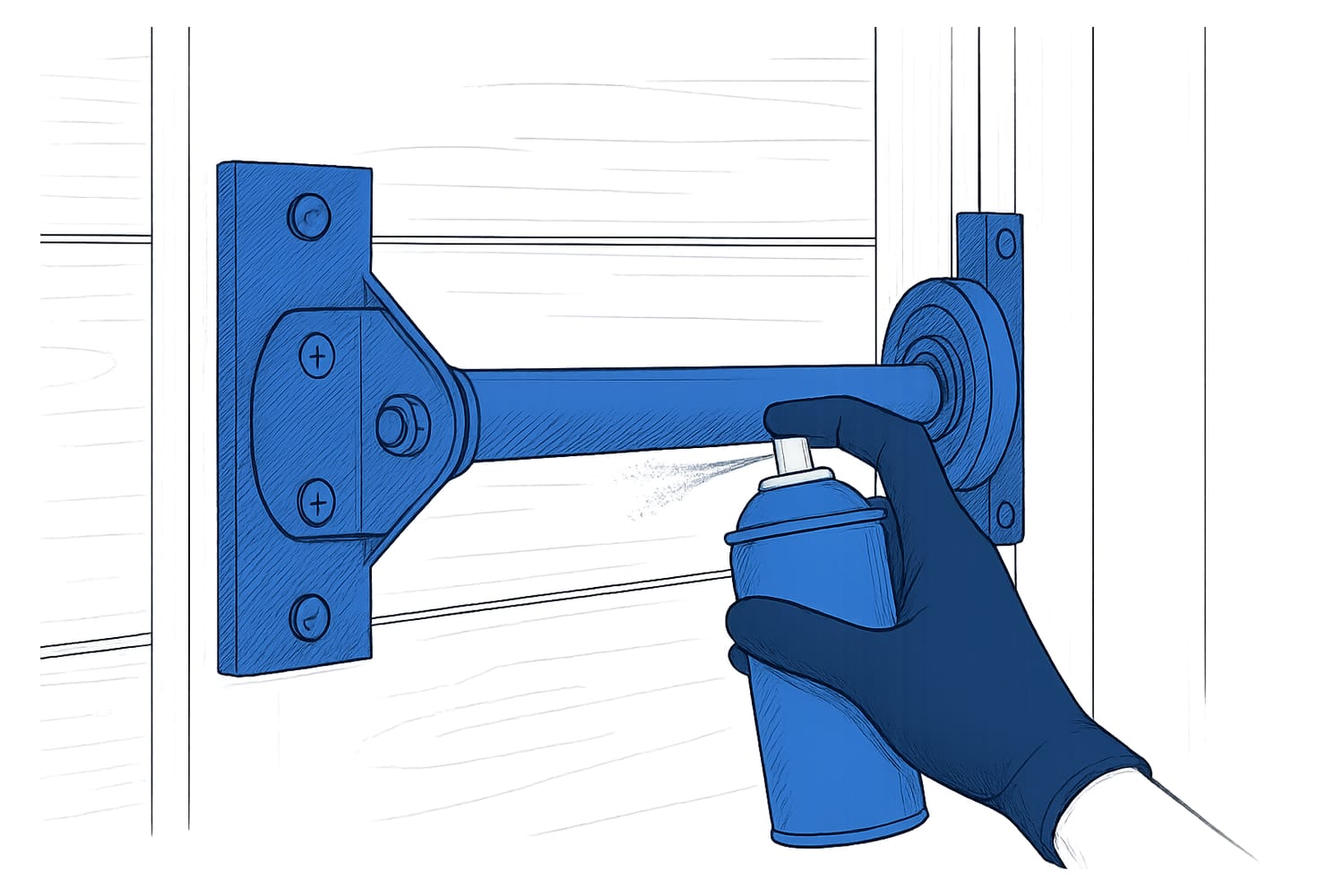 How to Lubricate a Garage Door (and What Not to Spray)Use a silicone spray or white lithium grease on the hinges, the bearings of steel rollers, the torsion spring coils, the bearing plates at each end of the spring shaft, and the lock. Keep it off the tracks and off nylon rollers. Twice a year is plenty for most homes.Read the guide
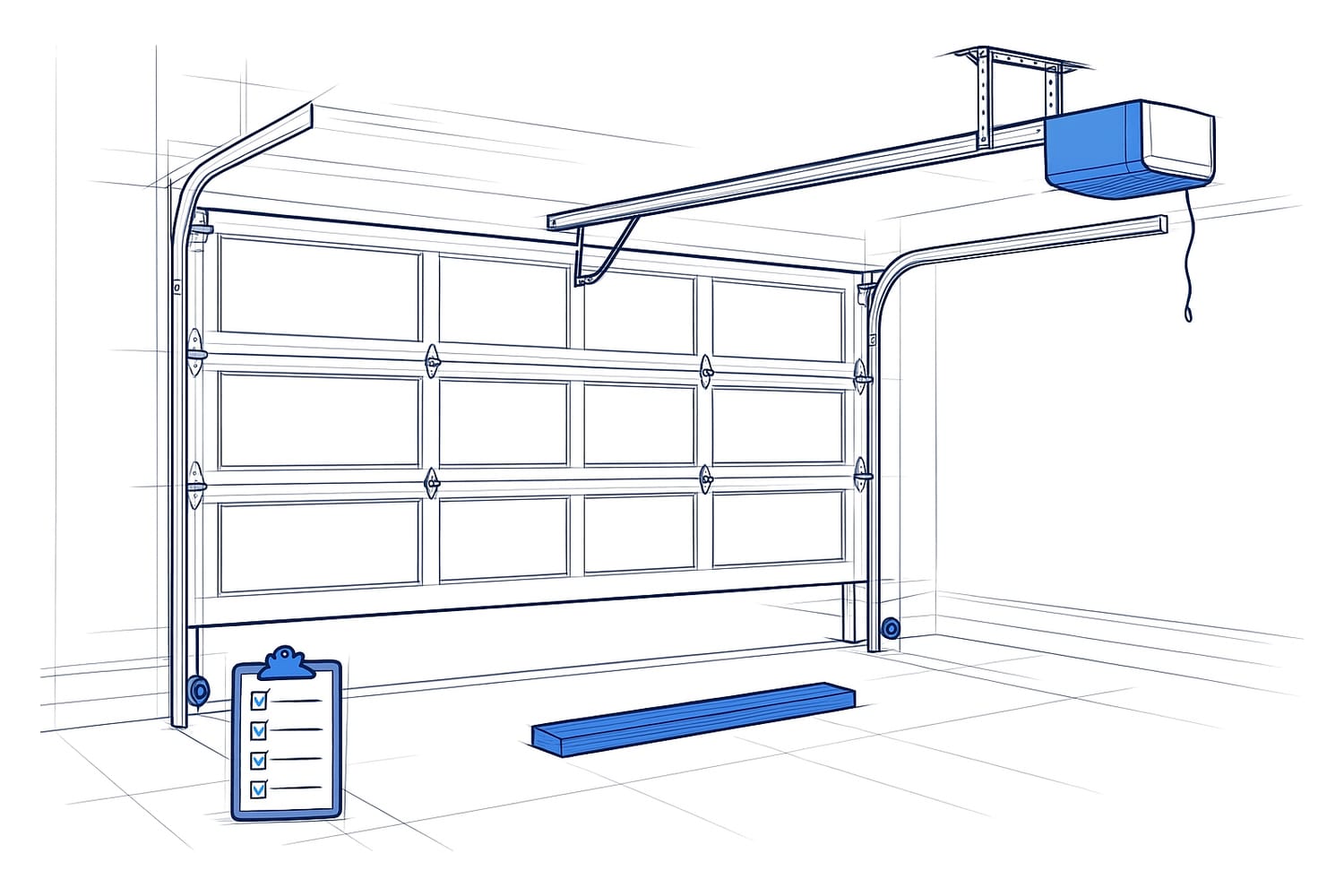 Garage Door Maintenance Checklist: Monthly, Twice a Year, and YearlyOnce a month: watch and listen to a full cycle, test the auto-reverse with a 2x4, and check the photo eyes. Twice a year: lubricate, test the balance, and look over the seals, cables, and rollers. Once a year: book a professional tune-up. The whole monthly check takes five minutes.Read the guide
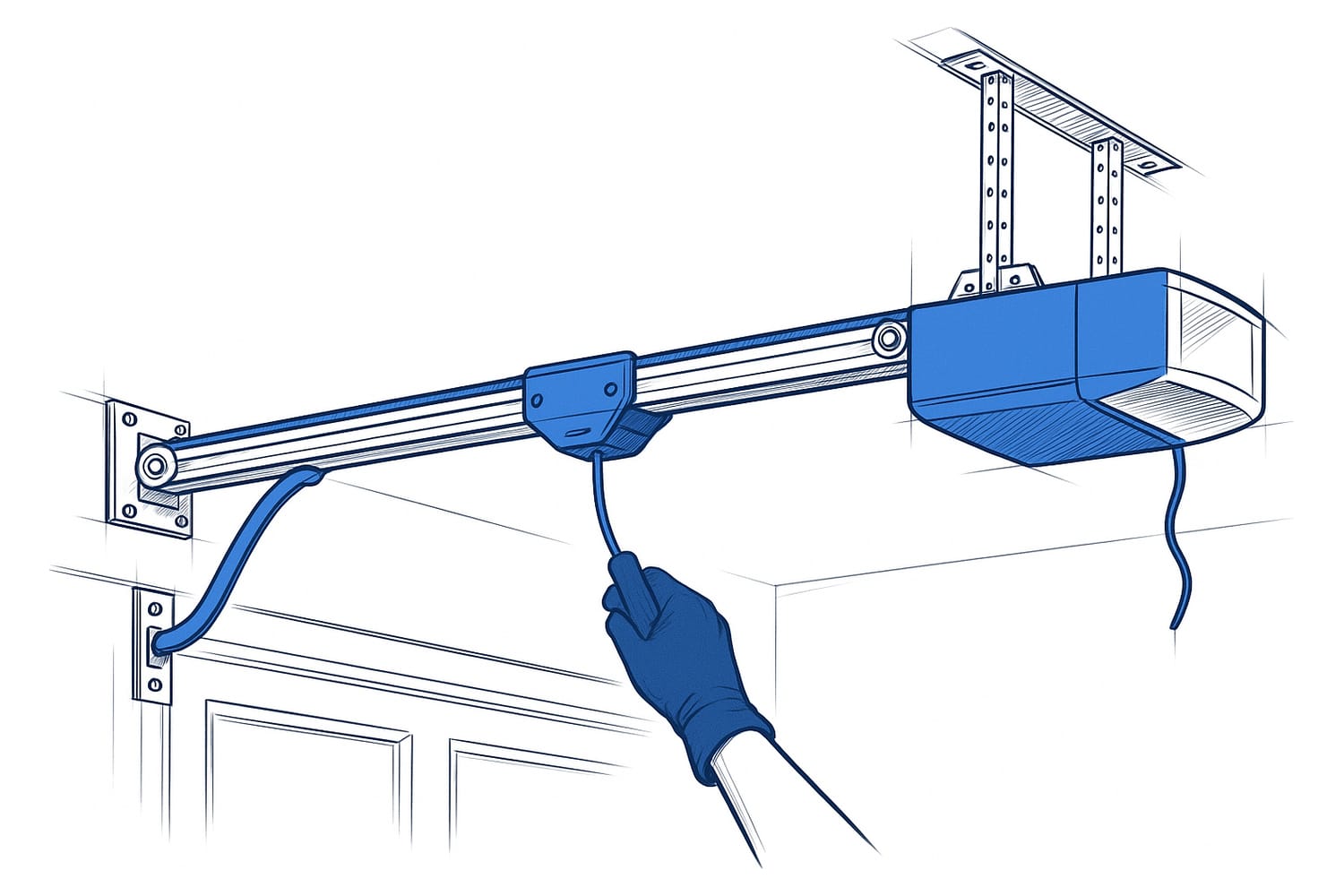 How to Open Your Garage Door in a Power Outage, and Reconnect It AfterWith the door closed, pull the red cord hanging from the opener rail to disconnect the door, then lift it by hand. When the power is back, pull the cord toward the motor (or straight down on some models) and run one cycle so the opener picks the door up again.Read the guide
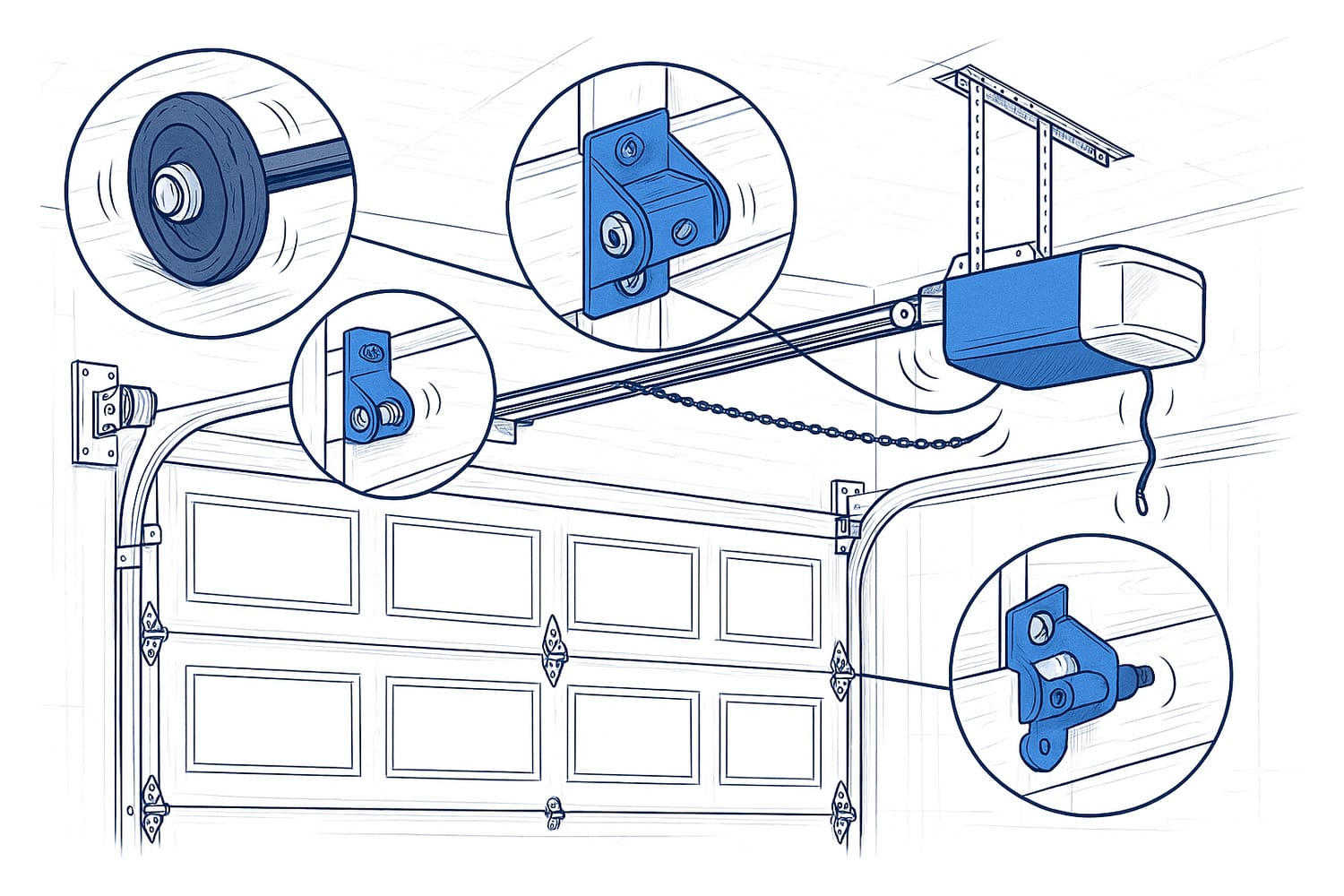 Why Is My Garage Door So Loud? Matching the Noise to the PartSqueaking and squealing usually means dry or worn rollers and hinges. Rattling is loose hardware or a slack opener chain. Grinding points at misaligned track or worn opener gears. A single loud bang is a spring breaking. Most noise is fixable in an hour, and some of it you can fix yourself.Read the guide
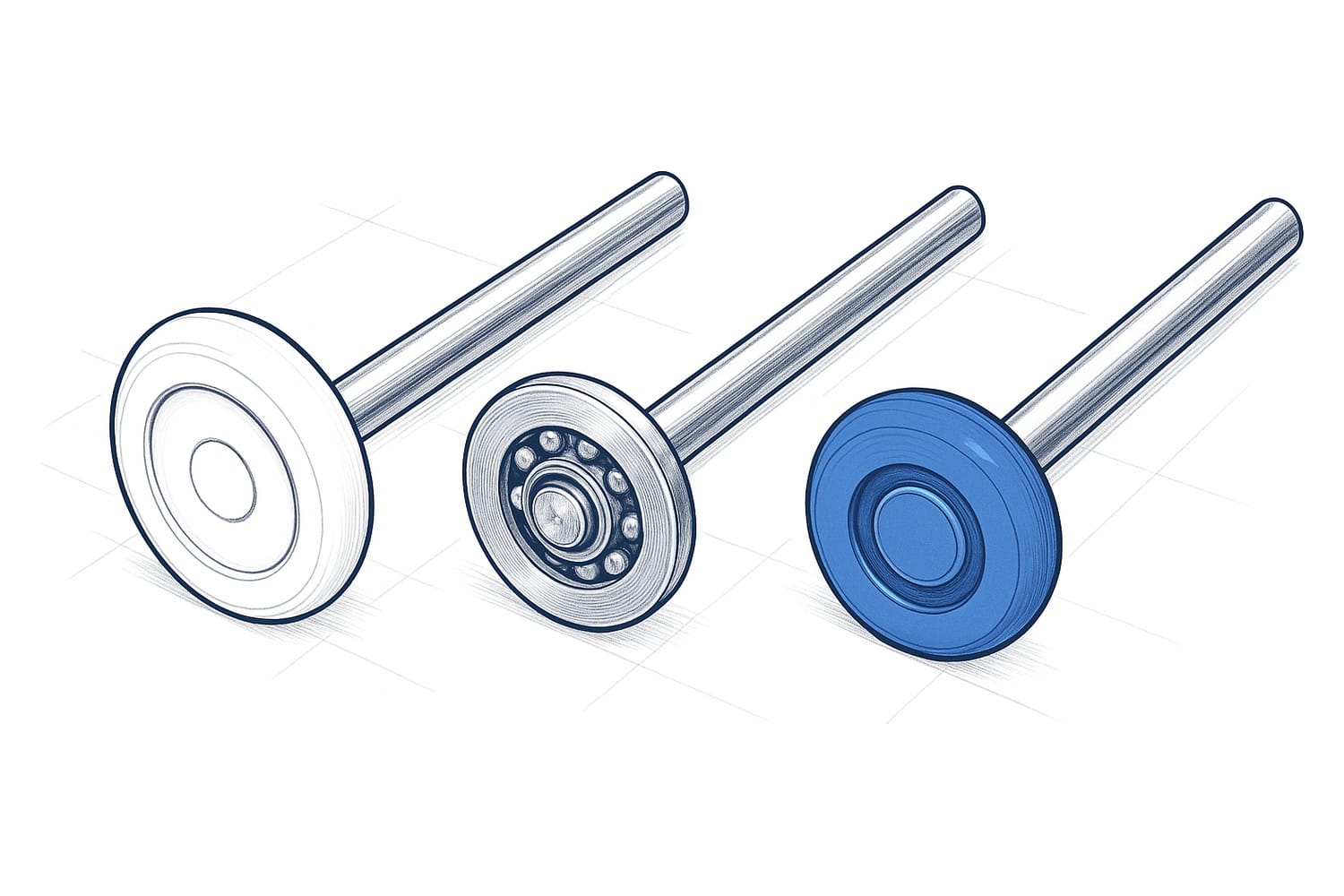 Garage Door Rollers: Types, Signs of Wear, and When to Replace ThemRollers are the wheels that carry the door along the track, one at every hinge. Builder-grade plastic rollers crack, steel rollers get loud and rust, and sealed-bearing nylon rollers run quietly for ten years or more. Cracks, chips, a roller that slides instead of turning, or squealing that lubrication doesn't fix all mean it's time for a set.Read the guide
Where we provide annual tune-up
Same-day service across Winnipeg, plus the surrounding communities we cover within about an hour of our south Winnipeg base.
Ready to Book?
Same-day service across Winnipeg and nearby communities. Free on-site diagnosis on every residential repair.