
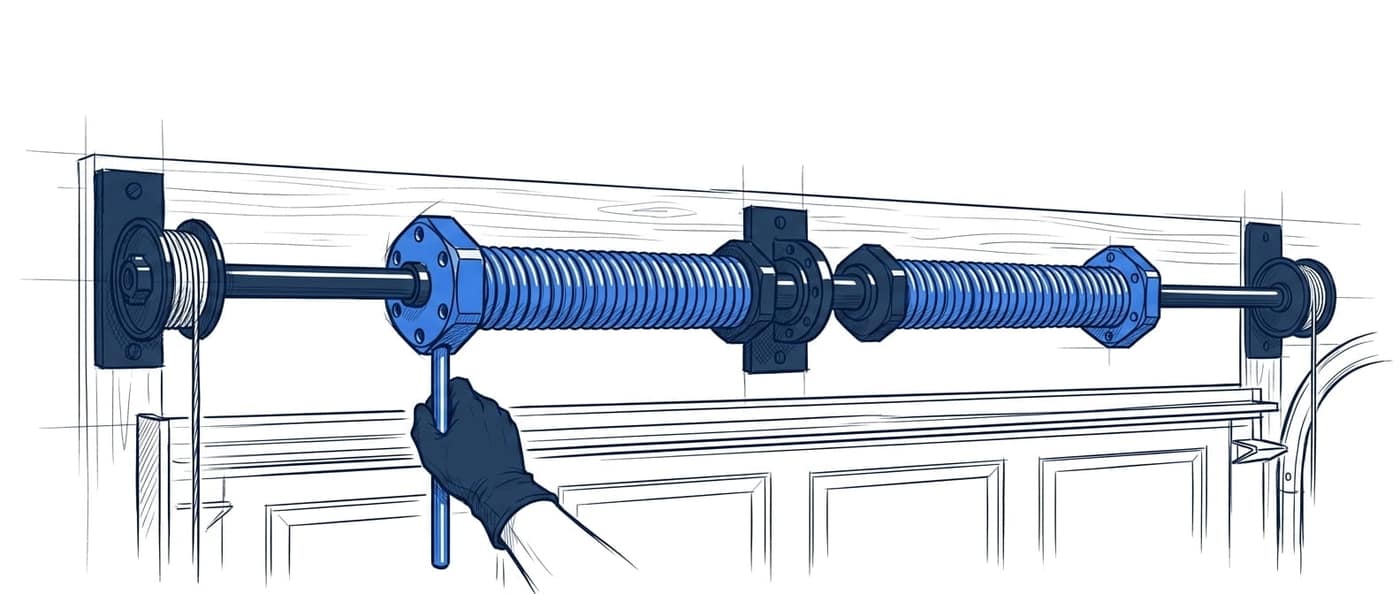
Spring Repair
Most garage door failures start with a broken spring. Same-day garage door spring repair in Winnipeg, with residential torsion replacement and a safer extension-to-torsion conversion when your door has the headroom for it.
Door unusable right now? What to do first, and how fast we can get there.
What This Covers
You went to open the garage this morning and heard a bang. The opener strains but the door barely moves, or it tilts on one side. Almost always, that's a snapped torsion spring. Same-day garage door spring repair in Winnipeg is among our most common calls.
Springs do the real work of lifting your door. A typical residential door weighs 150 to 400 pounds, and the spring is what makes that manageable. Most residential torsion springs are rated for 10,000 to 15,000 cycles, which is roughly seven to twelve years at average household use. Winnipeg winters shorten that. Cold makes high-carbon spring steel more brittle, fatigue cracks that have been growing through the season often let go on the first hard cold snap, and freeze-thaw in a heated garage drives condensation onto the coils, where surface corrosion creates fatigue stress points.
When we come out we replace both torsion springs as a matched pair, sized to your specific door weight rather than whatever generic part is on the truck. DASMA's guidance is unambiguous: if your door has two springs, replace both even when only one has broken. They've been through the same cycles, the second is usually within months of the first, and a properly balanced matched pair wears every other component on the door more slowly. We also inspect the cables, drums, and rollers that wear at the same rate as the springs, clean and lubricate the coils so friction and corrosion don't shorten the new spring's life, and rebalance the door so the opener isn't fighting the system every cycle.
If your door has extension springs (the long ones running along the horizontal tracks, common on older installs), there are two safer setups than a like-for-like extension swap. The first is a properly installed containment cable through each spring, which DASMA treats as a requirement on every extension-spring door because it catches the broken parts when a spring lets go. The second is converting to a torsion system, where the spring sits on a shaft above the door and breaks in place instead of throwing hardware across the garage. Torsion also drives the door from a central shaft rather than through pulleys and cables at the corners, which spreads load more evenly across the system over the door's life. Standard torsion hardware needs about 12 inches of clear headroom above the door, with a bit more if a new opener is part of the job. Low-headroom torsion kits exist for tighter spaces, down to around five inches of clearance, if a standard setup won't fit. We'll lay out the right option for your door in the on-site quote.
Signs You Need This Service
- You heard a bang and now the door barely moves, even though the opener strains
- Door feels much heavier than usual when you try to lift it manually
- Visible gap or break in the long coiled spring above the door
- Rust pitting, flaking, or heavy surface corrosion on the spring coils
- One side of the door drops lower than the other
- Opener hums, grinds, or stops partway through opening
- Door slams shut or closes much faster than it used to
How It Works
Step 1: Call or text. We usually answer live during the day, and back the same morning otherwise
Step 2: Same-day arrival in most cases, with common spring sizes and the right tools already on the truck
Step 3: Free on-site diagnosis: we check the spring, cables, drums, rollers, and door balance before we quote
Step 4: Firm written quote covering parts, labor, and anything related we found, with no surprises after
Step 5: Spring swap, full rebalance, cable and roller check, and a safety reverse test before we leave
Common Questions
Do you charge to come out and look at the spring?
- No. We come out, check the spring, cables, drums, and door balance, and give you a firm written price. If you go ahead, we replace the springs on the spot. If you'd rather think it over, that's fine. We'll wish you well and head out.
How do I know it's the spring and not the opener?
- The clearest signal is the weight of the door. With a broken spring the door is much heavier than it should be (150 to 400 pounds, depending on size). If the opener is the problem, the door still lifts manually with normal effort. If you can't lift it by hand, the opener isn't going to lift it either. Our broken spring guide covers the other signs to look for.
I have extension springs. Can you just replace them?
- Two safer paths exist than a bare extension swap. The first is a like-for-like extension replacement with a properly installed containment cable running through each spring. DASMA's safety guidance is firm here: every extension-spring door needs a safety cable, since a bare spring can throw parts across the garage when it lets go. The second is converting to a torsion system. When the door has the headroom for it we usually recommend the torsion conversion, because the spring sits on a central shaft instead of stretching at the corners, the load on cables and rollers stays more even over the door's life, and a broken torsion spring stays in place. Standard torsion hardware needs about 12 inches of clear headroom. Low-headroom kits work down to around five inches of clearance if a standard setup won't fit. We'll walk through both options on site.
Why do you replace both springs at the same time?
- DASMA's guidance is to replace both springs even when only one has broken. They've gone through the same cycles, so the surviving one is usually close behind (DDM puts the typical gap inside six months). Doing both at once means matched wear, a properly balanced door, and one service call instead of two. The savings from replacing only the broken one are almost always erased by the second call a few months later.
Can I just buy the spring and install it myself?
- Technically yes. In practice we'd talk you out of it. A torsion spring under tension stores thousands of pounds of force, and a single slip during installation has caused some genuinely bad injuries. The parts savings are also smaller than people expect once you factor in your time, winding bars rated for the load, and getting the spring gauge correct for your door weight. If cost is the concern, call us first. We'll be honest about what's actually needed.
Can I open the door myself until you arrive?
- We'd rather you didn't. A door with a broken spring is its full weight, heavy enough to fall and cause injury, and forcing the opener can damage the motor, rails, or cables. If you absolutely need to get a car out, two adults can usually lift the door together: one holds it open while the other moves the car. Don't run the opener. The power outage guide shows where the release cord is and how to reconnect afterward.
How long do the new springs last?
- Standard residential springs we install are rated for around 15,000 cycles, typically eight to twelve years at average household use. For heavy households, heated garages, or any door that opens many times a day, we can spec higher-cycle springs (25,000 cycles and up, with extra-long-life options reaching 100,000+) for an upcharge. We match the rating to how often the door actually moves.
What shortens the life of a new spring?
- Three things, mostly. A door that's out of balance forces the opener and the springs to fight extra load on every cycle. Unlubricated or rusted coils run with more friction and fatigue faster. And springs wound to the wrong tension at install (over- or under-stretched) age unevenly and break early. A silicone or white-lithium spray on the coils a couple of times a year and an annual balance check handle most of it.
Why do springs break more in Winnipeg winters?
- Cold steel is more brittle. At -30°C the metal contracts and loses ductility, and fatigue cracks that have been growing all year often finally let go on the first hard cold snap. We see a clear uptick in spring calls between November and March. If the door has been getting sluggish through the fall, that's worth a check before the deep freeze.
Guides for this repair
Plain steps for what you can safely do yourself, and the signs that mean it's time to call.
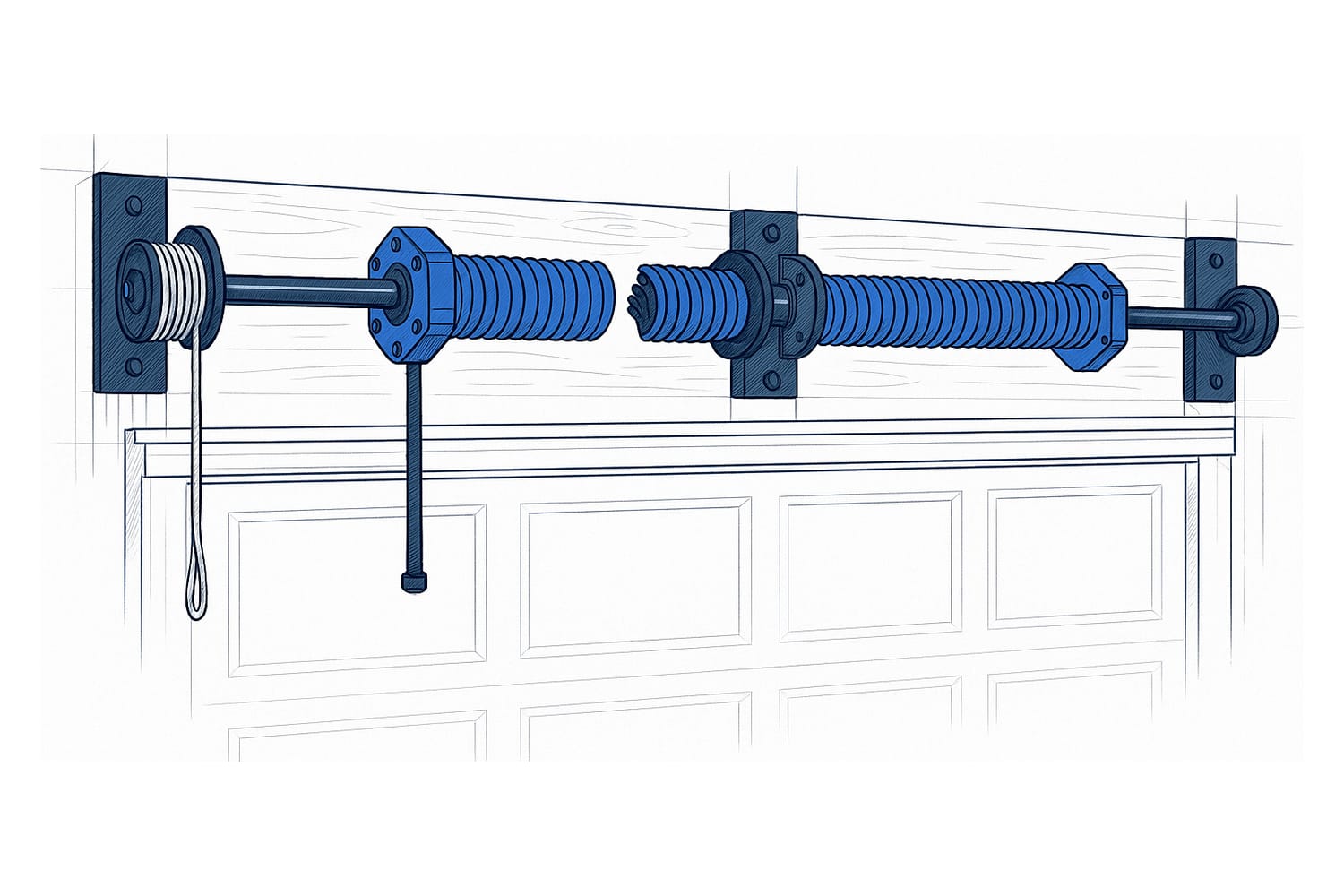 Is My Garage Door Spring Broken? The Signs, and What to Do NextA loud bang from the garage, a door that's suddenly too heavy to lift, an opener that raises the door a few inches and stops, a visible gap in the spring coil, or slack cables all point to a broken spring. Leave the door closed, don't run the opener, and book a spring repair.Read the guide
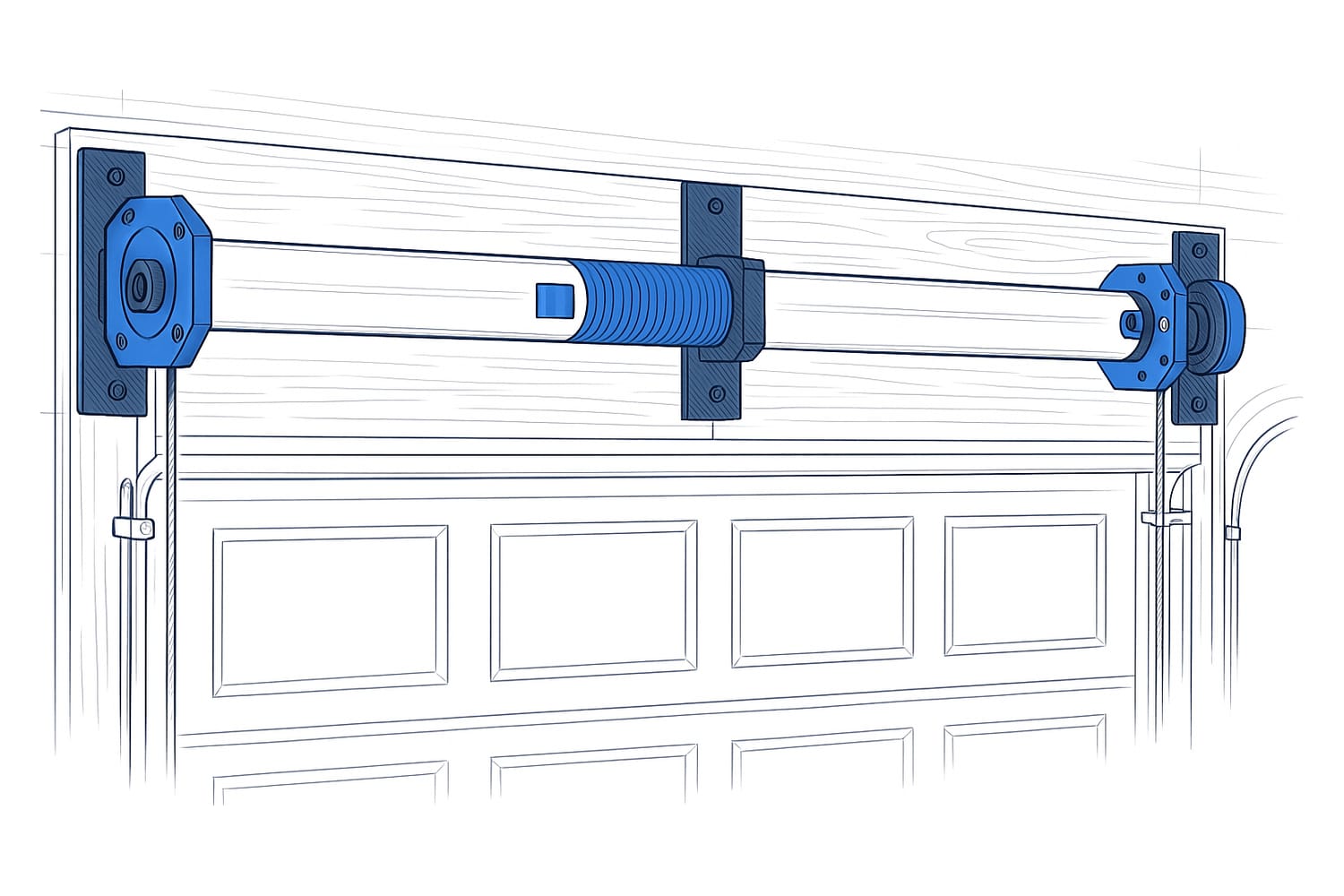 Wayne Dalton TorqueMaster Springs: What They Are and What to Do When One BreaksTorqueMaster is Wayne Dalton's spring system with the springs sealed inside the tube above the door. When one breaks you can't see it, but the door turns to dead weight and the opener stops after a few inches. We normally replace the system with standard torsion springs, which are easier to service for the rest of the door's life.Read the guide
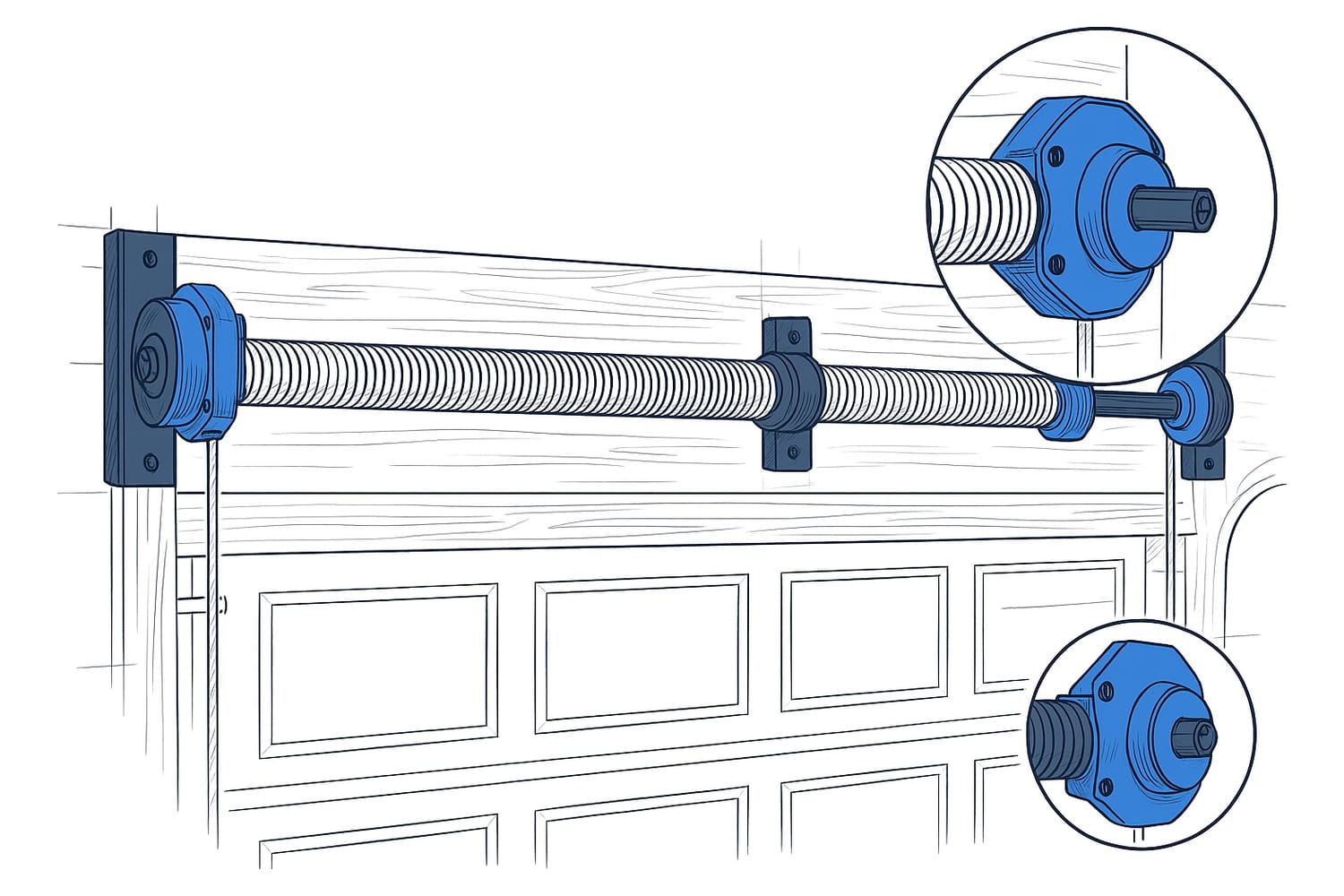 Clopay EZ-Set Torsion Springs: What They Are and What to Do When One BreaksEZ-Set is the spring system on many Clopay, Ideal, and Holmes doors. The springs sit above the door like standard torsion springs, but each is wound by a winder unit at the end of the shaft instead of at the centre. When one breaks, we normally convert the door to standard torsion springs rather than fit another EZ-Set spring.Read the guide
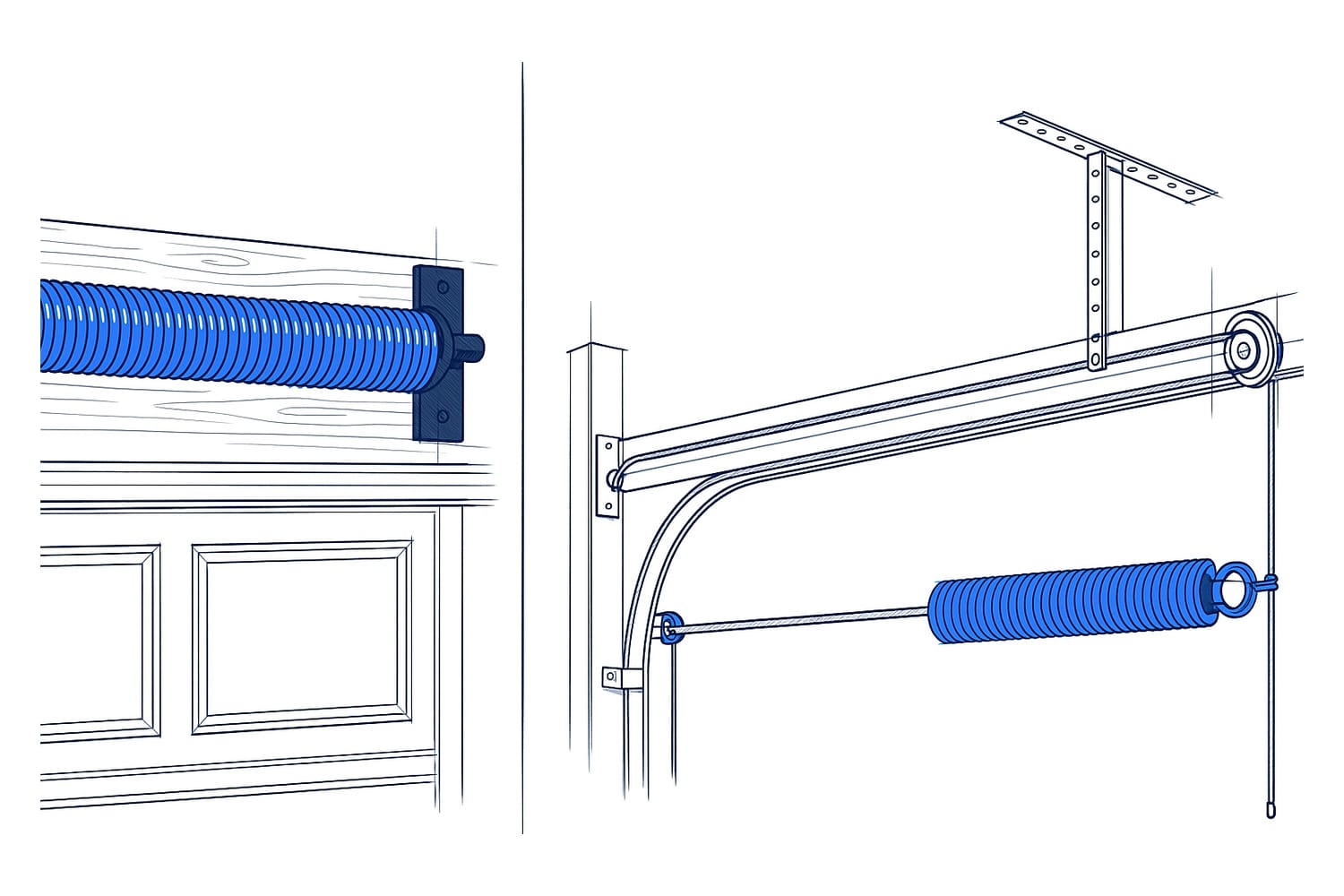 Torsion vs Extension Garage Door Springs: How to Tell Them Apart and Which Is SaferTorsion springs sit on a shaft above the door and twist to lift it. Extension springs run along the horizontal tracks on each side and stretch. Torsion is safer, lasts longer, and lifts more evenly, which is why we convert most extension doors when a spring goes. If you keep extension springs, they need a safety cable through each one.Read the guide
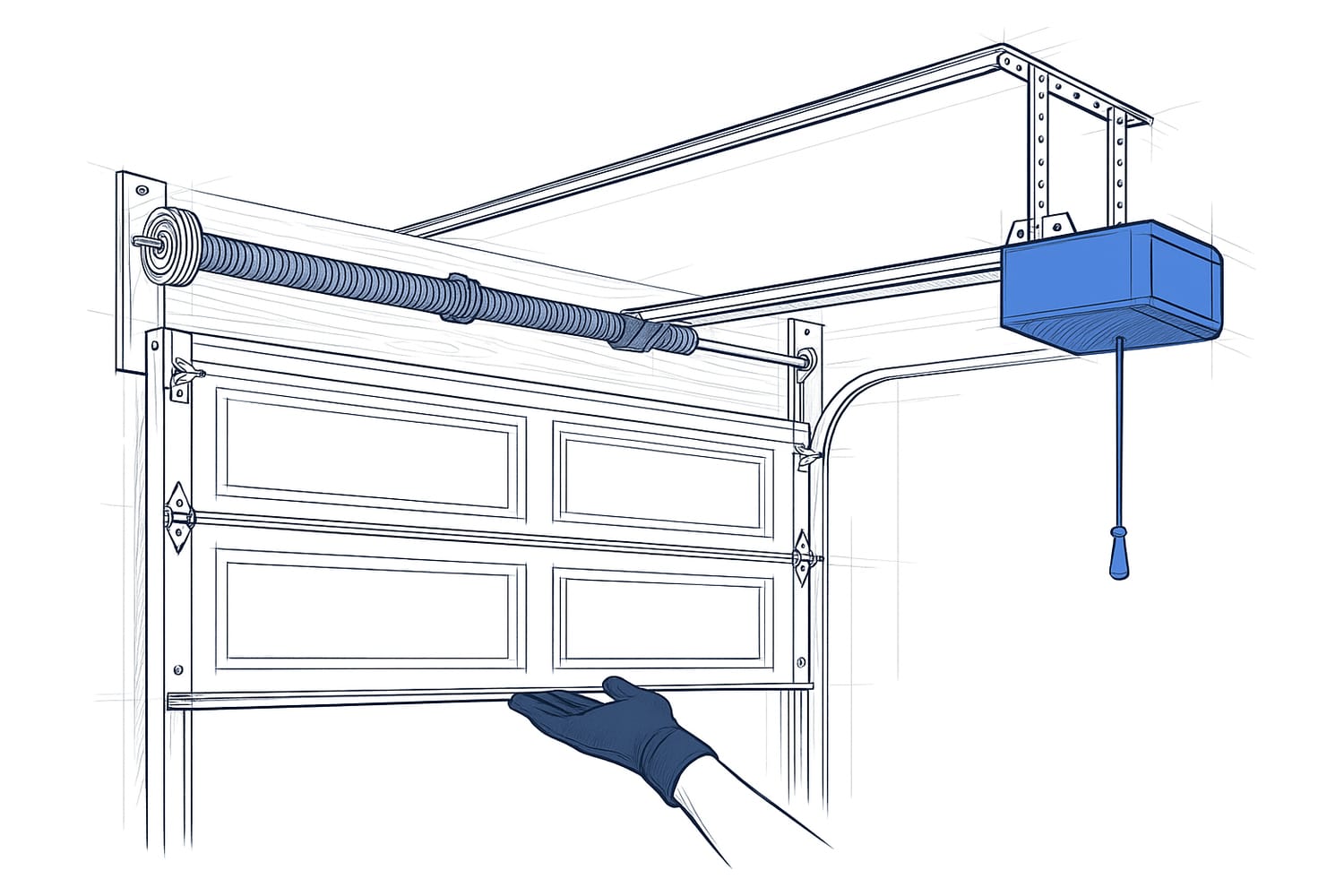 How to Test Your Garage Door's BalanceClose the door, pull the red release cord, lift the door by hand to about waist height, and let go. A balanced door stays put or drifts slowly. A door that drops or shoots up has a spring problem, and the opener has been covering for it.Read the guide
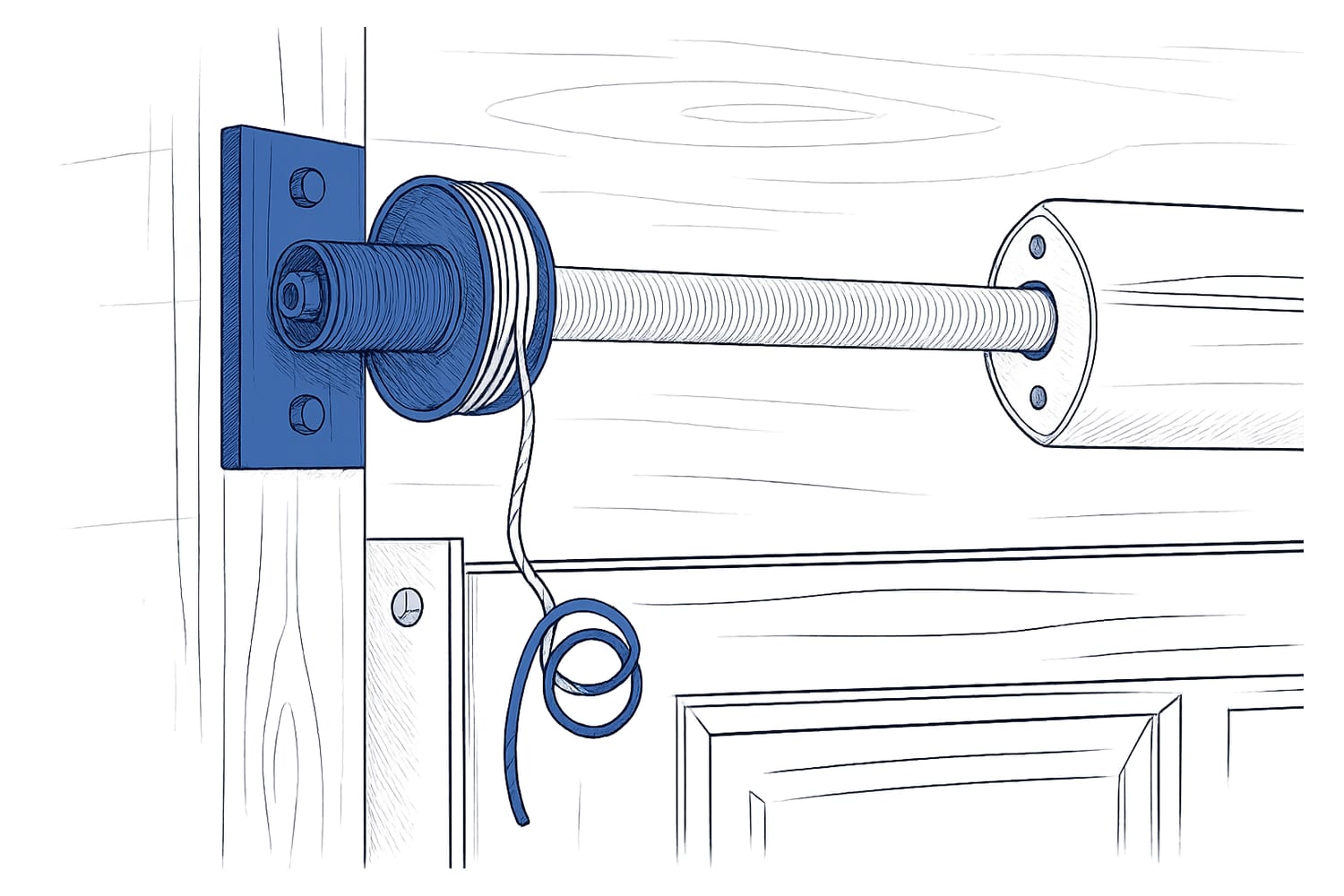 Garage Door Cable Off the Drum: What Happened and What to DoIf a lift cable is hanging loose, wound unevenly, or the door sits crooked with one side higher, a cable has come off its drum. Stop using the door, leave the opener alone, and don't pull the release cord with the door up. Re-seating a cable means releasing spring tension, which is a technician's job.Read the guide
Where we provide spring repair
Same-day service across Winnipeg, plus the surrounding communities we cover within about an hour of our south Winnipeg base.
Ready to Book?
Same-day service across Winnipeg and nearby communities. Free on-site diagnosis on every residential repair.