
Opener Repair & Installation
Same-day garage door opener repair in Winnipeg, plus new installs across both overhead and wall-mount (jackshaft) openers. LiftMaster, Chamberlain, Genie, and Sommer. Legacy Wayne Dalton iDrive and Quantum openers still serviced in the field.
Door unusable right now? What to do first, and how fast we can get there.
What This Covers
You press the remote and nothing happens. Or the opener runs but the door doesn't move. Or it worked fine yesterday and now reverses an inch before it can close. Garage door opener repair in Winnipeg covers a small number of common causes, and the right fix depends on which one, not on whichever part is easiest to swap.
Most failures we see are predictable: stripped gears in a chain or belt drive, a dead capacitor on an aging motor, drifted travel limits, a logic board that no longer wakes up, or a worn-out remote. We've also been to plenty of jobs where the opener was fine and the real problem was a misaligned safety sensor, a dead battery in the remote, or a door that's gone out of balance and is overloading the motor every cycle.
We diagnose the whole system (opener, door, sensors, remotes) before we quote. If a repair makes sense and the unit has years left, we repair it. If it's at end of life or parts are no longer made, we'll say so and quote a replacement rather than push parts onto a dying motor.
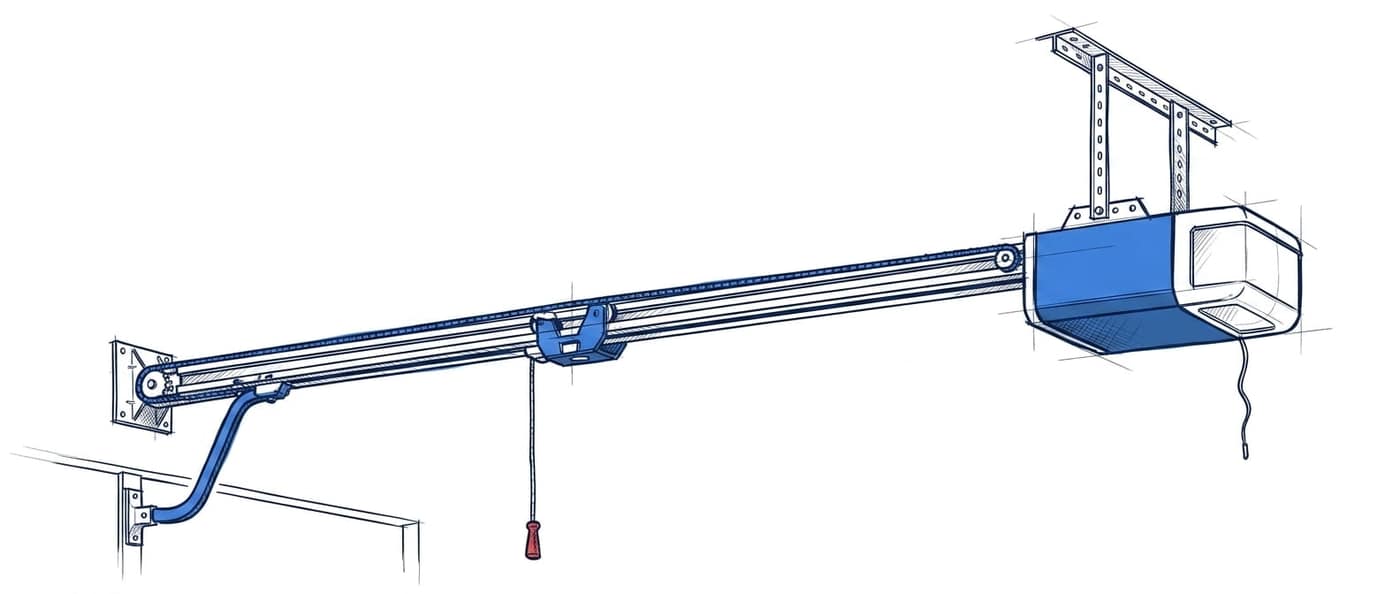
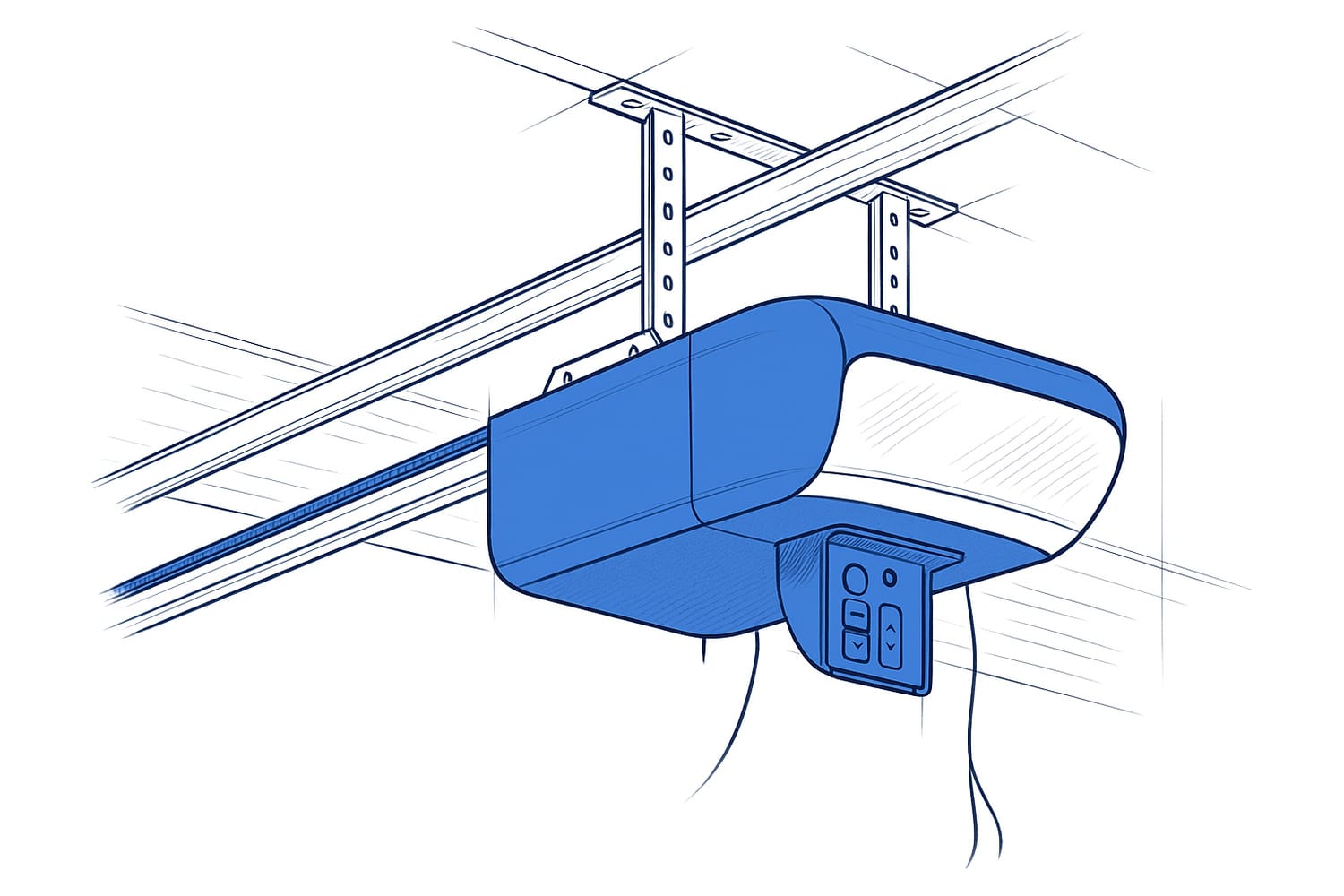
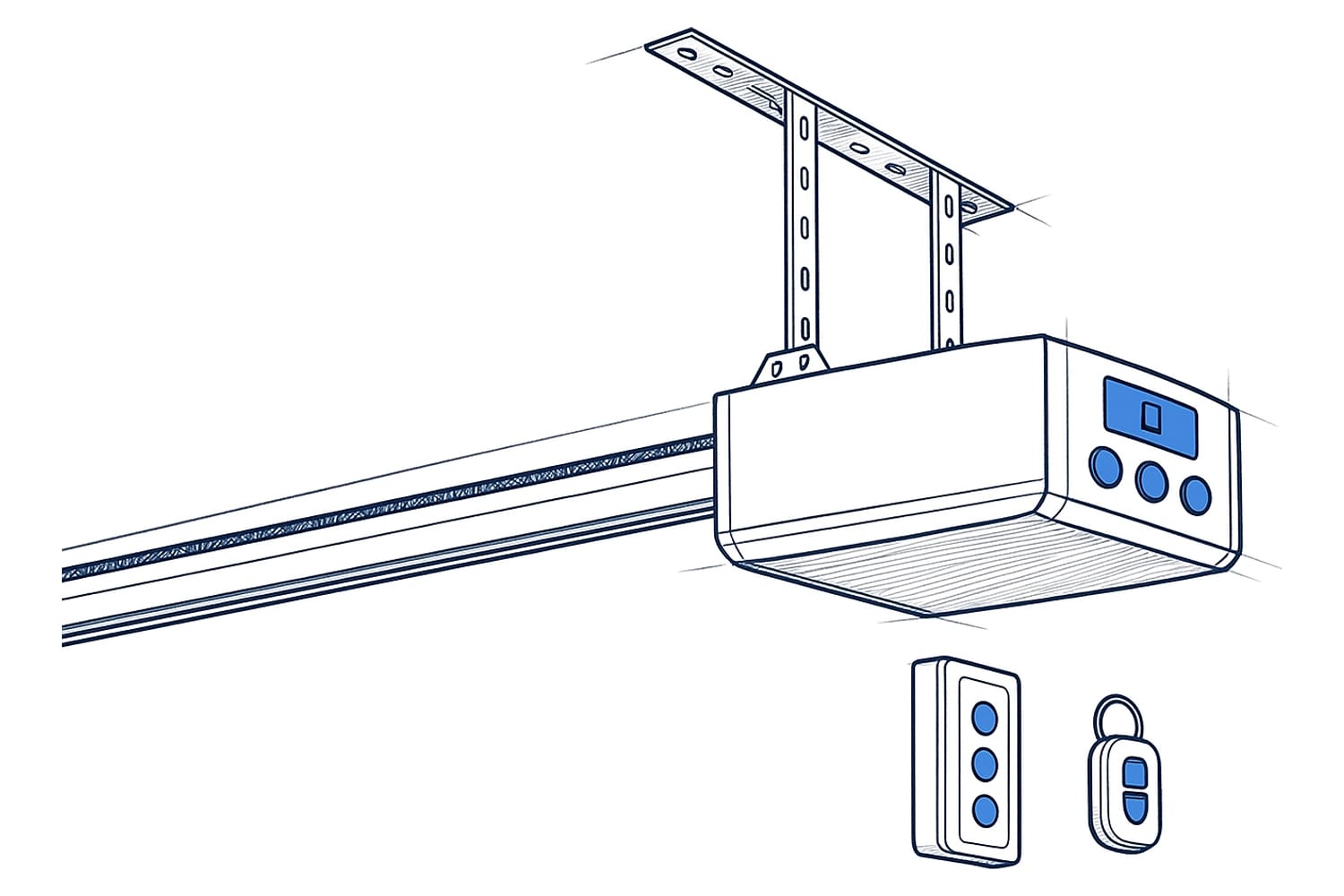
For new installs there are two broad categories: overhead openers and wall-mount openers. Overhead is what most homes have: a long rail across the ceiling, a trolley that travels along it, and a motor head at the back of the garage. We install current LiftMaster and Chamberlain models (both Chamberlain Group brands, both on the myQ smart-control platform), Genie units (with Aladdin Connect by Genie), and Sommer direct drive (a sealed-rail design where the motor rides along a stationary chain, notably quieter than a belt). Battery backup is standard on most current LiftMaster overhead models. Wayne Dalton has exited the opener business and now pairs its doors with Genie units, so we still service the legacy Wayne Dalton iDrive and Quantum openers but don't install new ones.
Wall-mount openers (the industry term is jackshaft) are the other category. Instead of pulling the door open from above with a rail and trolley, a wall-mount sits next to the door on the same torsion shaft your springs are mounted on, and drives the door by rotating that shaft directly. The overhead rail, the trolley, and the carriage are gone. This frees the ceiling for storage racks, a ceiling-mounted car lift, or a vaulted or cathedral garage ceiling that wouldn't fit a standard install, and the motor sits closer to the spring with no rail travel, so the door runs quieter than even a belt drive. The two we install most are the LiftMaster 8500W (Security+ 2.0, myQ, integrated battery backup, automatic door lock) and the Genie 6170H Wall Mount (Aladdin Connect, integrated lock). A wall-mount needs a torsion spring system (it can't drive extension springs), and most installs need the door's top section reinforced with a U-bar strut to handle the torque coming from one corner; if the door doesn't have one, we add it as part of the install. Up front, wall-mount runs higher than a comparable overhead opener, but for garages with overhead storage, a high-lift door configuration, a cathedral ceiling, or a bedroom directly above where quiet really matters, it's usually the better long-run choice.
Brands we service: LiftMaster, Chamberlain, Genie, SkyLink, Sommer, Wayne Dalton.
Signs You Need This Service
- Remote works inconsistently or only from up close
- Opener runs the full cycle but the door doesn't move
- Door reverses a few inches before it can fully close
- Loud grinding, clicking, or buzzing from the motor head
- Light on the opener flashes a repeating fault code
- Door closes only when you hold the wall button down
- Opener trips its breaker or the motor smells hot
- Wall-mount opener's automatic door lock won't engage or release on cycle
How It Works
Step 1: Call or text. Describe the symptoms; we can often narrow down the likely cause before we get there
Step 2: Same-day or next-day arrival in most cases
Step 3: Free on-site diagnosis: we test the opener, door, sensors, and remotes together, a real diagnosis rather than a guess at the obvious part
Step 4: Firm written quote with a straight repair-or-replace recommendation
Step 5: Repair on the spot when the part is on the truck; new opener installs are typically completed the same day
Common Questions
Is the diagnosis free if it turns out the opener isn't the problem?
- Yes. We test the opener, door, sensors, and remotes together and tell you plainly what's wrong and what it costs. If you want it fixed, we do it there and then. If you'd rather think it over, that's fine. We'll wish you well and head out.
Should I repair it or replace the whole opener?
- It comes down to age, what's broken, and parts availability. Units under ten years old with a localized failure (a snapped belt, a stripped gear, a bad capacitor) are usually worth fixing. Beyond that, repairs start chasing each other: you replace the gears, then the capacitor goes, then the board. We'll tell you the realistic life left after a repair and let you decide. The honest answer is sometimes 'replace.'
Will a new opener work with my existing remotes?
- Sometimes. Same-brand remotes on the same generation often pair with a newer unit, but the platforms have shifted. LiftMaster moved to Security+ 2.0 (the current yellow learn-button standard, with rolling code), Chamberlain Group has consolidated smart control around myQ, and Genie maintains Aladdin Connect by Genie. Rolling-code formats and frequencies have changed across generations, so older remotes often don't pair with newer units. We check compatibility during the on-site visit and include any needed remote in the quote so there are no surprises.
Do you install new Wayne Dalton openers?
- No: Wayne Dalton stopped making openers and now pairs its garage doors with Genie opener systems. We still service the legacy Wayne Dalton iDrive (TorqueMaster and Torsion versions) and Quantum openers in the field, including belts, gears, capacitors, logic boards, and remotes. For a new install on a Wayne Dalton door, we typically quote the Genie unit Wayne Dalton itself partners with now, or any of the other current opener brands we install.
Belt, chain, direct drive, or wall-mount: which should I get?
- Chain is the cheapest and a bit louder, the workhorse for a detached garage where noise doesn't matter. Belt is noticeably quieter, the usual call for an attached garage with bedrooms overhead. Sommer's direct drive runs quieter still (the motor rides along a stationary chain inside a sealed rail), at a higher up-front price. Wall-mount (jackshaft) openers like the LiftMaster 8500W and the Genie 6170 skip the overhead rail entirely: the motor sits on the wall beside the door and drives the torsion shaft directly. They free the ceiling for storage or a high-lift or cathedral setup, run very quiet, and include battery backup and an automatic door lock on most current models. They cost more up front and only work with torsion-spring doors. For most attached garages, belt drive is the easiest call. Direct drive is the upgrade when belt isn't quiet enough. Wall-mount is the answer when ceiling space matters or quiet is the top priority. The opener buying guide goes through each in more detail.
What's a wall-mount (jackshaft) opener and when does it make sense?
- Wall-mount openers (industry term: jackshaft) sit on the wall beside the door, on the same torsion shaft your springs are mounted on, and drive the door by rotating that shaft directly. There's no overhead rail and no trolley. The two we install most are the LiftMaster 8500W and the Genie 6170H Wall Mount. They make sense when ceiling space matters (overhead storage racks, a ceiling-mounted car lift, a vaulted or cathedral garage ceiling), when the door is set up for high-lift, or when you want the install as quiet as possible (no rail travel means less mechanical noise than even a belt drive). Two requirements to know about: wall-mount only works with torsion-spring doors (it can't drive extension springs), and most installs need the door's top section reinforced with a U-bar strut to handle the torque coming from one corner. If the door doesn't have one, we add it as part of the install. Wall-mount runs higher up front than a comparable belt-drive overhead opener, but the install is cleaner, quieter, and frees usable space above the door. For homes where the garage shares a wall or ceiling with living space, or doubles as a workshop, it's often worth the upgrade.
The door reverses before it can close. Is the opener broken?
- Usually the door, surprisingly often. Auto-reverse fires when the opener senses too much resistance on the way down: typically a weakened spring making the door too heavy, rollers binding in the track, or a safety sensor drifting out of alignment. The opener is doing its job by refusing to close on a problem. The balance test tells you in two minutes whether the door is the cause. We check the whole system, not just the opener, on every call.
Is battery backup worth it?
- In Winnipeg, yes. Winter power outages happen, and being locked out of (or stuck inside) a garage with no way to lift a heavy door manually is a bad time. Integrated battery backup is standard on most current LiftMaster units, including the 8500W wall-mount. LiftMaster cites up to 24 hours of operation on a charge, which works out to roughly 20 to 50 cycles depending on the opener model and the door's weight. That covers most outages without leaving you stranded. Worth the upcharge for homeowners with attached garages.
Guides for this repair
Plain steps for what you can safely do yourself, and the signs that mean it's time to call.
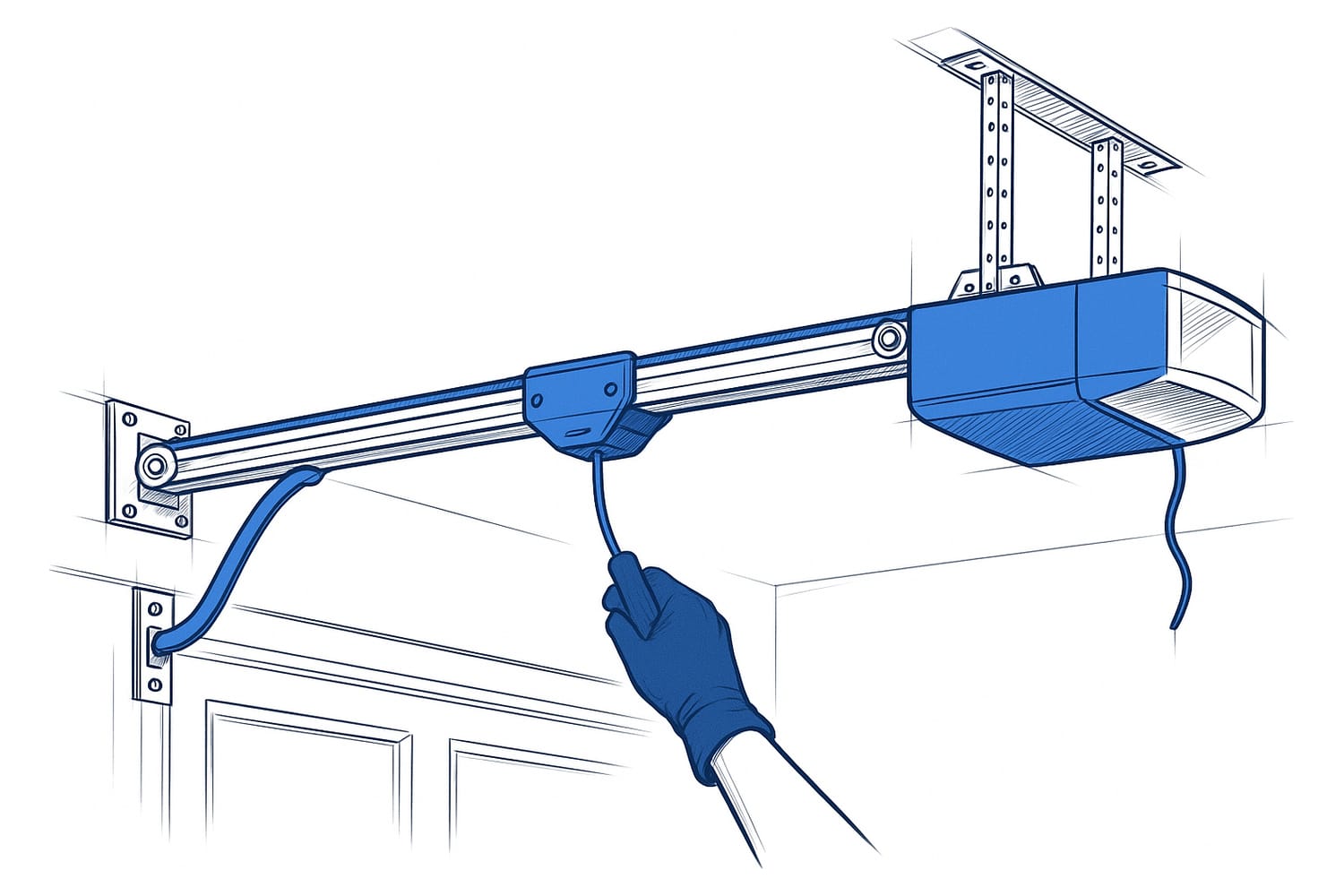 How to Open Your Garage Door in a Power Outage, and Reconnect It AfterWith the door closed, pull the red cord hanging from the opener rail to disconnect the door, then lift it by hand. When the power is back, pull the cord toward the motor (or straight down on some models) and run one cycle so the opener picks the door up again.Read the guide
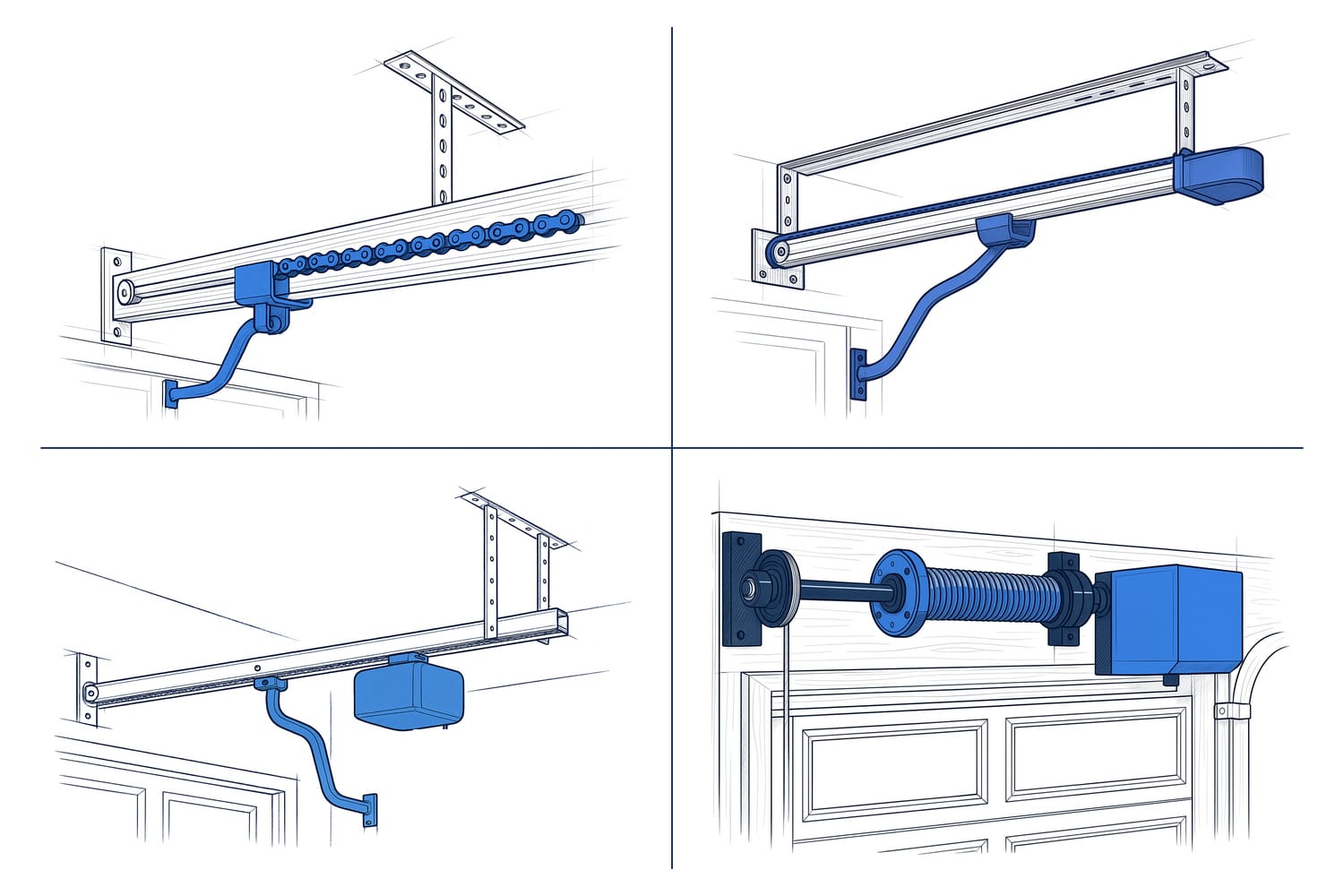 How to Choose a Garage Door Opener: Chain, Belt, Direct Drive, or Wall-MountFor most attached garages, a belt-drive opener with battery backup is the easy call. Chain drive is the budget choice for a detached garage where noise doesn't matter. Direct drive is the quiet upgrade, and a wall-mount opener is the answer when you want the ceiling free or the door runs under a bedroom.Read the guide
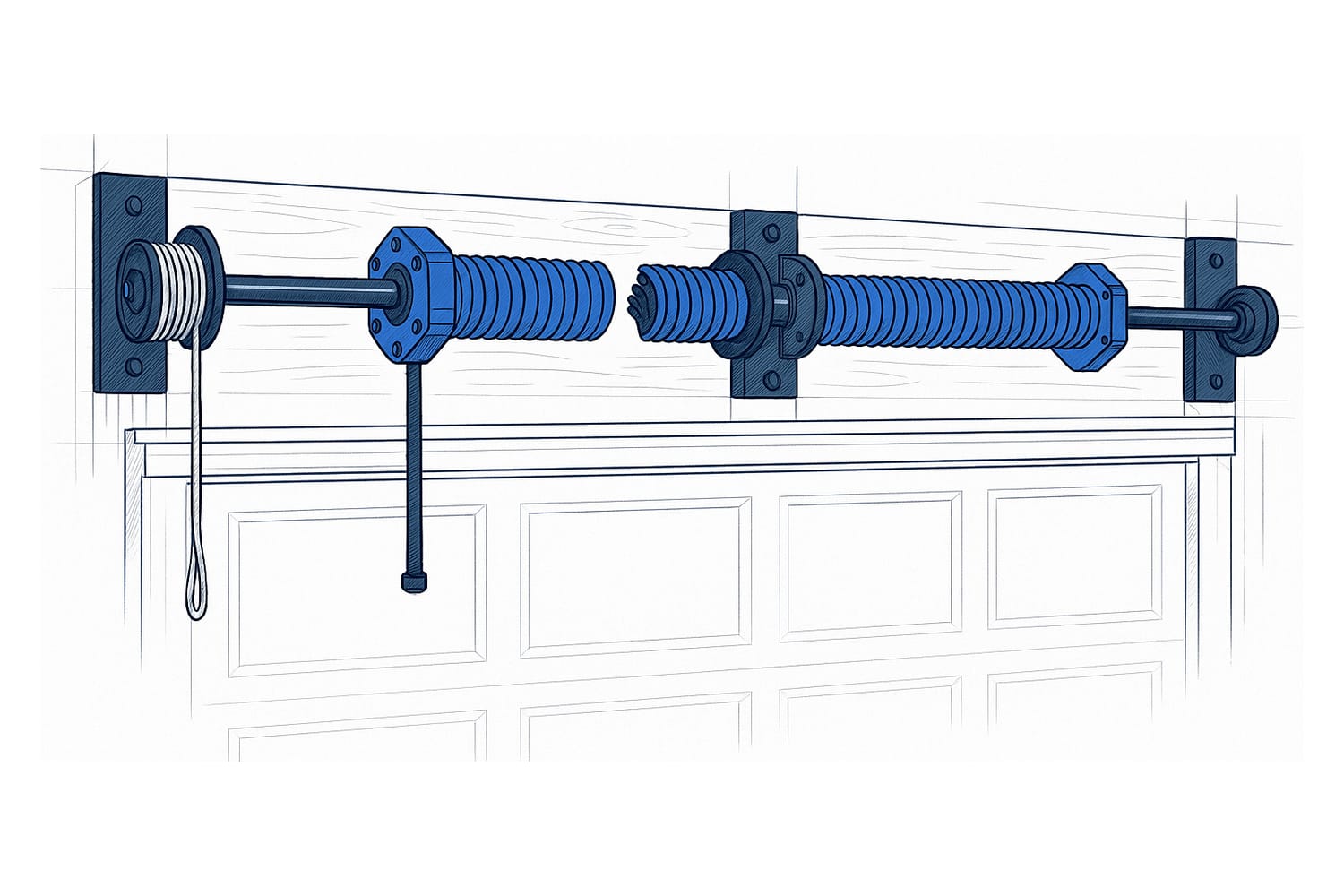 Is My Garage Door Spring Broken? The Signs, and What to Do NextA loud bang from the garage, a door that's suddenly too heavy to lift, an opener that raises the door a few inches and stops, a visible gap in the spring coil, or slack cables all point to a broken spring. Leave the door closed, don't run the opener, and book a spring repair.Read the guide
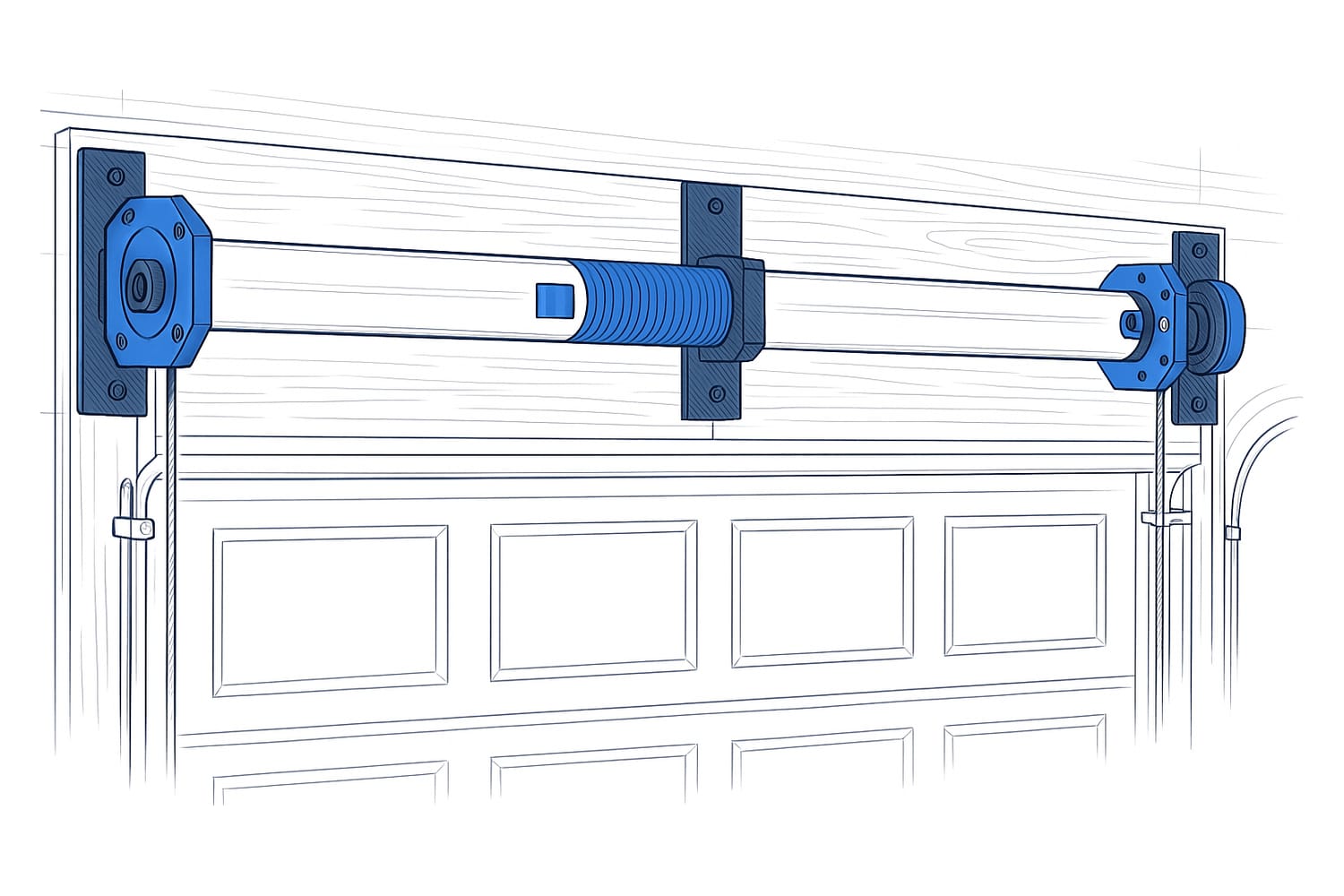 Wayne Dalton TorqueMaster Springs: What They Are and What to Do When One BreaksTorqueMaster is Wayne Dalton's spring system with the springs sealed inside the tube above the door. When one breaks you can't see it, but the door turns to dead weight and the opener stops after a few inches. We normally replace the system with standard torsion springs, which are easier to service for the rest of the door's life.Read the guide
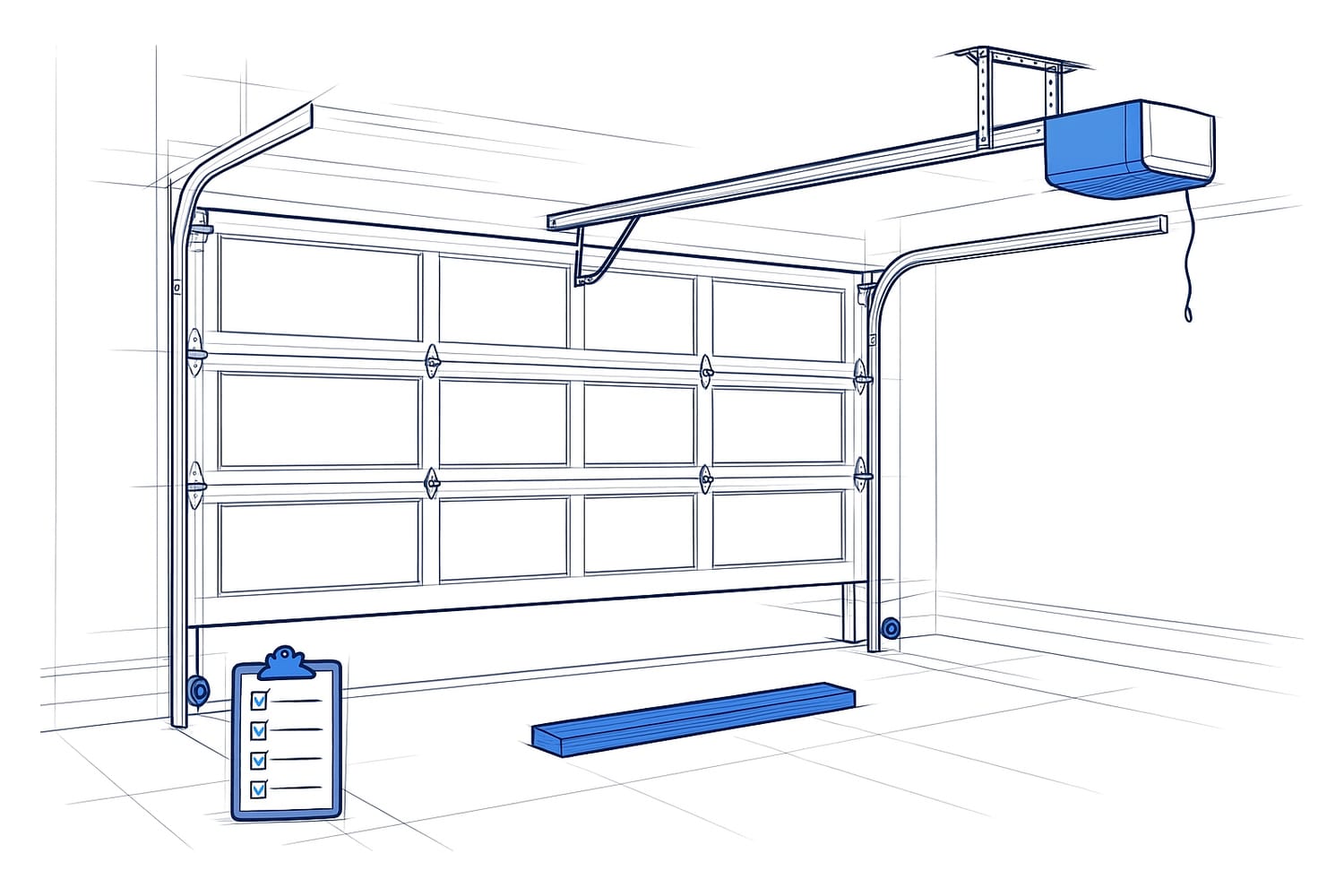 Garage Door Maintenance Checklist: Monthly, Twice a Year, and YearlyOnce a month: watch and listen to a full cycle, test the auto-reverse with a 2x4, and check the photo eyes. Twice a year: lubricate, test the balance, and look over the seals, cables, and rollers. Once a year: book a professional tune-up. The whole monthly check takes five minutes.Read the guide
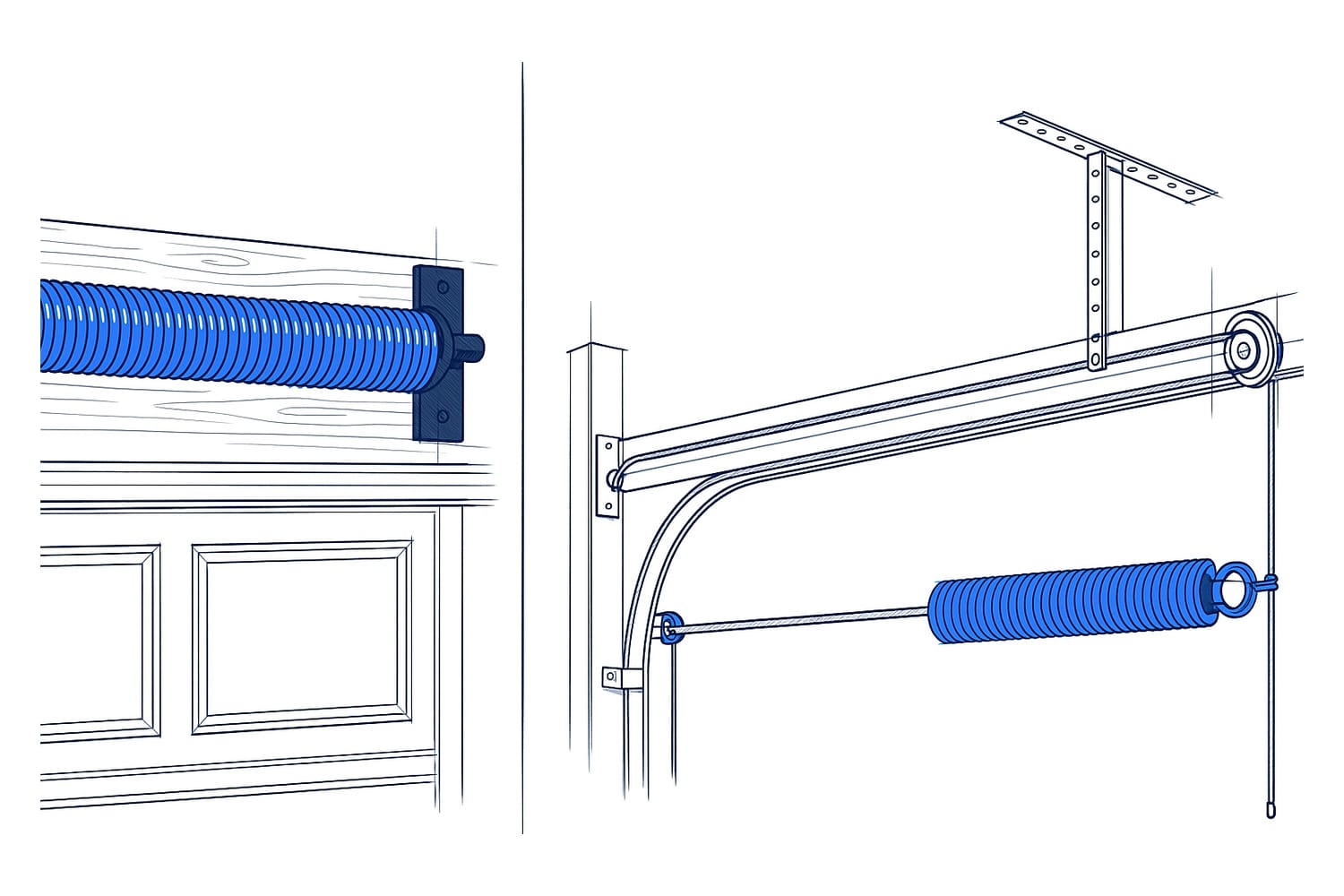 Torsion vs Extension Garage Door Springs: How to Tell Them Apart and Which Is SaferTorsion springs sit on a shaft above the door and twist to lift it. Extension springs run along the horizontal tracks on each side and stretch. Torsion is safer, lasts longer, and lifts more evenly, which is why we convert most extension doors when a spring goes. If you keep extension springs, they need a safety cable through each one.Read the guide
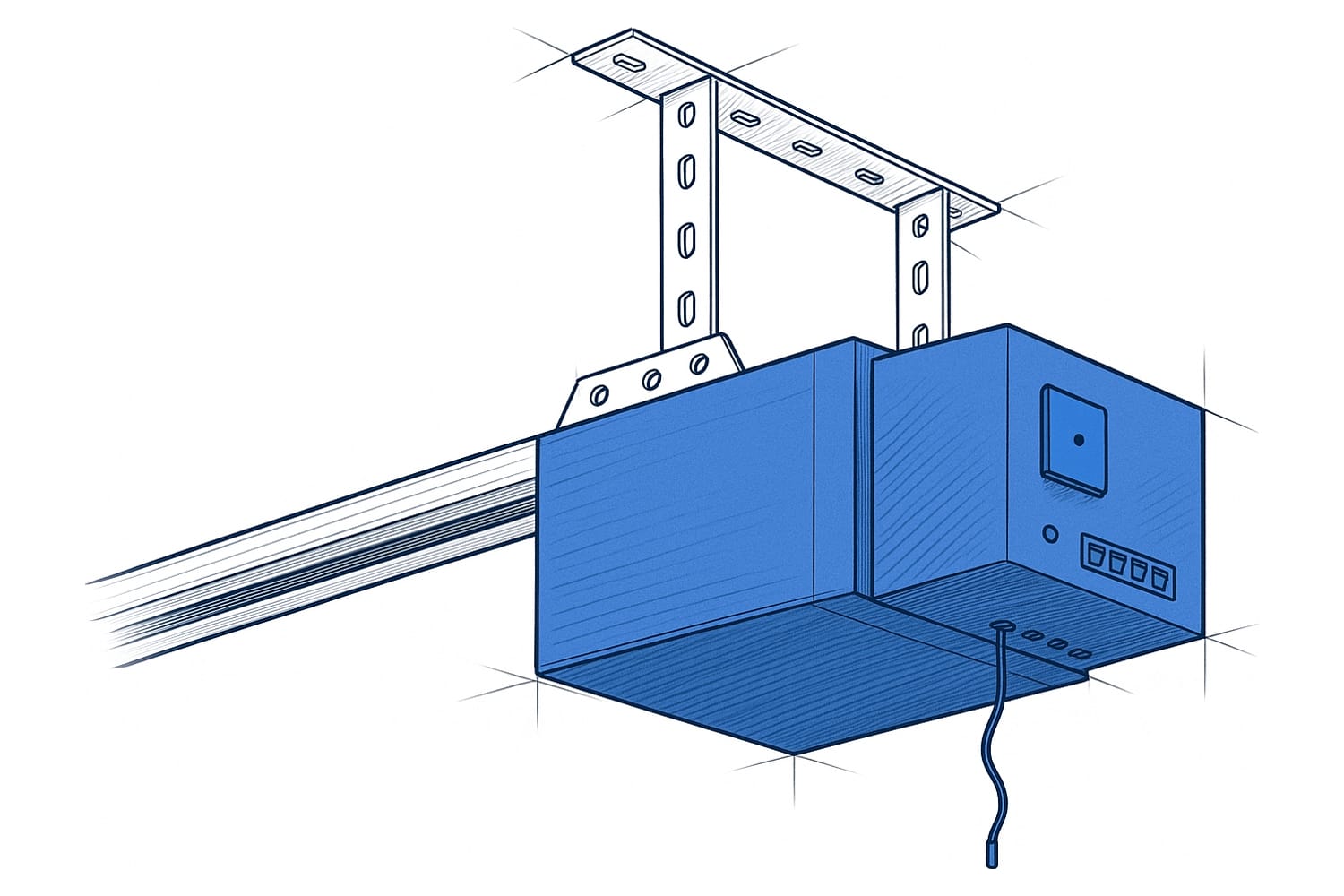
Where we provide opener repair & installation
Same-day service across Winnipeg, plus the surrounding communities we cover within about an hour of our south Winnipeg base.
Ready to Book?
Same-day service across Winnipeg and nearby communities. Free on-site diagnosis on every residential repair.