
Cable & Roller Repair
A noisy, drifting, or sticking door usually traces back to worn cables or rollers. Same-day garage door cable repair in Winnipeg, plus full roller replacement with sealed-bearing nylon and a fresh door rebalance.
Door unusable right now? What to do first, and how fast we can get there.
What This Covers
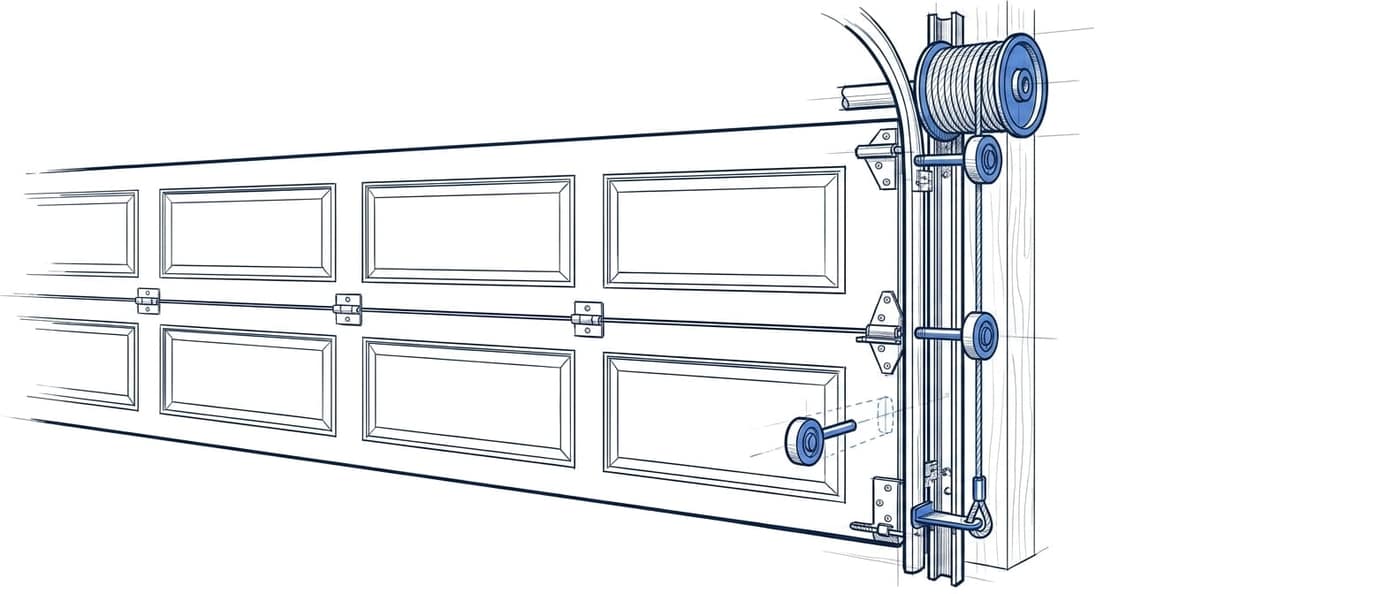
Cables and rollers do quiet work until they fail loudly. The cables carry your door's weight up the side rails. The rollers are what let it travel up and down the tracks smoothly. When either starts going, the rest of the system compensates, and the wear cascades from there. Garage door cable repair in Winnipeg picks up sharply through freeze-thaw season, when corrosion and metal contraction accelerate the wear.
Most cable failures we see are gradual: a single frayed strand, then a few more, then one day a snap on the way up. Sometimes the cable jumps the drum first, leaving the door tilted partway through travel before any visible fraying. Roller failures vary: bearings seize and start squealing, wheels develop flat spots that thump through every cycle, plastic rollers go brittle in the cold and crack, or a stem bends after the door takes an impact. Either way, you end up with uneven load on the opener and accelerated wear on everything else.
We replace cables in pairs (they've gone through the same cycles, so the second isn't far behind). Rollers we swap as a complete set, upgrading from worn steel or brittle plastic to sealed-bearing nylon. Within nylon, ball-bearing count is the quality marker (7-ball is budget, 10 to 11 ball is mid-grade, 13-ball is premium and rated for around 20,000 cycles), so we match the grade to how often the door actually moves. We also check the drums on the torsion shaft for wear or out-of-position cable wrap, the tracks for dents or bowing, and the hinges that take part of the load. The door comes back quieter, tracks straight, and stops drifting at the top.
Signs You Need This Service
- One side of the door hangs lower than the other
- Loud grinding, popping, or rattling as the door moves
- Visible fraying, kinking, or rust on the cables in the corners by the door
- Door jerked, stopped, or tilted partway through travel (cable may have come off the drum)
- Door binds or catches at the same spot every cycle
- Roller bearings squeal or seize even after fresh lubrication
- Plastic shards from broken rollers appearing in the tracks or on the floor
How It Works
Step 1: Call or text. Describe what you're hearing or seeing
Step 2: Same-day or next-day arrival for most cable and roller calls
Step 3: Free on-site diagnosis: we check cables, rollers, drums, tracks, hinges, and door balance before quoting
Step 4: Firm written quote with parts and labor; work starts only after you approve
Step 5: Cables replaced in pairs, rollers swapped as a full set, door rebalanced, full cycle test before we leave
Common Questions
Do you replace one roller or all of them?
- Usually all of them. They've gone through the same cycles, so replacing the one that died means the others are next in line. Doing them together is one service call instead of two or three, and the cost difference per roller is small once we're on site.
Are nylon rollers really worth the upgrade?
- Noticeably, yes. Sealed-bearing nylon rollers run quieter, smoother, and don't need lubrication. They handle Winnipeg cold better than steel (which contracts and gets noisier) or plastic (which gets brittle and cracks). Within nylon, ball-bearing count is the marker that separates a roller you'll forget about from one you'll be back to replace in a few years. We stock and recommend 10- or 11-ball nylon for typical residential doors and 13-ball for heavy-use or workshop doors. The cheapest option, builder-grade unreinforced plastic with no real bearings, is what most homeowners are replacing when they call us about noise on a newer house. The rollers guide covers the types and the signs of wear.
One cable looks fine but the other is fraying. Do you really need to replace both?
- Yes. Cables wear in lockstep on a balanced door, so if one is fraying, the other is somewhere in the same wear band even if you can't see it yet. Replacing only the visibly damaged one buys you a few months at best, and you're paying for a second service call. Single-cable replacements are also genuinely risky in the meantime: a snapped cable lets one side of the door drop suddenly, which can take the spring, drum, or framing with it.
What causes cables to fray in the first place?
- A few patterns. The most common is a door that's been slightly out of balance for a long stretch, which makes the heavier side eat its cable faster, especially where the cable bends across the drum or the bottom bracket. Misaligned or worn drums with uneven cable wrap do the same thing on a smaller scale. Moisture is the other big one: in Winnipeg, snow piling against the bottom panel and melting onto the cable's lower end pushes corrosion into the strands, and a corroded strand is a cracked strand. Heated garages where snowmelt and condensation cycle through the winter wear cables faster than dry cold-only spaces, for the same reason: liquid water on cold metal.
My door is loud. Is it always the rollers?
- Usually but not always. Worn rollers are the most common single source of noise, but dry hinges, an unlubricated torsion shaft, an out-of-balance door, or a chain-drive opener overdue for service all add to it. When we come out for a noise complaint, we check all of those, and our noisy door guide matches each sound to the part. Sometimes the right answer is rollers plus a hinge swap, sometimes it's actually a tune-up. We won't sell you a new opener for a problem the door itself can fix.
How long should new cables and rollers last?
- Quality nylon rollers with sealed bearings typically run 10 to 20 years on a residential door, depending on the grade. The 10- and 11-ball mid-grade rollers are rated for around 10,000 to 15,000 cycles (roughly seven to ten years at average household use), and the 13-ball premium grade reaches about 20,000 cycles (closer to thirteen or fourteen years). Cables run similar at 8 to 15 years depending on usage, humidity, and how well the door is balanced. A poorly balanced door eats cables fast, and a yearly inspection catches wear before it becomes a snap.
Guides for this repair
Plain steps for what you can safely do yourself, and the signs that mean it's time to call.
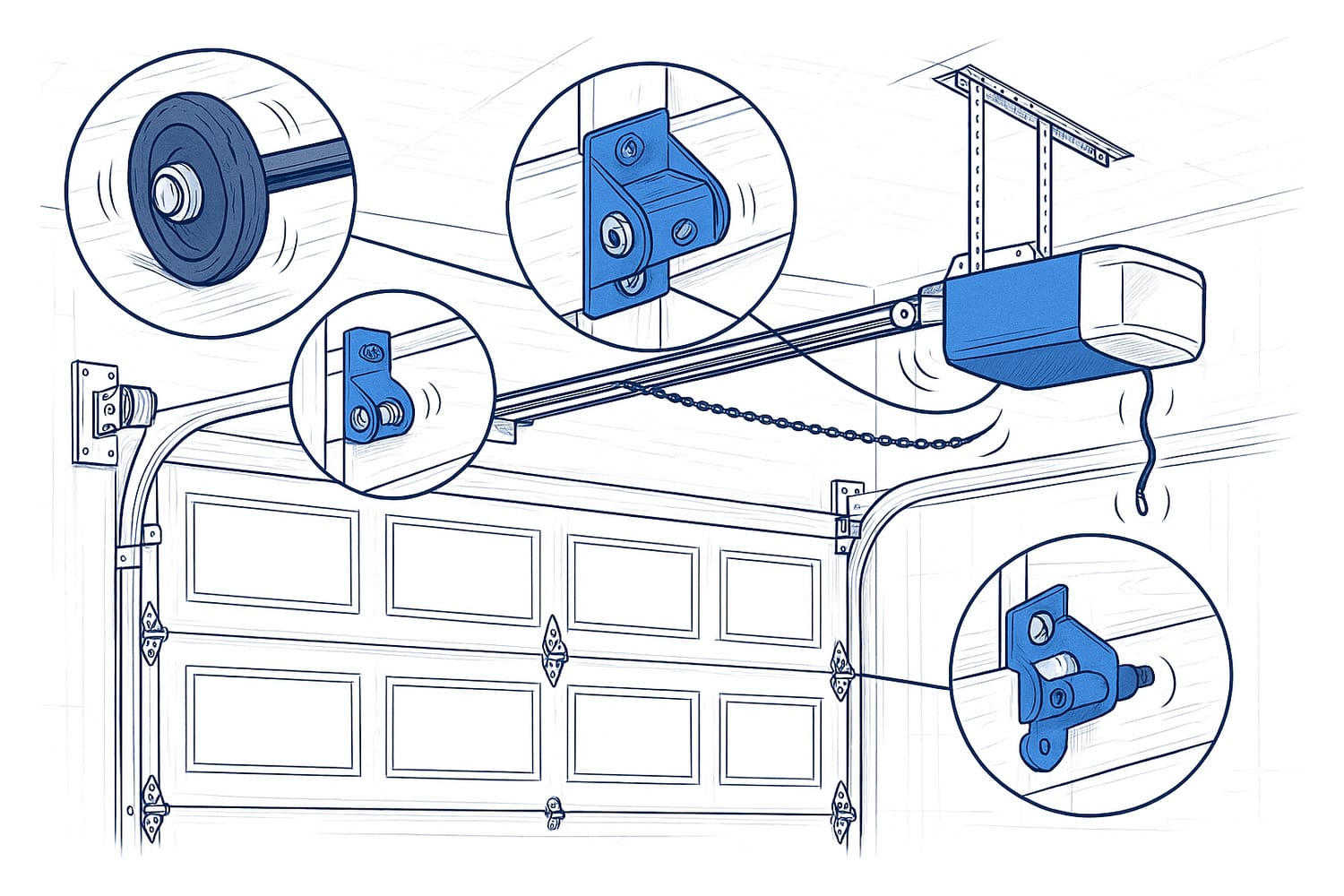 Why Is My Garage Door So Loud? Matching the Noise to the PartSqueaking and squealing usually means dry or worn rollers and hinges. Rattling is loose hardware or a slack opener chain. Grinding points at misaligned track or worn opener gears. A single loud bang is a spring breaking. Most noise is fixable in an hour, and some of it you can fix yourself.Read the guide
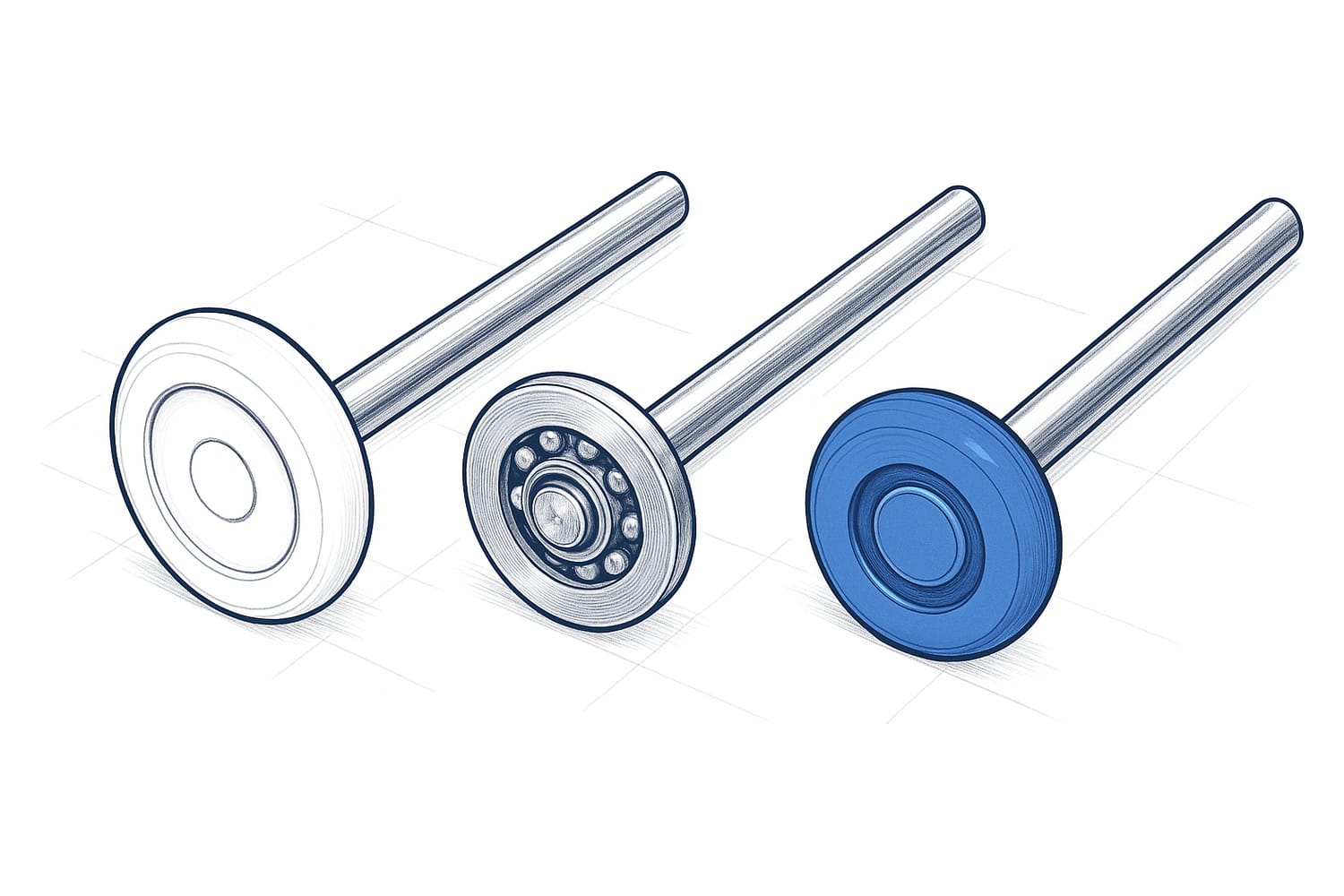 Garage Door Rollers: Types, Signs of Wear, and When to Replace ThemRollers are the wheels that carry the door along the track, one at every hinge. Builder-grade plastic rollers crack, steel rollers get loud and rust, and sealed-bearing nylon rollers run quietly for ten years or more. Cracks, chips, a roller that slides instead of turning, or squealing that lubrication doesn't fix all mean it's time for a set.Read the guide
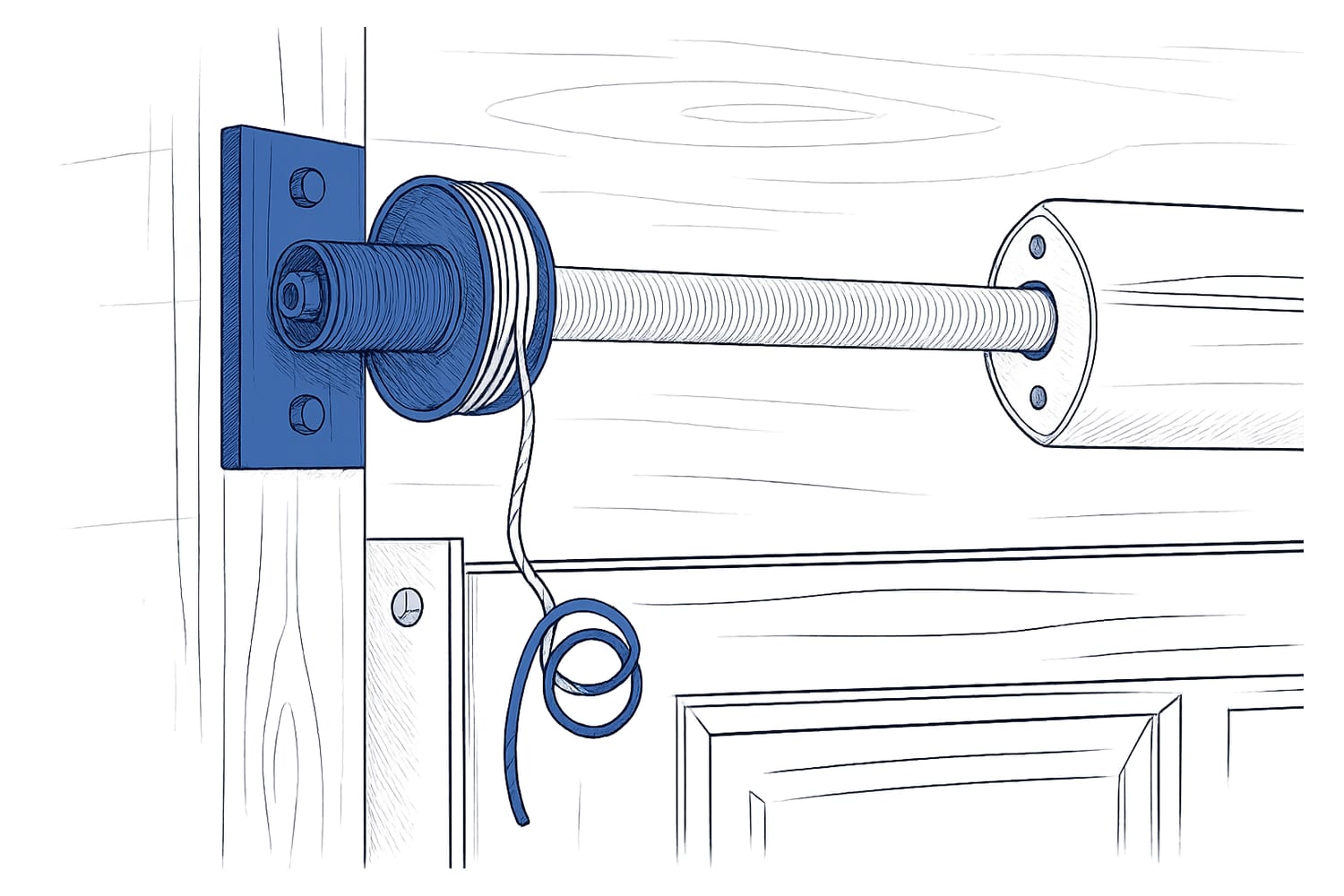 Garage Door Cable Off the Drum: What Happened and What to DoIf a lift cable is hanging loose, wound unevenly, or the door sits crooked with one side higher, a cable has come off its drum. Stop using the door, leave the opener alone, and don't pull the release cord with the door up. Re-seating a cable means releasing spring tension, which is a technician's job.Read the guide
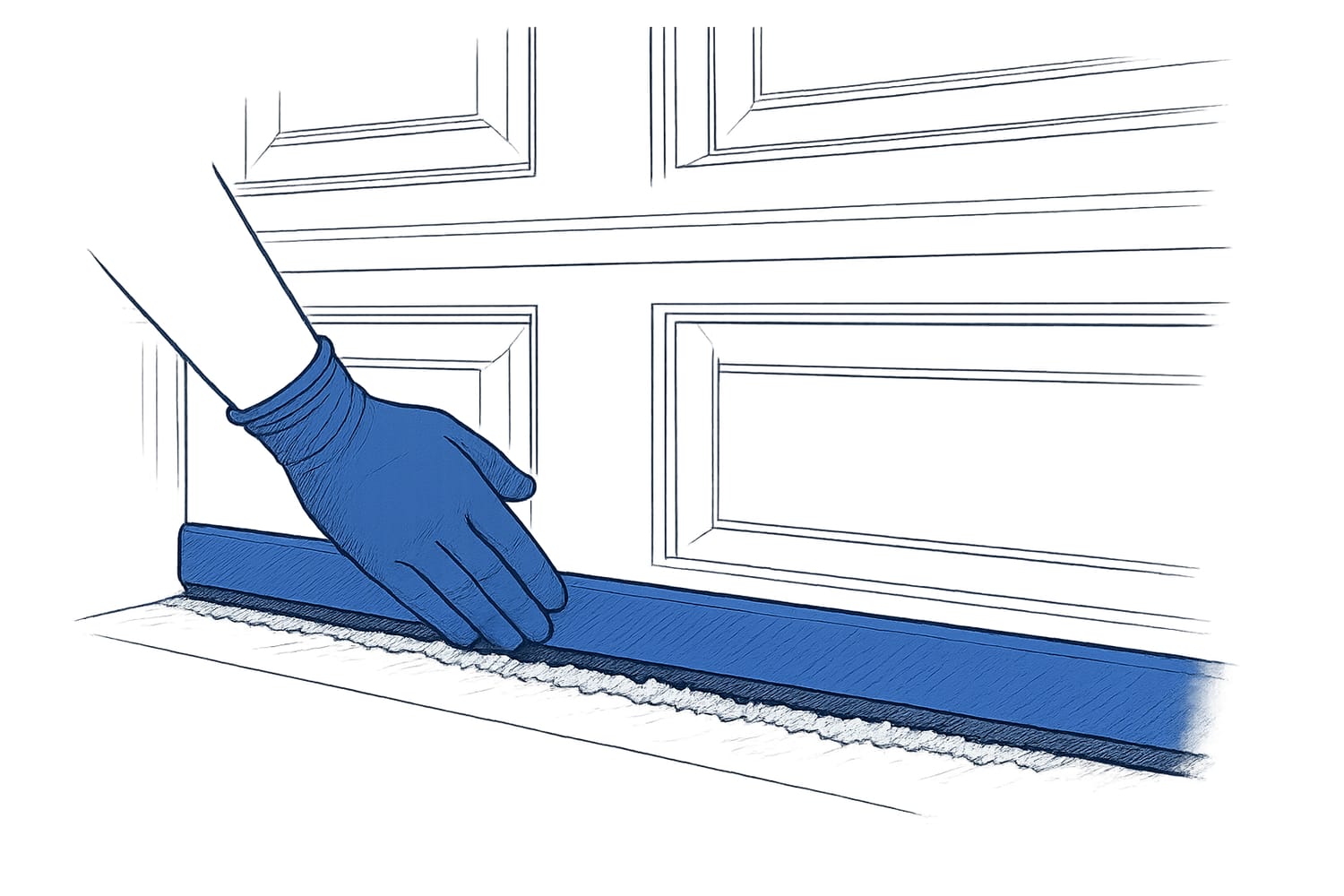 Garage Door Frozen to the Floor: How to Free It SafelyStop pressing the button. Pull the red release cord so the opener is out of the picture, warm the ice along the bottom edge with a hair dryer, and lift the door by hand. Silicone spray on the bottom seal and a cleared threshold keep it from happening again.Read the guide
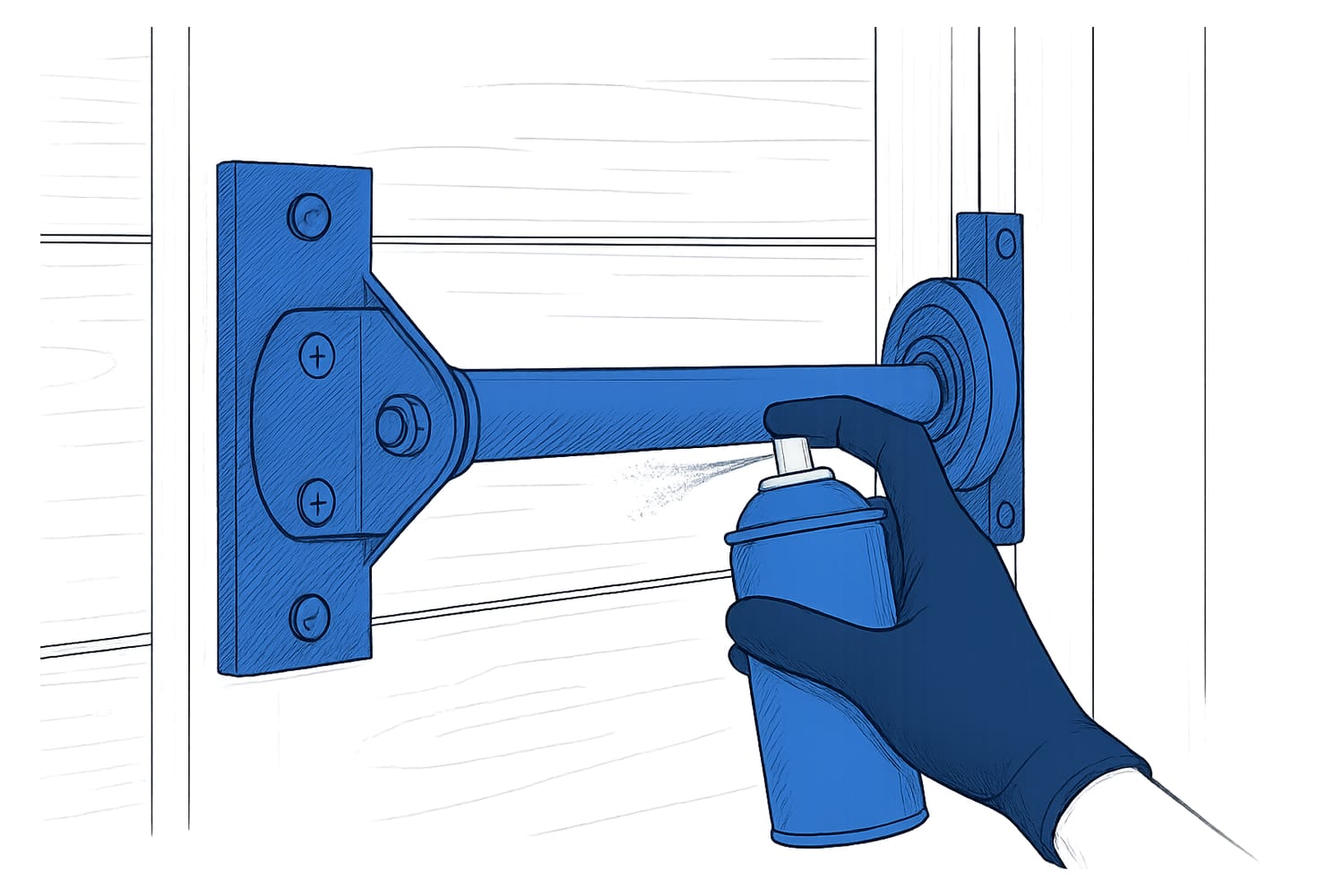 How to Lubricate a Garage Door (and What Not to Spray)Use a silicone spray or white lithium grease on the hinges, the bearings of steel rollers, the torsion spring coils, the bearing plates at each end of the spring shaft, and the lock. Keep it off the tracks and off nylon rollers. Twice a year is plenty for most homes.Read the guide
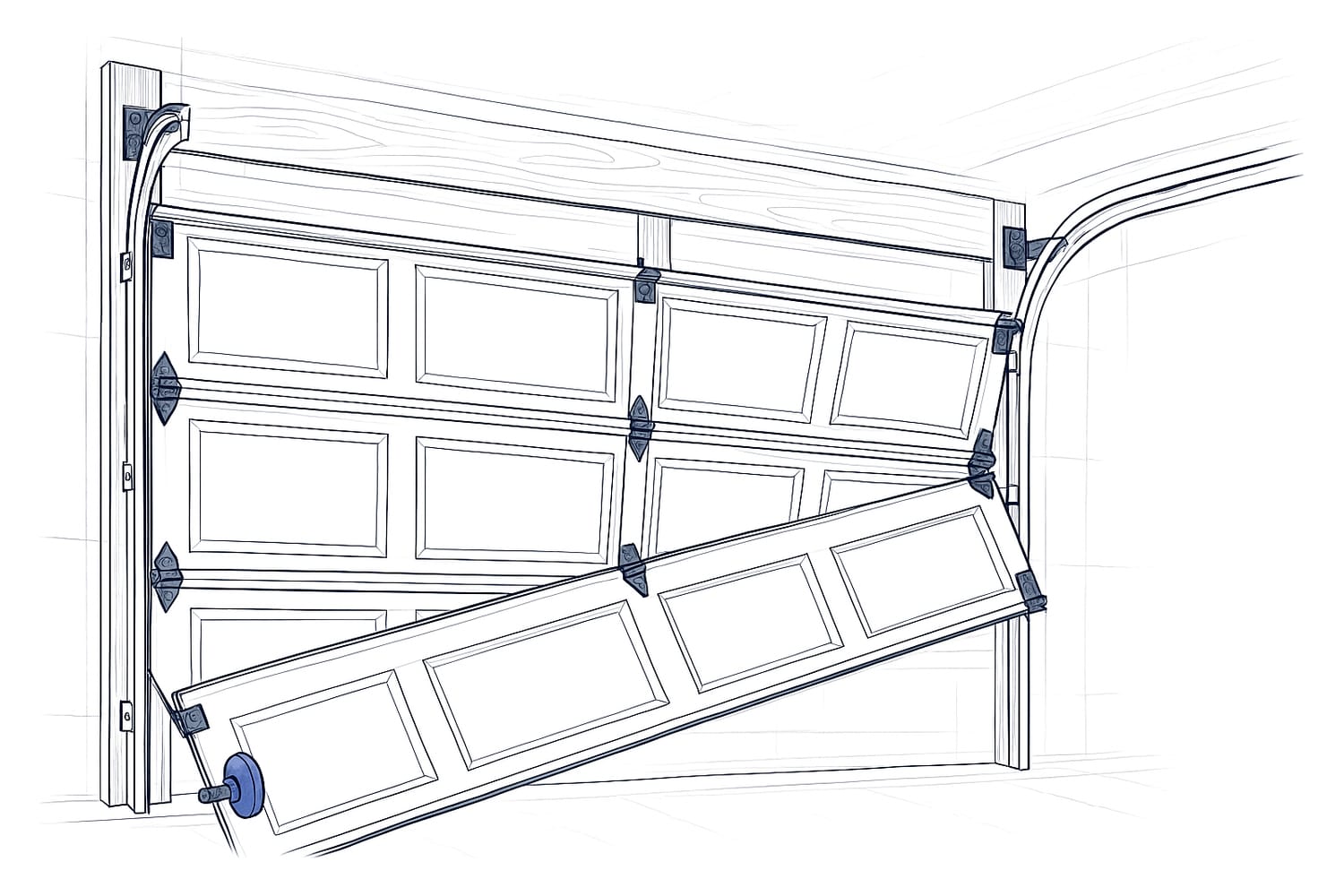 Garage Door Off Track: Causes, Dangers, and What Not to DoA door comes off its track when a roller leaves the rail: after a vehicle bump, a broken cable, worn rollers, bent or loose track, or being forced while frozen. The door is then heavy, crooked, and held by very little. Don't push it back, don't run the opener, and don't pull the release. Call.Read the guide
Where we provide cable & roller repair
Same-day service across Winnipeg, plus the surrounding communities we cover within about an hour of our south Winnipeg base.
Ready to Book?
Same-day service across Winnipeg and nearby communities. Free on-site diagnosis on every residential repair.