
Window Replacement
Garage door window replacement in Winnipeg: fogged sealed units, cracked panes, and brittle inserts swapped in the existing frame. Clear, frosted, and tinted glass, with custom-cut sealed units when the original style is discontinued.
What This Covers
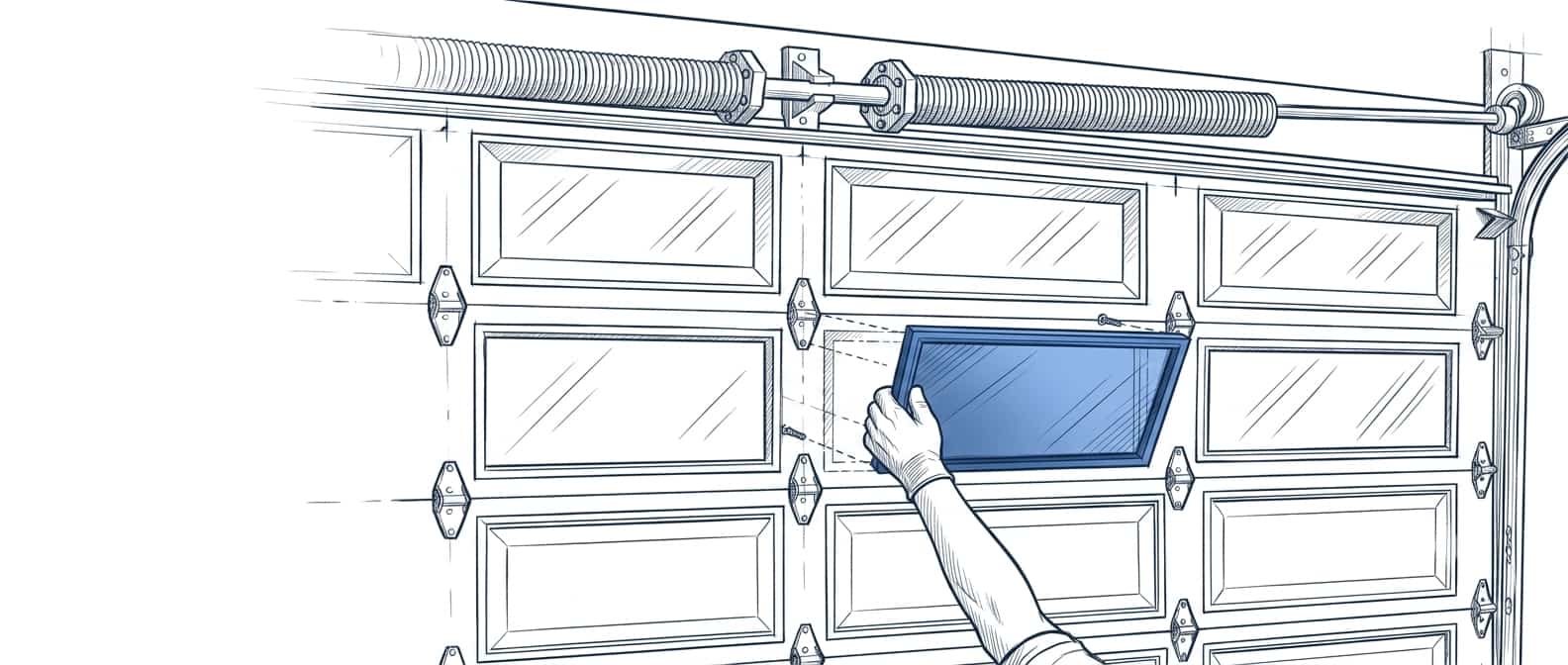
The glass in a garage door takes the same abuse the door does: pucks, gravel off the driveway, decades of sun and weather. When a pane cracks, or a double-pane window turns permanently foggy, the good news is that garage door window replacement in Winnipeg almost never means replacing the panel or the door. The windows are inserts: self-contained units held by a two-piece frame that fastens through a pre-cut opening in the panel. We take the old unit out, put the right new one in, and the rest of the door stays exactly where it is.
Most insulated doors from the last couple of decades carry sealed double-pane units: two panes of glass bonded to a spacer around the edge, with dry air or argon sealed in the gap for insulation. That perimeter seal is the part that ages. Hot days expand the air in the gap and cold nights contract it, so the panes flex and the seal works like a slow pump, and Winnipeg puts that pump through a swing of 60 degrees or more between January and July. Eventually the seal lets humid air in, the moisture condenses on the inner faces of the glass, and you get fog, haze, or water stains that no cloth can reach. The fog often comes and goes with the weather at first, which is the early warning. Once the seal has failed the unit has also lost its insulating gas, so a heated garage pays twice: once in the view and once on the heating bill. A failed sealed unit can't be resealed in place. The fix is a new sealed unit, and in most cases the existing frame stays.
Age is the complication. Manufacturers change and discontinue their window styles as door models turn over, so on an older door the original insert often isn't made anymore. When the OEM part still exists, we order it. When it doesn't, we measure the opening and the frame and have a sealed unit custom cut by a glass fabricator, built to the exact size and thickness the existing frame was designed to hold. The custom route costs more than a stock part and takes longer to arrive, but it's a fraction of the cost of a new panel and the door keeps its original look. If the frame itself is cracked or too brittle to reuse, aftermarket frame-and-retainer kits cover the common opening sizes, and in the worst case panel replacement is the fallback. We'll tell you which situation you're in before anything gets ordered.
Replacement is also the natural moment to choose the glass you actually want. Clear gives the most light and the open look. Frosted (obscure) glass passes nearly as much light but blocks the view in, which many homeowners prefer once they realize a clear garage window shows the street whether the cars are home. Tinted glass cuts glare and afternoon heat on south- and west-facing doors. Whatever the style, the glass we install in a garage door is tempered safety glass, which breaks into small blunt pieces instead of shards. And because glass sealed units weigh more than the acrylic panes in many builder-grade doors, we check the door's balance after the swap so the springs and opener aren't quietly fighting the extra weight.
Signs You Need This Service
- Fog, haze, or moisture between the panes that no amount of wiping reaches
- Condensation inside the glass that comes and goes with the weather (the early sign of a failing seal)
- Cracked or shattered pane from a puck, a stone off the mower, or an errant basketball
- White mineral stains or water streaks sealed inside a double-pane unit
- Window frame or retainer cracked, warped, or gone brittle and yellow with age
- Cold air and frost around the windows of a heated garage
- Clear glass where you'd rather have privacy: frosted or tinted swaps use the same opening
How It Works
Step 1: Send a photo of the window plus a wider shot of the full door, or book a free on-site visit; the door's make and style tells us what we're working with
Step 2: We confirm whether the original insert is still made. If it's discontinued, we measure the frame and opening for a custom-cut sealed unit
Step 3: Firm written quote covering the glass or insert, any frame parts, and labor, with a realistic timeline before anything is ordered
Step 4: Stock inserts arrive quickly; custom-cut sealed units typically run one to three weeks, and we give you a real date up front
Step 5: Install visit: old unit out, new glass in, frame resealed and fastened, then a balance check and full cycle test before we leave
Common Questions
The window is foggy inside. Can you clear the fog without replacing it?
- Not durably, no. Fog between the panes means the perimeter seal has failed: humid air got in, the insulating gas got out, and the moisture is condensing on surfaces that can only be reached by taking the unit apart. Defogging services exist for large house windows (they drill the unit, flush it, and add vents), but garage door lites are small enough that a new sealed unit costs about the same and actually restores the insulation value. Replacement is the fix we stand behind, and the frame usually stays; only the glass unit changes.
Why did the seal fail in the first place?
- Mostly age and temperature swings. The sealed air gap expands on hot days and contracts on cold nights, which flexes the panes and works the seal like a slow pump. Sun exposure dries the sealant out, and the vibration of the door cycling every day adds to it. Winnipeg runs from the minus thirties to the plus thirties in a normal year, which is about as hard as that duty cycle gets. Sealed units in garage doors commonly give ten to twenty years before the seal lets go, and a south- or west-facing door tends to sit at the short end of that range.
My door is older and the original windows are discontinued. What are my options?
- This is common and usually very fixable. First we check whether the manufacturer or a distributor still stocks the insert, since some styles stay available long after the door model is gone. If not, we measure your existing frame and have a sealed unit custom cut by a glass fabricator to the exact size and thickness the frame holds. The custom route costs more than a stock part and adds lead time, but it keeps the original frames and the door's original look. If the frames themselves are broken or too brittle to reuse, aftermarket frame kits cover the common opening sizes. Only when the opening or the panel around it is damaged does panel replacement enter the conversation.
What's the difference between clear, frosted, and tinted glass?
- Clear gives the most light and a full view in both directions. Frosted (also called obscure) passes almost as much light but scrambles the view, so the garage stays bright without showing the street what's inside. Tinted cuts glare and solar heat, which matters most on south- and west-facing doors that cook in the afternoon sun. All three come as sealed double-pane units, so you don't trade insulation for the look, and if you're replacing a failed unit anyway, switching styles costs little more than replacing like for like.
Is frosted glass worth it for privacy and security?
- It helps more than people expect. A clear garage window at eye level shows whether the vehicles are home and what's sitting on the shelves. Frosted glass keeps the daylight and removes the view. It's not a substitute for locking the passage door to the house, but for a street-facing garage it takes away the easiest look inside a home offers, and it's one of the most common upgrades we do when a failed unit needs replacing anyway.
Do I have to replace all the windows, or just the failed one?
- Just the one, if that's what you want. But the same logic we use on springs applies here: the other units are the same age, with the same seal, on the same door, and once the first one fogs the rest tend to follow over the next few years. Replacing several at once shares the service call and the ordering, and it keeps the glass matching across the door, since a new clear unit next to twenty-year-old glass can read slightly different in tint. We'll quote it both ways and you decide.
The old panes are plastic. Should I go back with acrylic or real glass?
- Depends on the door and the garage. Many builder-grade doors ship with single-pane acrylic: it's light, cheap, and shrugs off pucks, but it scratches, hazes, and yellows in the sun over the years, and a single pane insulates poorly. A sealed double-pane glass unit insulates far better and stays clear, which is the right call for a heated or attached garage. For an unheated door in a hockey driveway, impact-resistant acrylic or polycarbonate is a legitimate choice and we'll say so. One detail either way: glass units weigh more than acrylic, so we check spring balance after the swap rather than leaving the opener to absorb the difference.
Can you add windows to a door that doesn't have any?
- Sometimes, but it's the one job in this category we quote cautiously. Cutting openings into an existing door costs the sections some rigidity, adds weight, and the result has to stay square under daily cycling, so it makes the most sense on doors that are otherwise in good shape with window-ready sections. Often the honest math points to putting that money toward a new door with factory window sections instead. We'll look at your door and tell you which side of the line it's on.
Where we provide window replacement
Same-day service across Winnipeg, plus the surrounding communities we cover within about an hour of our south Winnipeg base.
Ready to Book?
Same-day service across Winnipeg and nearby communities. Free on-site diagnosis on every residential repair.