
Weather Seal Replacement
Garage door weather seal replacement in Winnipeg: bottom seals, side and top weatherstripping, and threshold seals that keep out drafts, snow, meltwater, and mice. Cold-rated rubber that stays flexible through a prairie winter.
What This Covers
Every garage door closes against four gaps: the floor, the two sides, and the top. The seals that close those gaps are the cheapest parts on the door and the first to wear out, and when they do you can tell without looking hard: daylight under a closed door, a small snow drift inside the garage after a windy night, meltwater creeping across the floor in spring, or a mouse that found the chewed corner of the bottom seal in October. Garage door weather seal replacement in Winnipeg is quick, modest-cost work that changes how the garage feels more than almost anything else on the door.
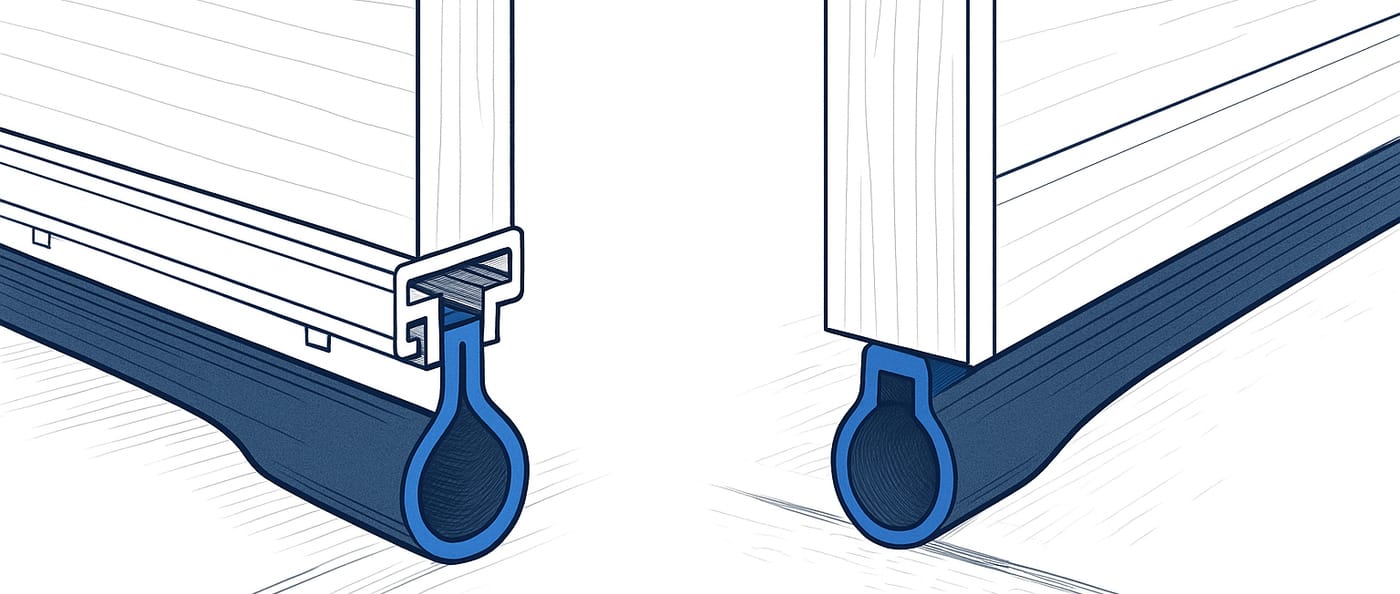
There are more seal types than most homeowners expect, and matching the right profile matters more than the brand. The bottom seal is a rubber or vinyl strip that slides into a metal or PVC retainer on the door's bottom edge, most often a T-style or bead profile, with U-shaped and bulb profiles for doors that meet an uneven floor. The sides and top of the opening take weatherstripping: a stop molding with a flexible flap that presses against the door face when it closes. Where water is the real problem, a threshold seal glues to the concrete itself and gives the bottom seal something to compress against. And when the retainer holding the bottom seal is bent, corroded, or was never the right one for the door, we replace it rather than forcing a generic seal into it. We carry the common profiles on the truck and match what your door was designed to hold.
Winnipeg is hard on seals in a specific way: cold. Budget vinyl stiffens as the temperature drops, and somewhere past minus twenty it stops flexing, which means it stops sealing in exactly the weather you bought it for. Worse, a stiff or flattened bottom seal lets meltwater from the car pool at the threshold, and that water freezing overnight is how doors end up frozen to the floor, straining the opener the next morning. Cold-rated rubber stays pliable through the deep freeze, keeps contact with the floor all winter, and releases ice more easily. The difference in part cost is small; the difference in February is not.
Seals are consumables. A few years of cycling, UV, road salt, and freeze-thaw is a normal life for a bottom seal, and hard winters shorten it. We inspect all four sides plus the retainer and the floor on every seal call, quote in writing, and in most cases replace everything the same visit from stock on the truck. It's also natural add-on work: if we're already out for a tune-up or a repair, new seals add little to the visit. And if the reason the door won't seal is the door itself (sagging sections, a rusted-through bottom panel, gaps no rubber can bridge), we'll say so and lay out what a new door would look like instead of selling seals that can't fix steel.
Signs You Need This Service
- Daylight visible under or around the door when it's fully closed
- Snow drifting into the garage along the bottom or the corners after a windy night
- Meltwater or rain creeping under the door and pooling on the floor
- Door keeps freezing to the floor in cold snaps
- Cold drafts making a heated garage expensive to keep warm
- Mouse droppings inside, or chewed corners on the bottom seal every fall
- Bottom rubber visibly cracked, flattened, or torn; side flaps stiff or broken off
How It Works
Step 1: Call or text, or add it to a visit we're already making for a tune-up or another repair
Step 2: Free on-site inspection: all four sides of the opening, bottom seal and retainer, side and top weatherstripping, and how the door meets the floor
Step 3: Firm written quote covering seals, any retainer or threshold work, and labor
Step 4: Common seal profiles ride on the truck, so most replacements happen the same visit
Step 5: We close the door on the new seals and check for light, gaps, and even contact with the floor before we leave
Common Questions
How often do garage door seals need replacing?
- Every few years is normal for a bottom seal, and that's by design: the seal is the cheap, sacrificial part that wears so the door doesn't. Sun exposure, road salt, freeze-thaw, and how often the door cycles all move the timeline. The practical answer is to replace seals when they stop doing the job: daylight underneath, cracks or flattened sections in the rubber, or a side flap that's gone stiff. An annual tune-up includes a seal inspection, which is how most of our seal replacements get caught before the snow finds the gap first.
My door keeps freezing to the floor. Will a new seal fix it?
- Usually it helps a lot. Doors freeze down when water sits at the threshold and the seal either sits in it or has flattened enough to let it pool. A fresh cold-rated rubber seal sheds water better and releases ice more easily, and a threshold seal changes the geometry so meltwater drains away from the door line instead of under it. Two habits finish the job: clear snow away from the door line before it melts, and hit the bottom seal with a silicone spray a couple of times each winter so ice can't get a grip. If the door does freeze down, don't run the opener; our frozen door guide covers how to free it safely.
What's the difference between vinyl and rubber seals?
- Temperature range, mostly. Vinyl is cheaper and fine in mild climates, but it stiffens as the temperature drops and can crack or simply stop flexing in a Winnipeg cold snap, which means it stops sealing in exactly the weather that matters. Rubber compounds rated for cold stay pliable through the deep freeze. The price difference per door is small, so cold-rated rubber is what we install unless there's a specific reason not to.
Can you just replace the bottom seal, or do I need all four sides?
- We replace exactly what's worn. The bottom seal usually goes first because it takes the compression, the water, and the salt, so bottom-only calls are common. But the side and top weatherstripping is often original to the door and just as old, and if it's brittle we'd rather tell you while we're standing there than have you call us back in January. The quote is itemized either way, and you pick.
Will new seals keep mice out?
- It closes the entrance they use most. A mouse can squeeze through a gap about the width of a pencil, and a chewed or flattened corner on the bottom seal is the most common way they get into a garage in the fall. Fresh seals with intact corners, plus side stripping that actually meets the door, take away the easy route. Rodent-resistant bottom seals exist for garages with a recurring problem. What seals can't fix is a gap somewhere else in the structure, so if we spot daylight where rubber can't reach, we'll point it out.
My garage floor is uneven or cracked. Is there a seal for that?
- Yes, two options. A larger U-shaped bottom seal gives more rubber to compress into dips and follow a wavy floor line. Where the slope or a settled slab sends water toward the door, a threshold seal glued to the concrete raises a small ramp for the door to close against, which handles the gap and the drainage at the same time. If the slab is heaved or cracked badly enough that no seal geometry can close it, we'll be straight about that too; sometimes the right order is a concrete fix before the rubber.
Can I replace the seals myself?
- This is one of the more DIY-friendly jobs on a garage door, and we'll say that honestly. The catches are real but manageable: the new seal has to match your retainer's profile (T-style, bead, or U-shape, and the sizes look similar until one won't slide in), the old seal often tears or binds on the way out, and rubber installs far easier warm than cold, so it's a summer job or a heated-garage job. If you'd rather not wrestle it, we carry the common profiles on the truck and the labor is modest. The shortcut we'd steer you away from is stapling a flat strip to the bottom of the door: it holds water against the steel and rusts out the bottom edge. Our bottom seal guide and weatherstripping guide walk through both jobs.
Guides for this repair
Plain steps for what you can safely do yourself, and the signs that mean it's time to call.
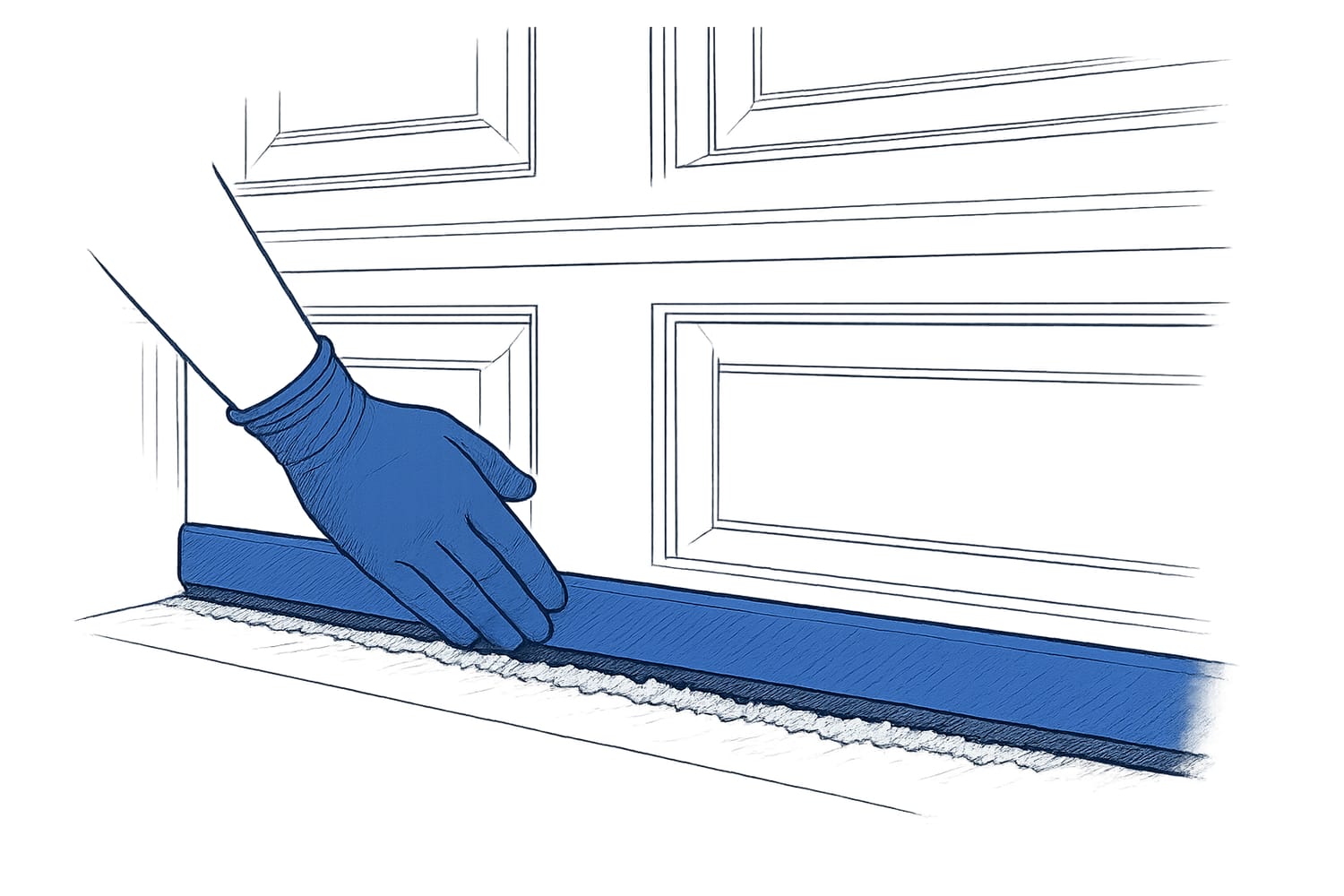 Garage Door Frozen to the Floor: How to Free It SafelyStop pressing the button. Pull the red release cord so the opener is out of the picture, warm the ice along the bottom edge with a hair dryer, and lift the door by hand. Silicone spray on the bottom seal and a cleared threshold keep it from happening again.Read the guide
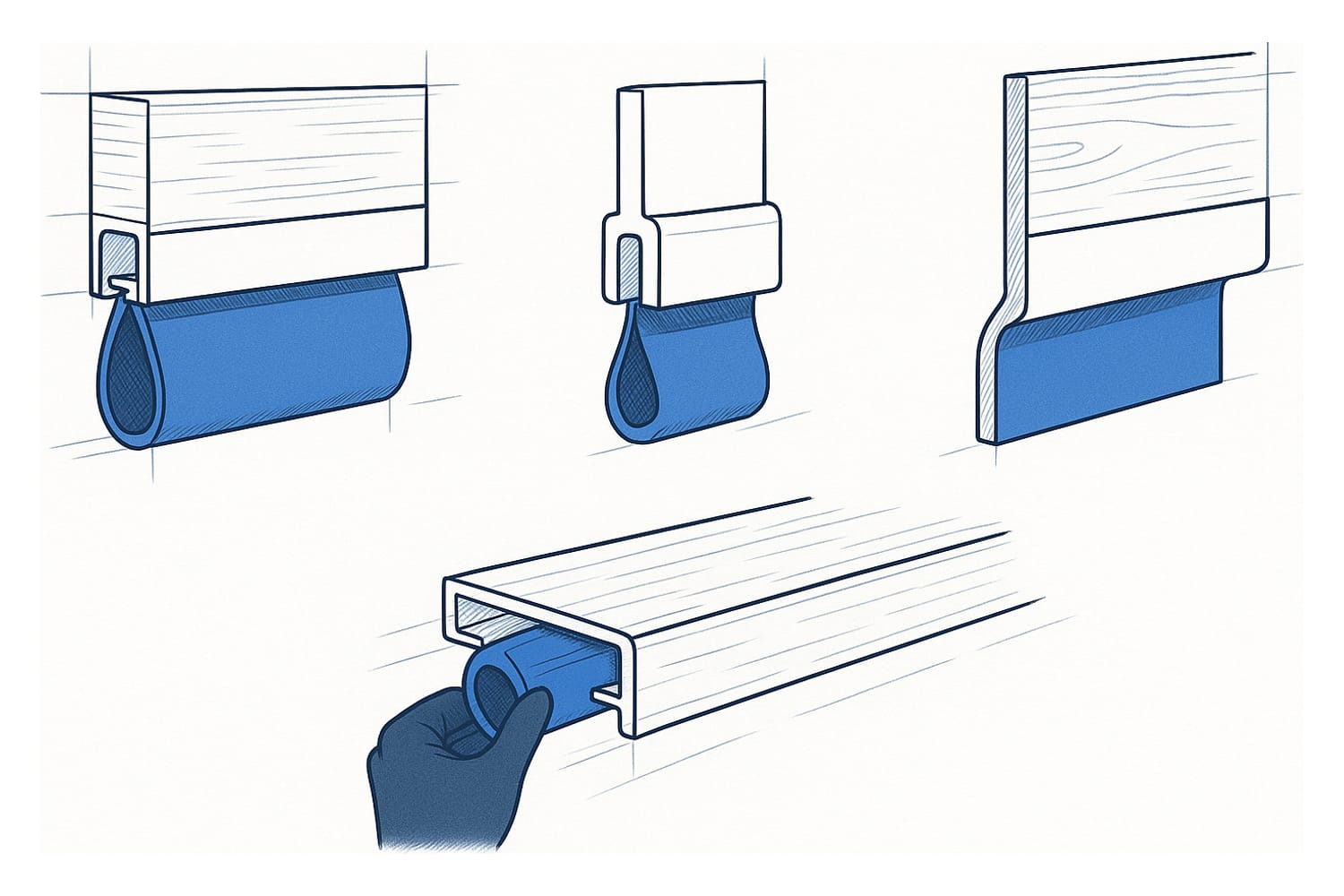 How to Replace a Garage Door Bottom SealMatch the new seal to your retainer (T-style, bead, J-style, or bulb) and buy it longer than the door, pull the old seal out of the retainer, spray the channel with soapy water, and slide the new one in. Trim the ends after it settles for a day.Read the guide
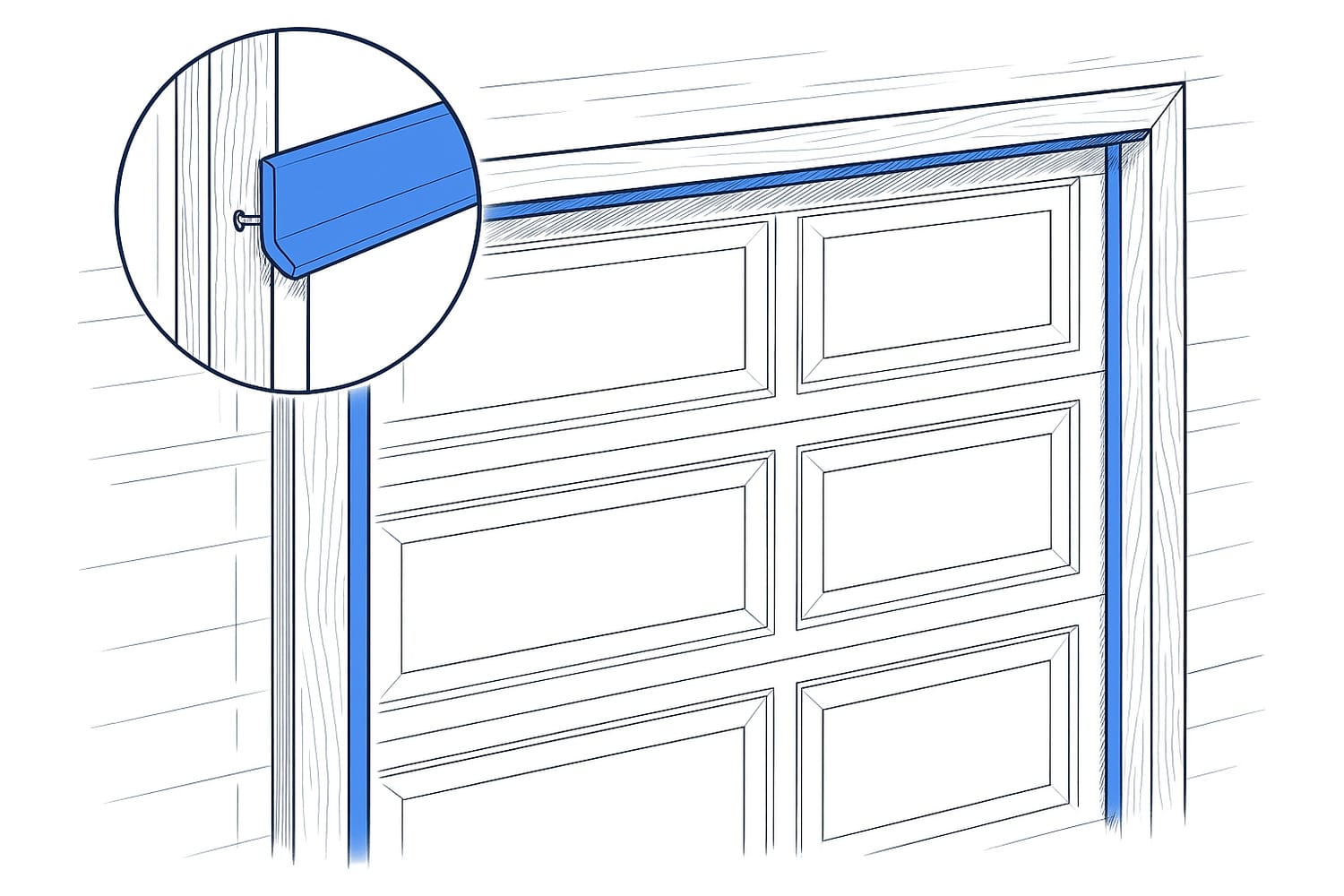 How to Replace Garage Door Weatherstripping (Sides and Top)Pry off the old stop moulding, cut new vinyl stop with a rubber flap to length, nail the top piece first and the sides last, and set the flap so it just touches the face of the closed door. It stops drafts, light, and blown snow at the edges of the door.Read the guide
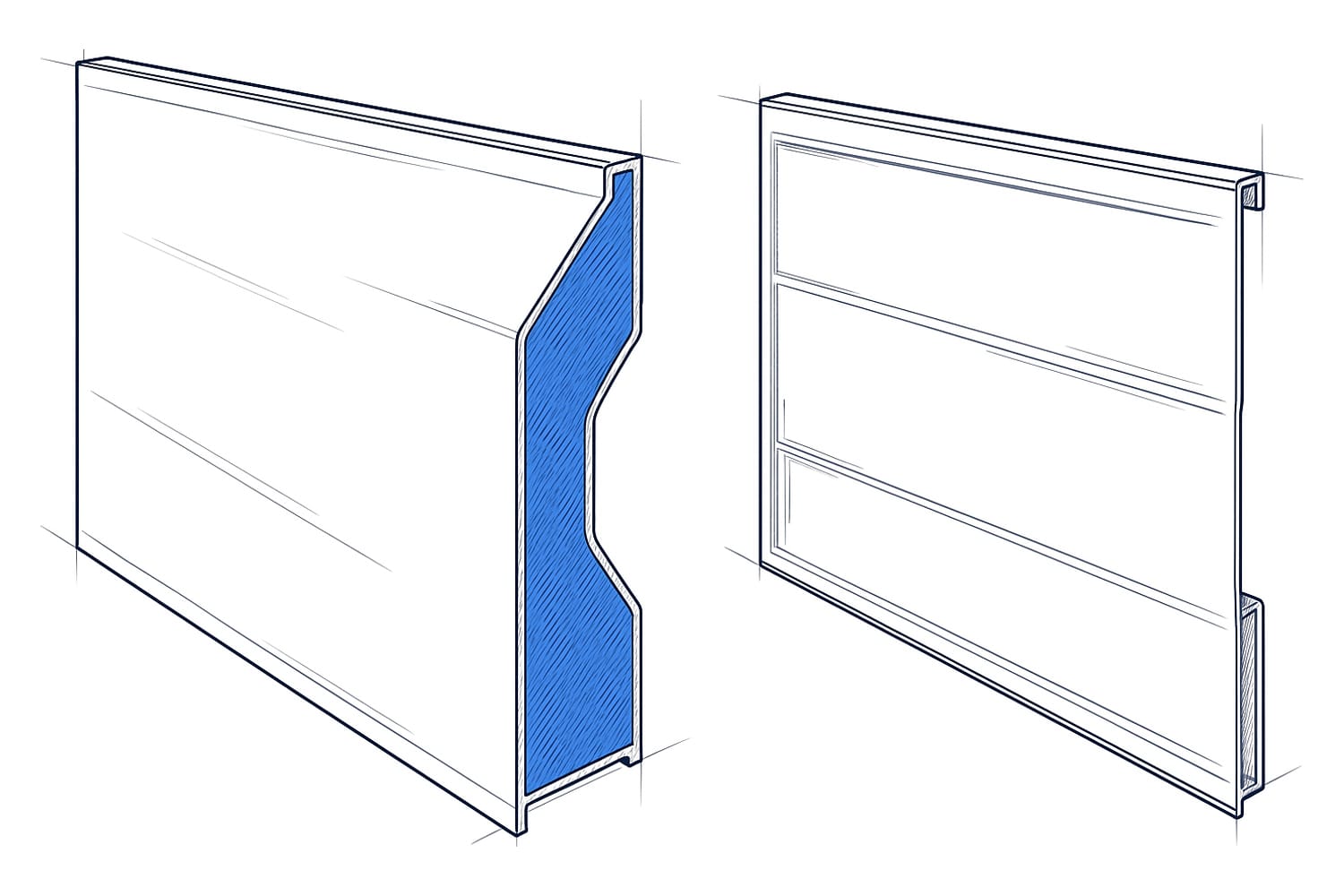 Garage Door Insulation and R-Value: What the Numbers Mean in WinnipegR-value measures how well the middle of a door section resists heat flow, and it's calculated, not tested. For a detached unheated garage, R-6 or less is fine. For an attached garage, aim for R-10 to R-12. For a heated garage or shop, R-16. The seals and the joints between sections matter as much as the number.Read the guide
Where we provide weather seal replacement
Same-day service across Winnipeg, plus the surrounding communities we cover within about an hour of our south Winnipeg base.
Ready to Book?
Same-day service across Winnipeg and nearby communities. Free on-site diagnosis on every residential repair.