
Garage Door Guides
Plain steps for the jobs most people can handle themselves, and straight answers about the ones they shouldn't. Written by the people who fix these doors in Winnipeg every day.
Openers
Programming remotes, keypads, and car buttons, fixing the sensors, reading the flashing lights, and getting the door open when the power is out.
Choose your opener brand
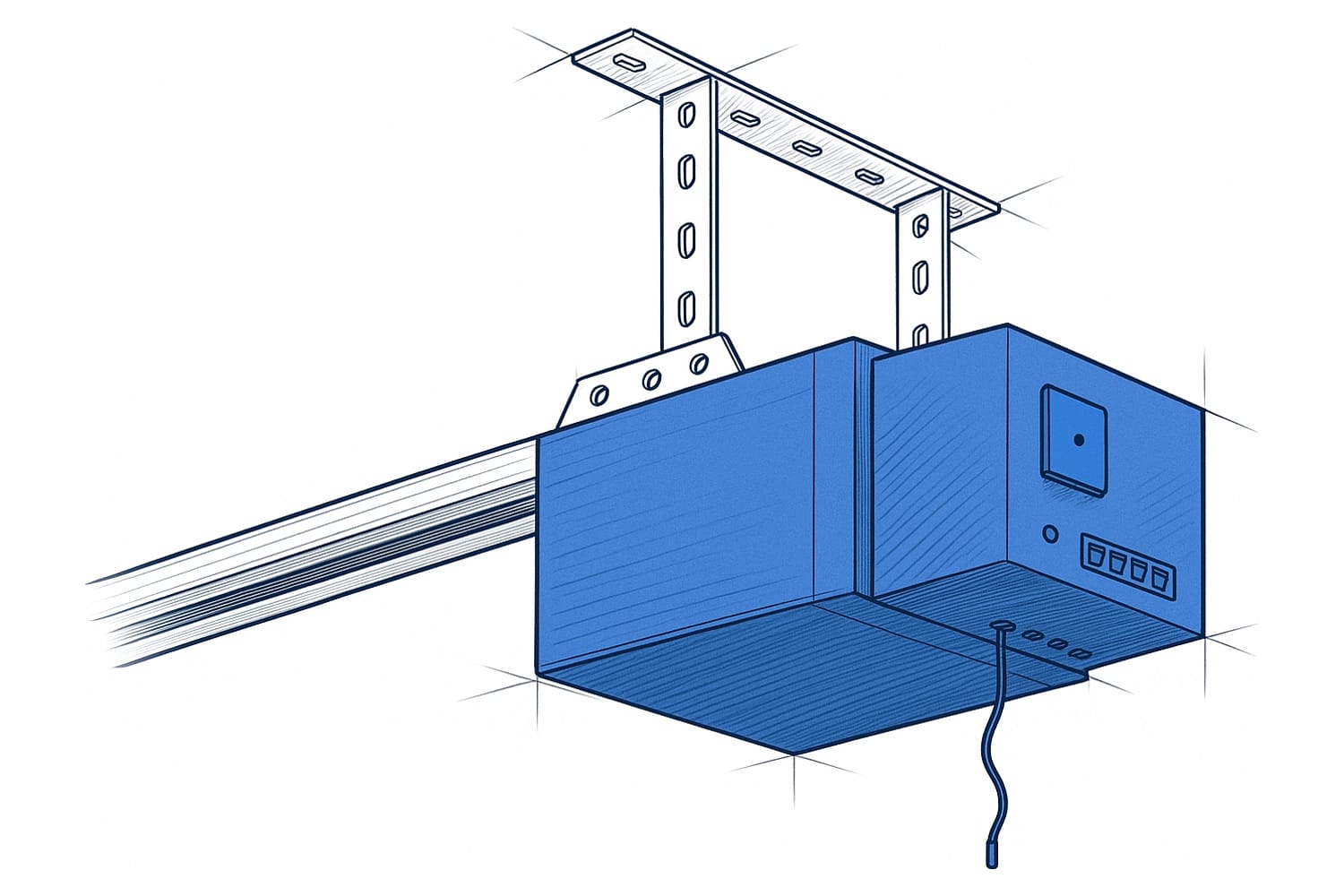
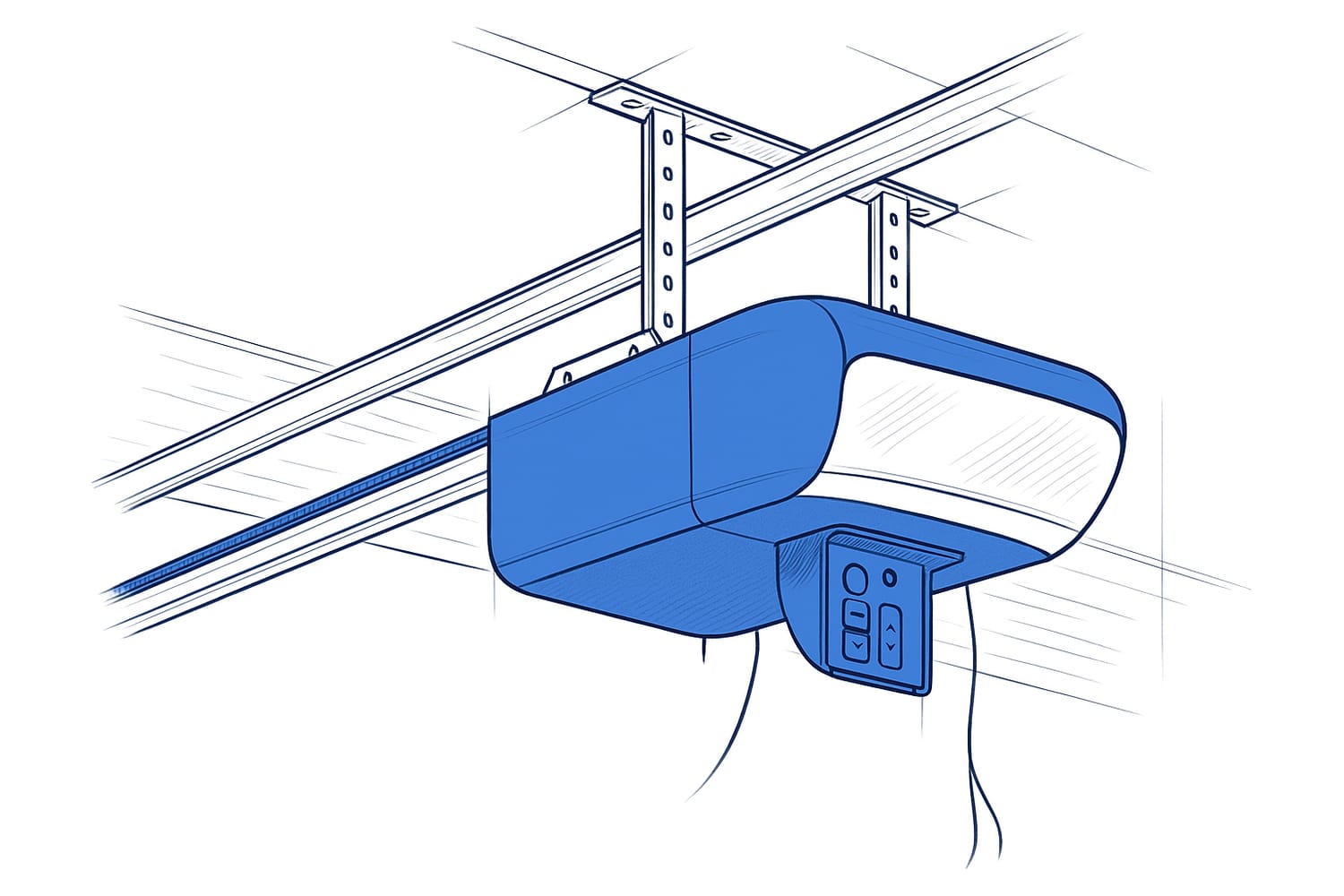
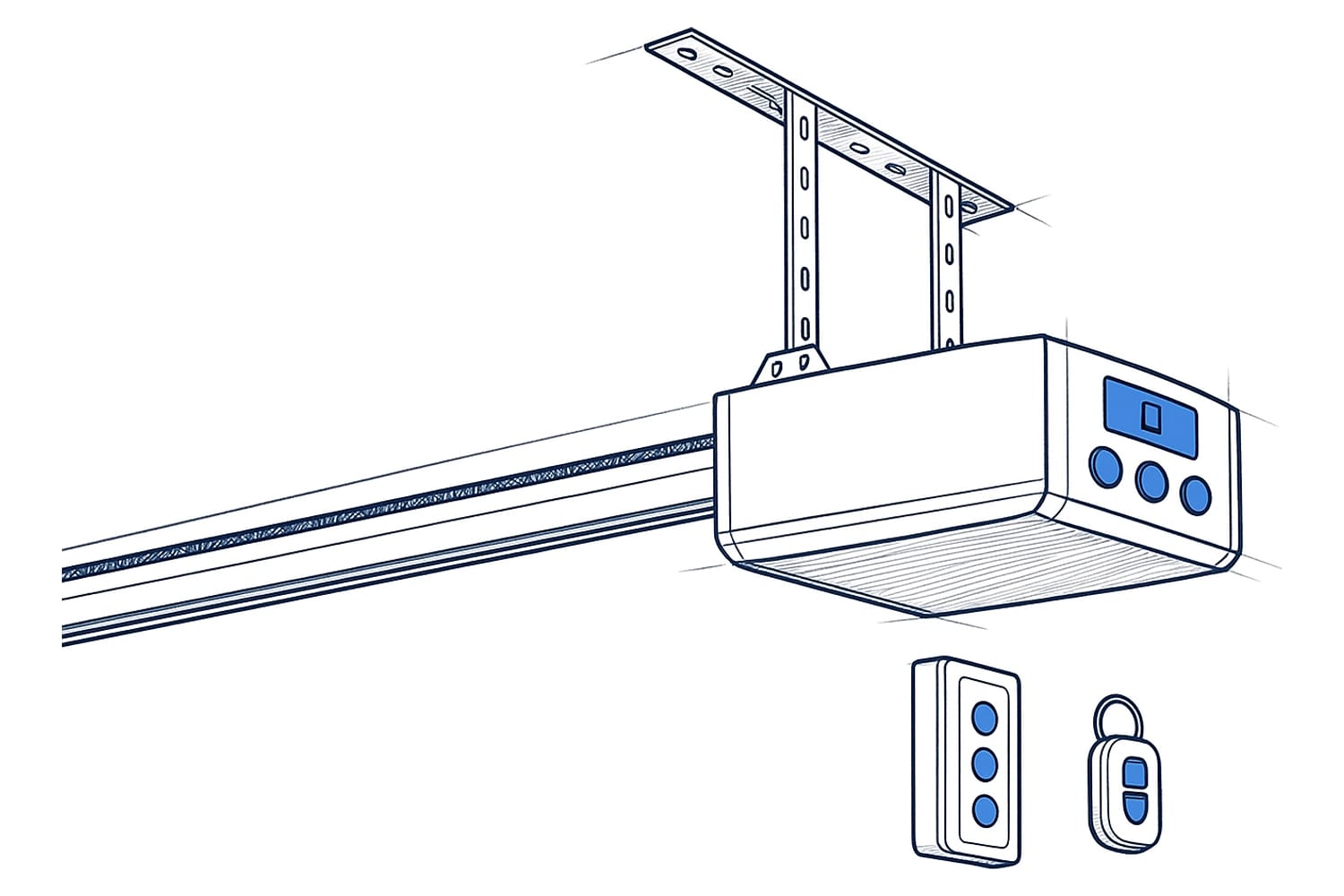
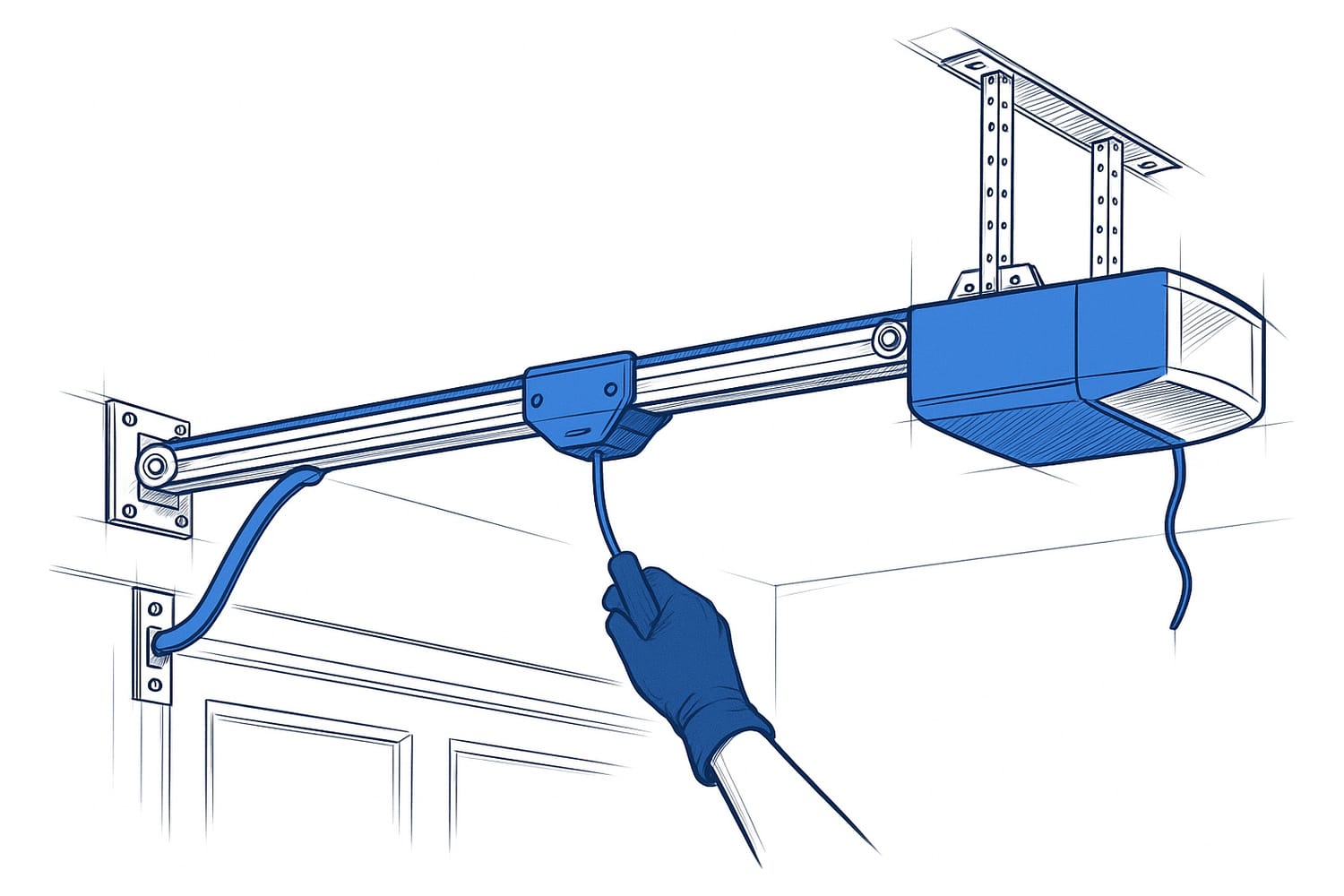
Check the label on the motor unit on your garage ceiling. The brand on the opener matters more than the brand on the remote.
Springs and cables
How to tell what's broken and what to leave alone. Springs and cables are under serious tension, so these guides explain and identify rather than instruct.
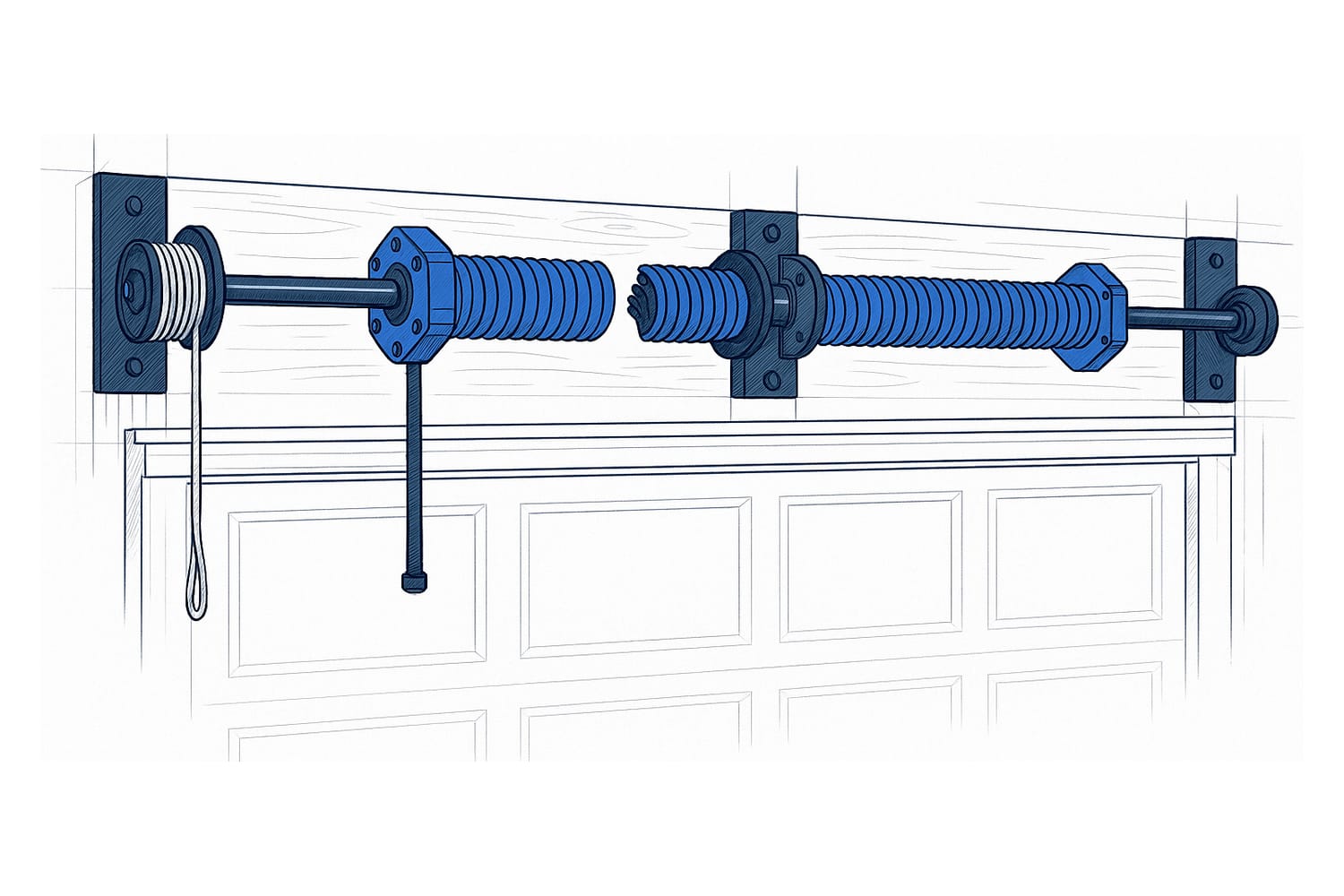 Is My Garage Door Spring Broken? The Signs, and What to Do NextA loud bang from the garage, a door that's suddenly too heavy to lift, an opener that raises the door a few inches and stops, a visible gap in the spring coil, or slack cables all point to a broken spring. Leave the door closed, don't run the opener, and book a spring repair.Read the guide
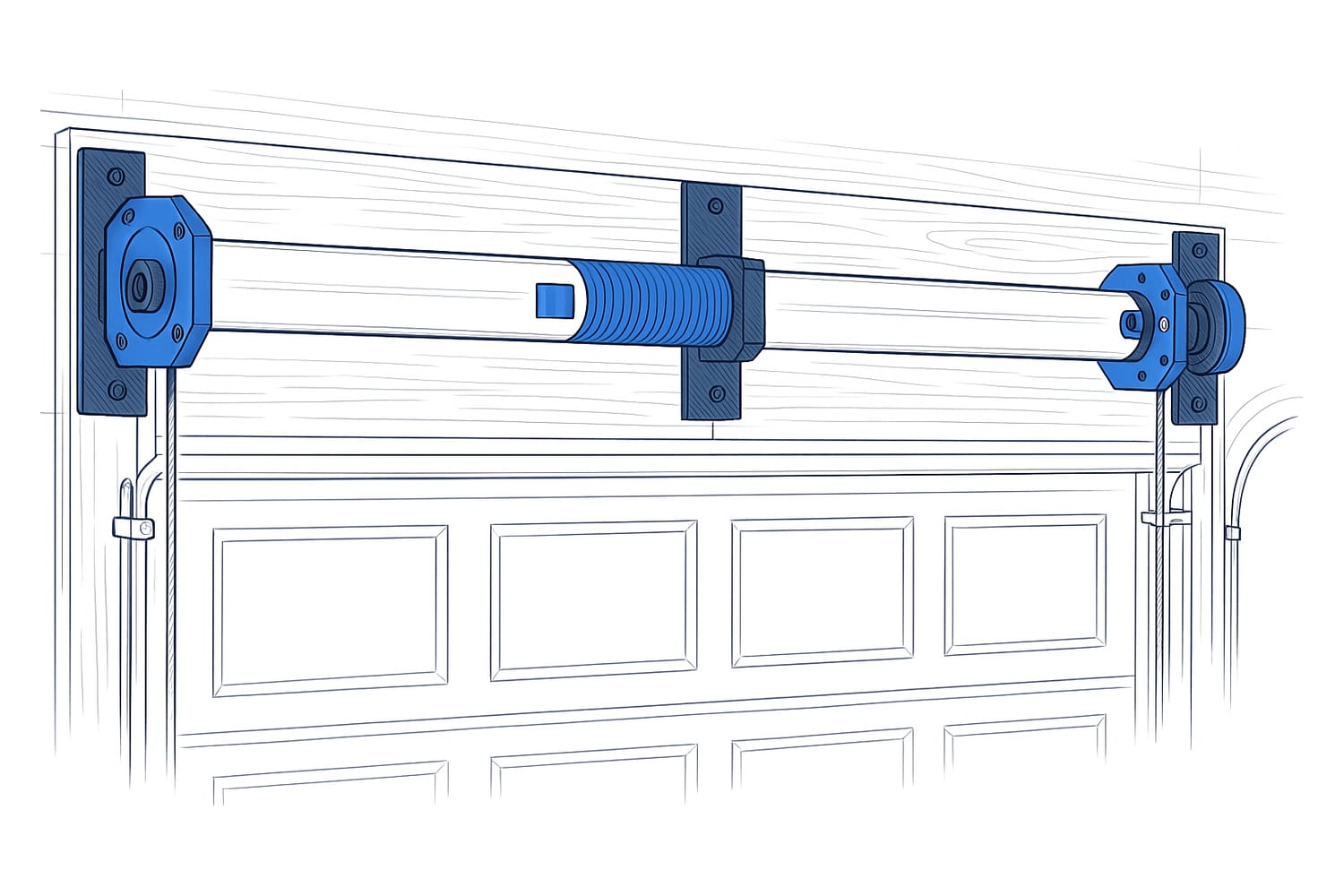 Wayne Dalton TorqueMaster Springs: What They Are and What to Do When One BreaksTorqueMaster is Wayne Dalton's spring system with the springs sealed inside the tube above the door. When one breaks you can't see it, but the door turns to dead weight and the opener stops after a few inches. We normally replace the system with standard torsion springs, which are easier to service for the rest of the door's life.Read the guide
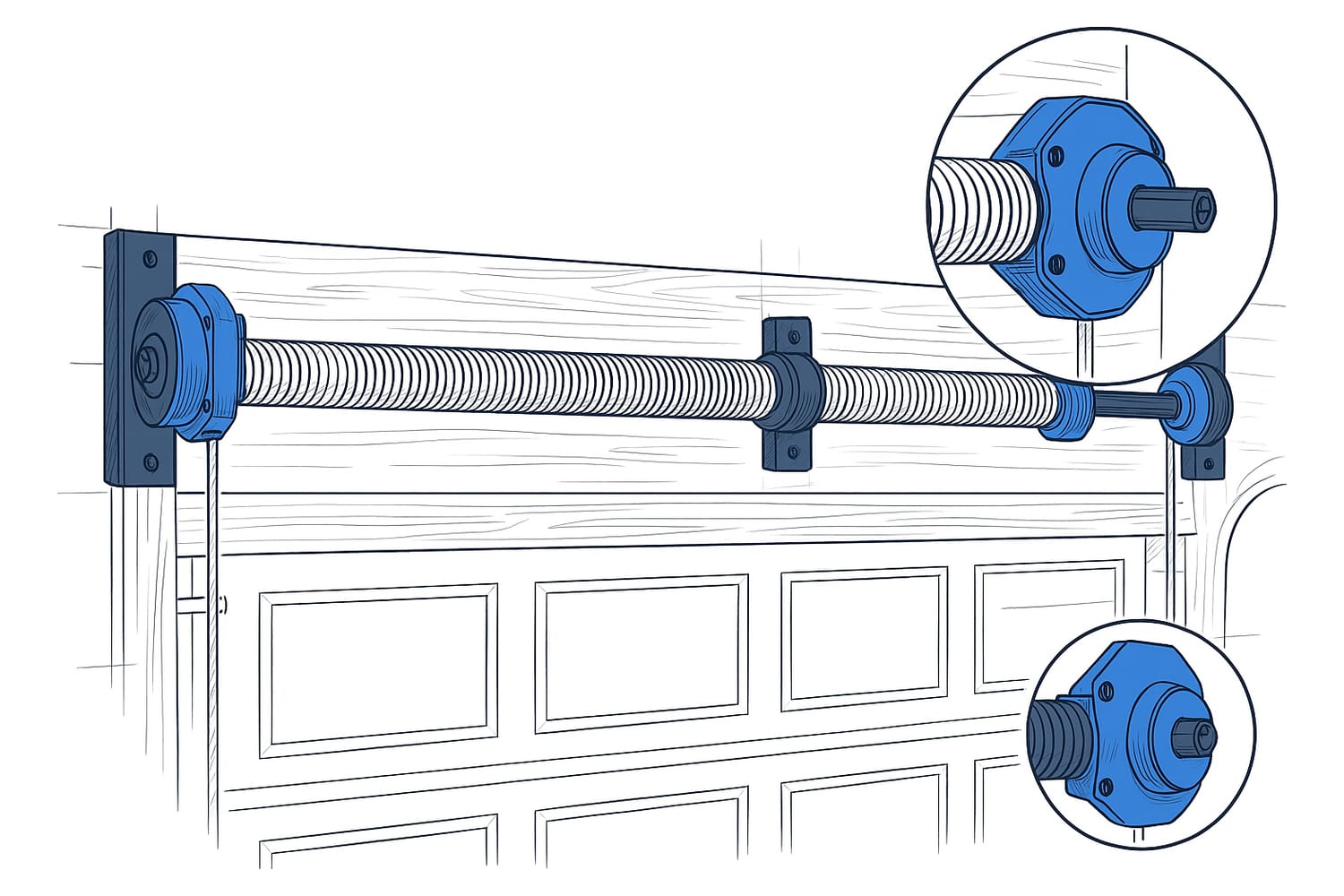 Clopay EZ-Set Torsion Springs: What They Are and What to Do When One BreaksEZ-Set is the spring system on many Clopay, Ideal, and Holmes doors. The springs sit above the door like standard torsion springs, but each is wound by a winder unit at the end of the shaft instead of at the centre. When one breaks, we normally convert the door to standard torsion springs rather than fit another EZ-Set spring.Read the guide
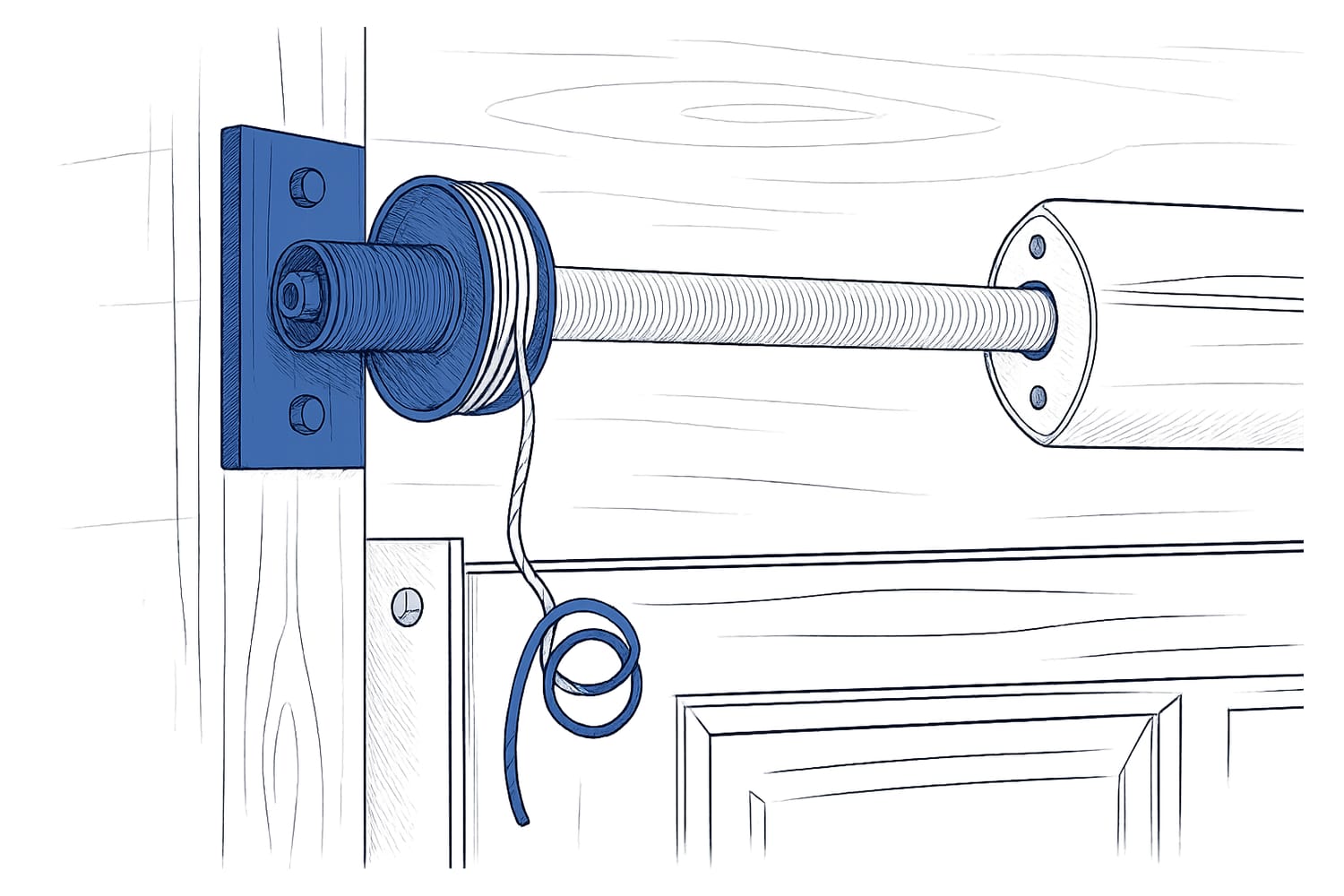 Garage Door Cable Off the Drum: What Happened and What to DoIf a lift cable is hanging loose, wound unevenly, or the door sits crooked with one side higher, a cable has come off its drum. Stop using the door, leave the opener alone, and don't pull the release cord with the door up. Re-seating a cable means releasing spring tension, which is a technician's job.Read the guide
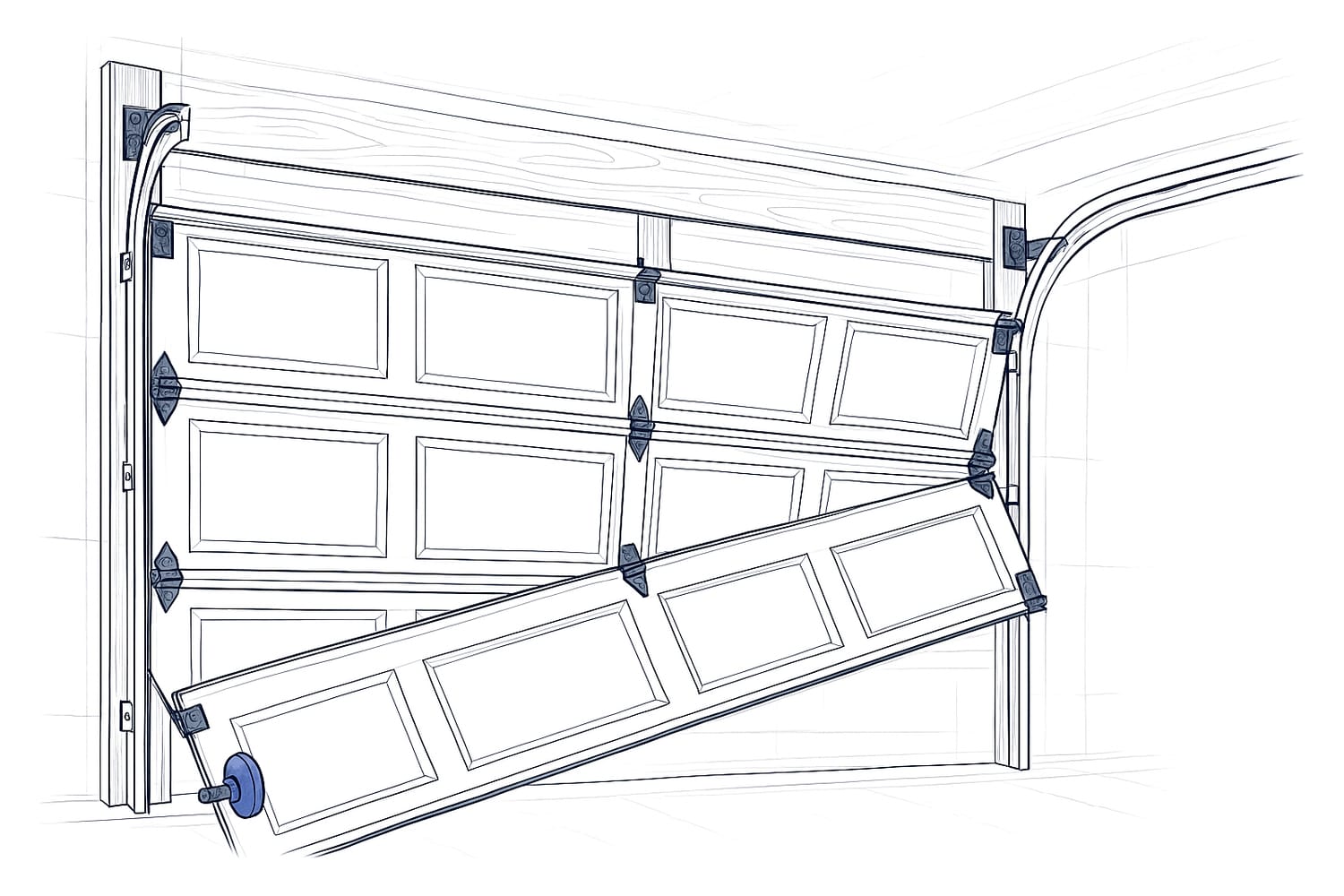 Garage Door Off Track: Causes, Dangers, and What Not to DoA door comes off its track when a roller leaves the rail: after a vehicle bump, a broken cable, worn rollers, bent or loose track, or being forced while frozen. The door is then heavy, crooked, and held by very little. Don't push it back, don't run the opener, and don't pull the release. Call.Read the guide
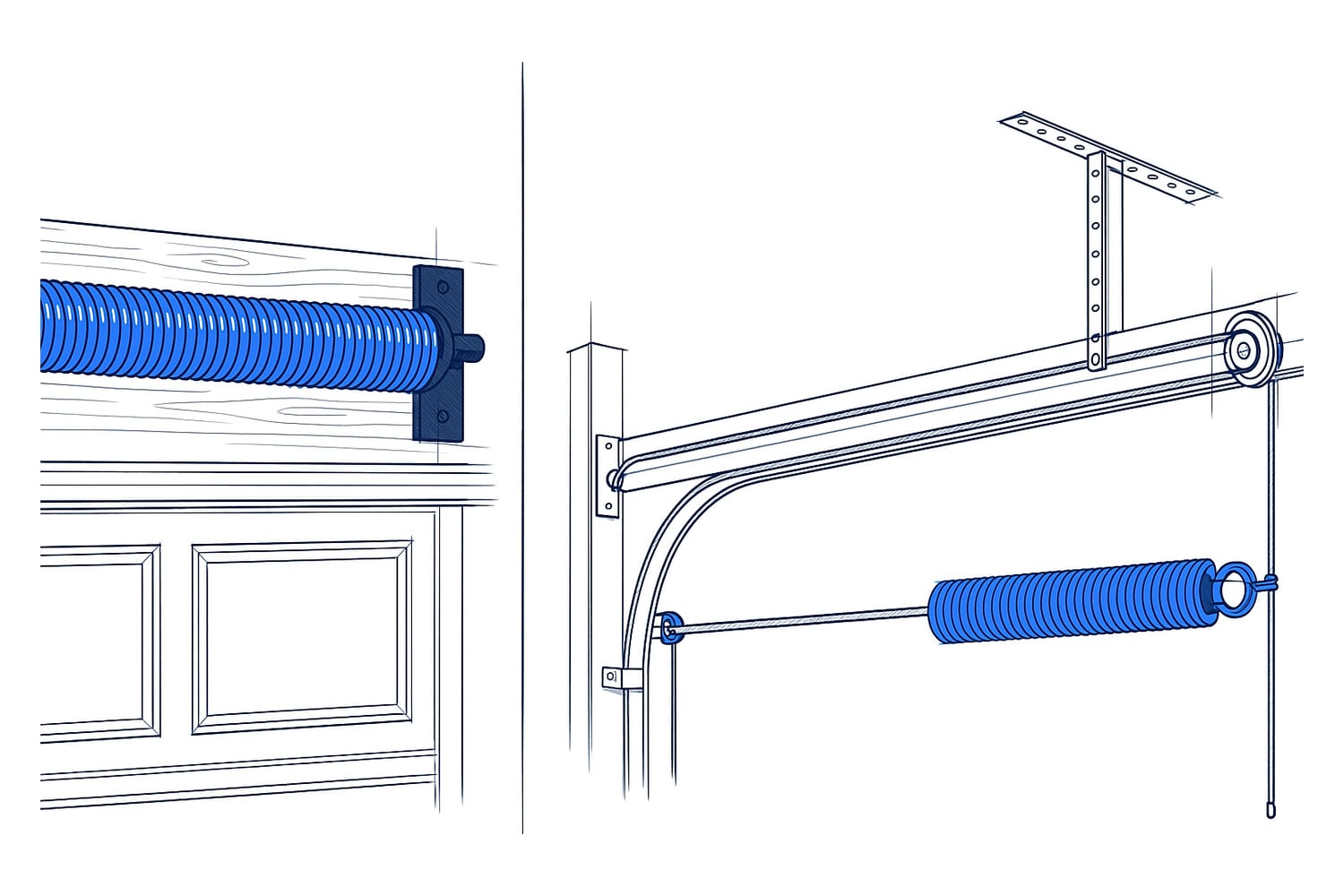 Torsion vs Extension Garage Door Springs: How to Tell Them Apart and Which Is SaferTorsion springs sit on a shaft above the door and twist to lift it. Extension springs run along the horizontal tracks on each side and stretch. Torsion is safer, lasts longer, and lifts more evenly, which is why we convert most extension doors when a spring goes. If you keep extension springs, they need a safety cable through each one.Read the guide
Seals and winter
Frozen doors, bottom seals, and weatherstripping. The jobs a Winnipeg winter hands you, and the ones you can do yourself.
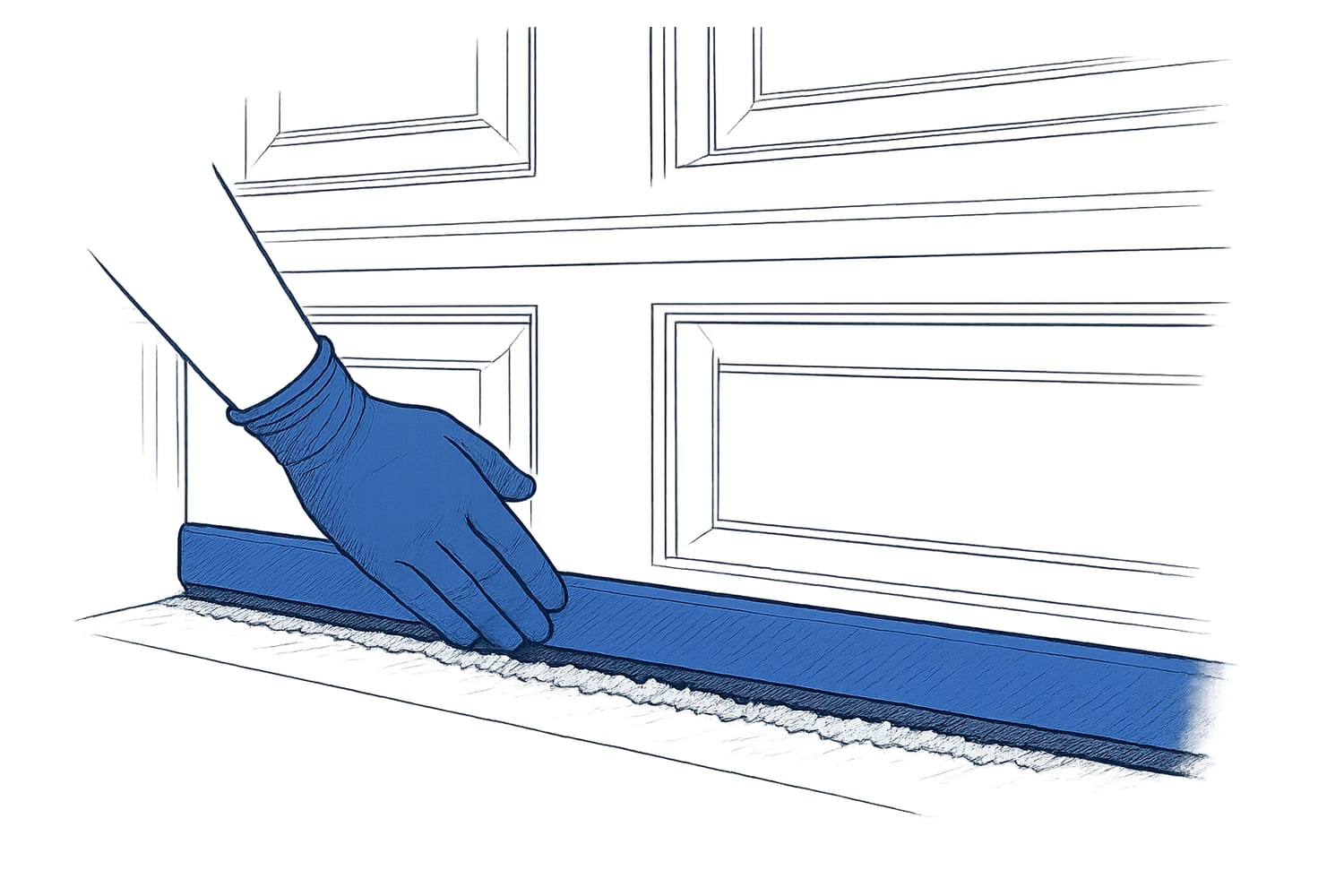 Garage Door Frozen to the Floor: How to Free It SafelyStop pressing the button. Pull the red release cord so the opener is out of the picture, warm the ice along the bottom edge with a hair dryer, and lift the door by hand. Silicone spray on the bottom seal and a cleared threshold keep it from happening again.Read the guide
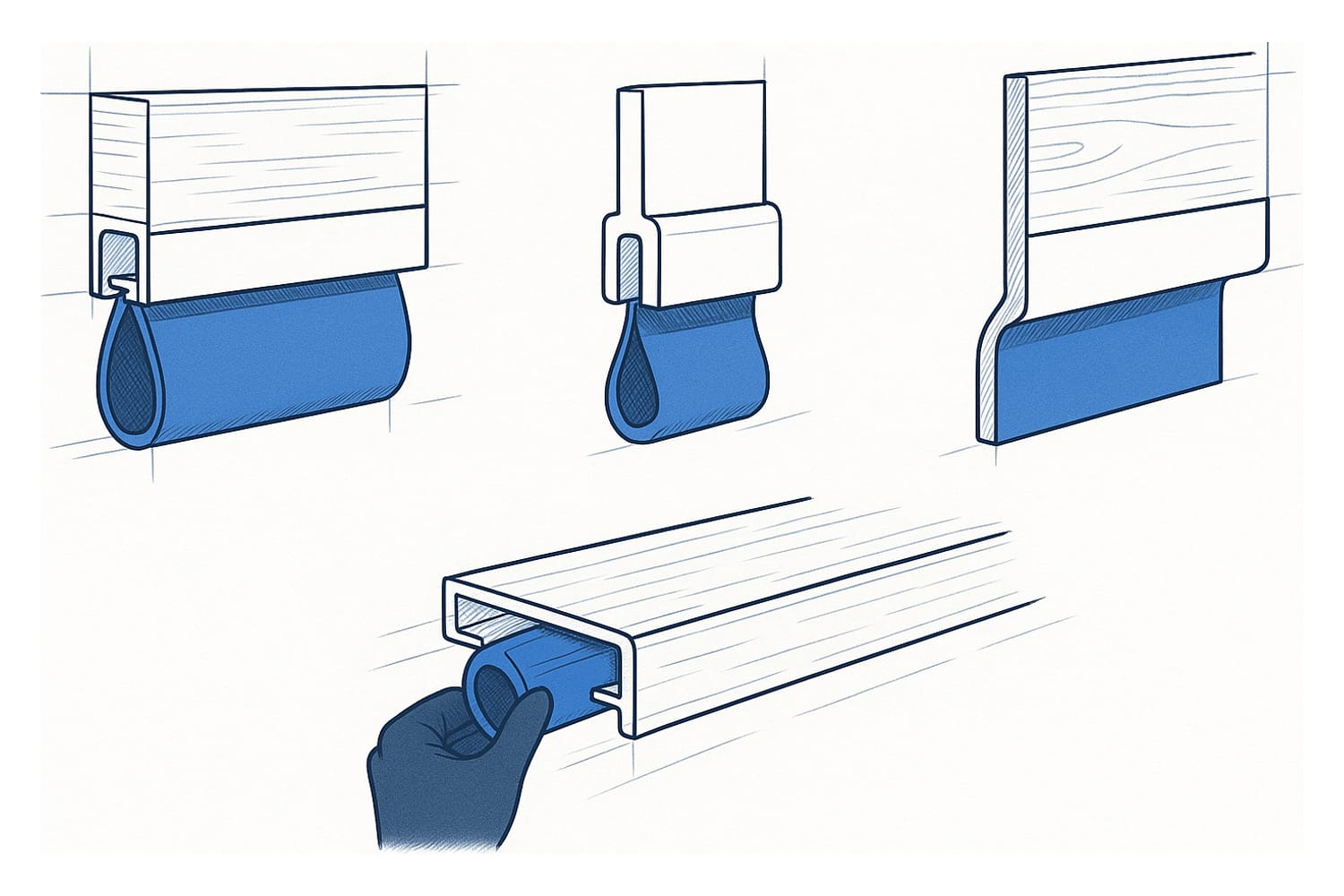 How to Replace a Garage Door Bottom SealMatch the new seal to your retainer (T-style, bead, J-style, or bulb) and buy it longer than the door, pull the old seal out of the retainer, spray the channel with soapy water, and slide the new one in. Trim the ends after it settles for a day.Read the guide
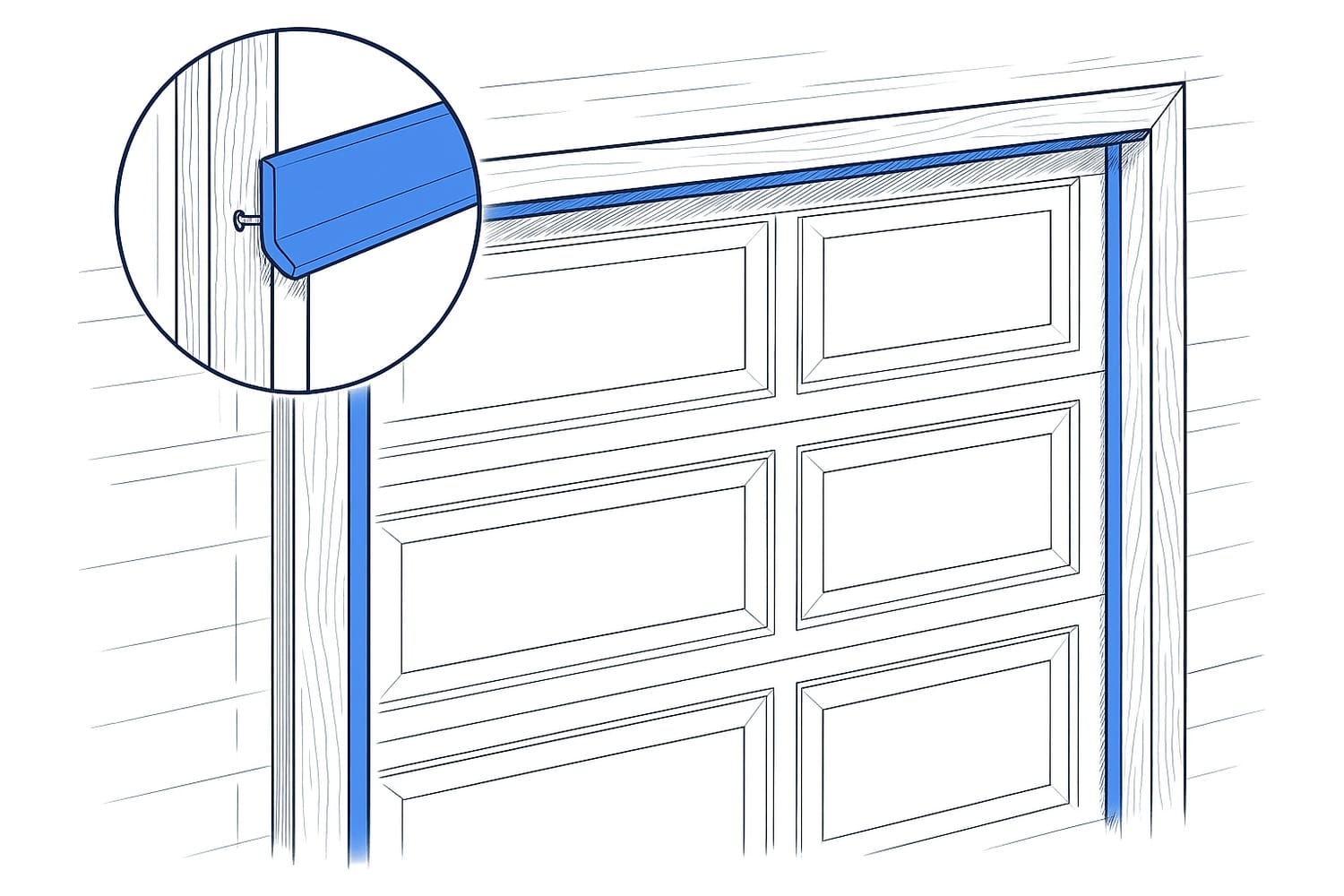 How to Replace Garage Door Weatherstripping (Sides and Top)Pry off the old stop moulding, cut new vinyl stop with a rubber flap to length, nail the top piece first and the sides last, and set the flap so it just touches the face of the closed door. It stops drafts, light, and blown snow at the edges of the door.Read the guide
Maintenance
Quick checks that catch a problem before it becomes an emergency call.
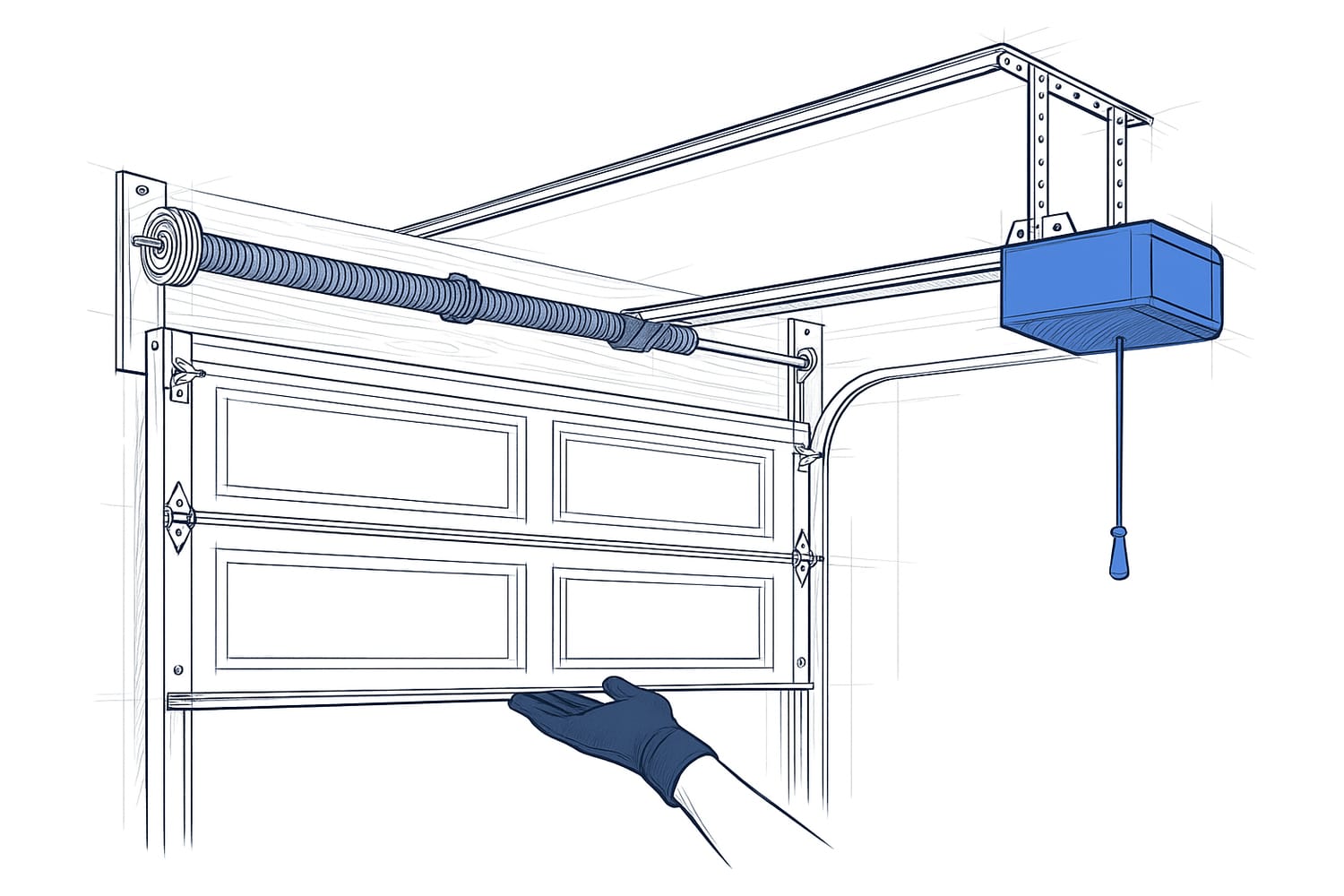 How to Test Your Garage Door's BalanceClose the door, pull the red release cord, lift the door by hand to about waist height, and let go. A balanced door stays put or drifts slowly. A door that drops or shoots up has a spring problem, and the opener has been covering for it.Read the guide
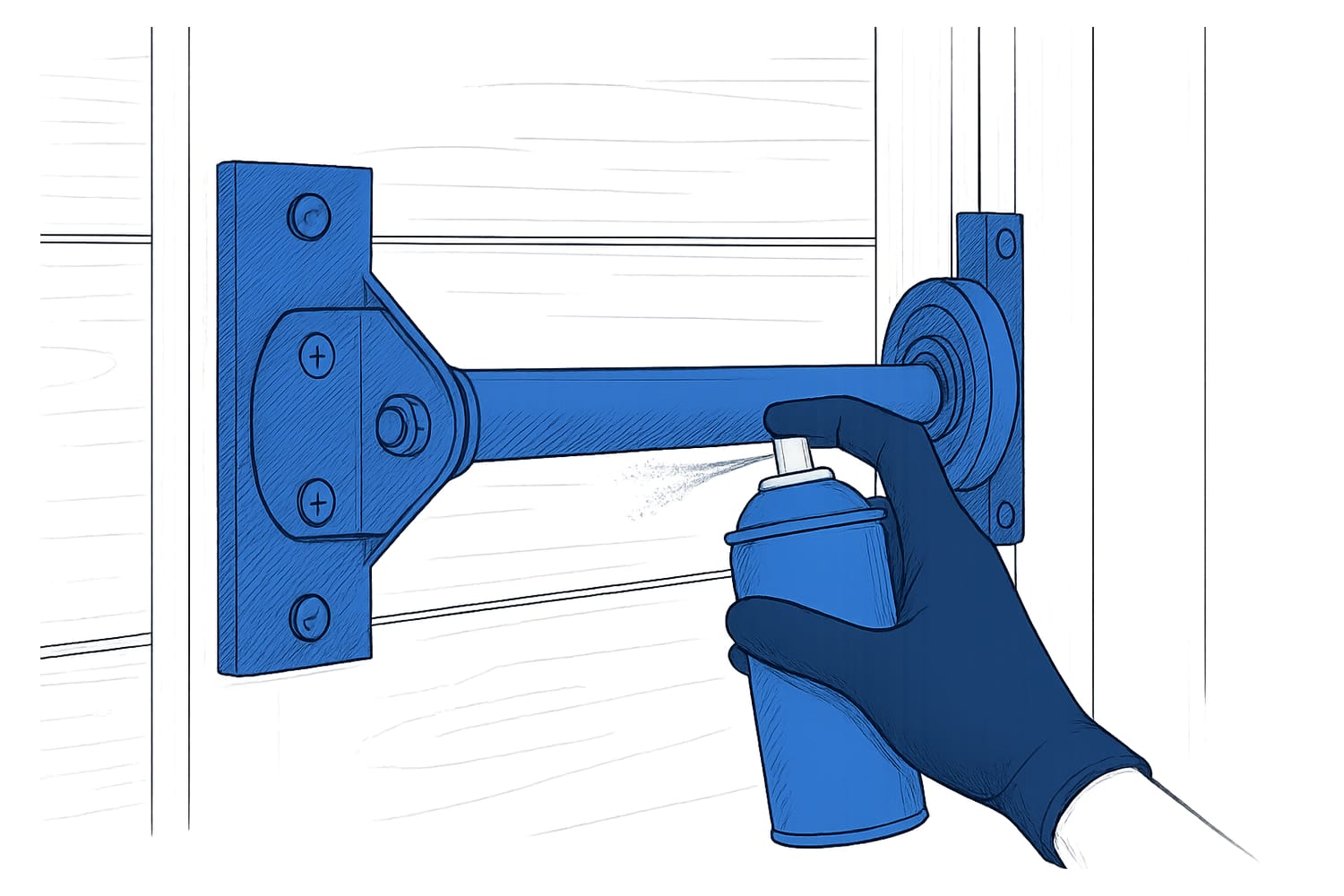 How to Lubricate a Garage Door (and What Not to Spray)Use a silicone spray or white lithium grease on the hinges, the bearings of steel rollers, the torsion spring coils, the bearing plates at each end of the spring shaft, and the lock. Keep it off the tracks and off nylon rollers. Twice a year is plenty for most homes.Read the guide
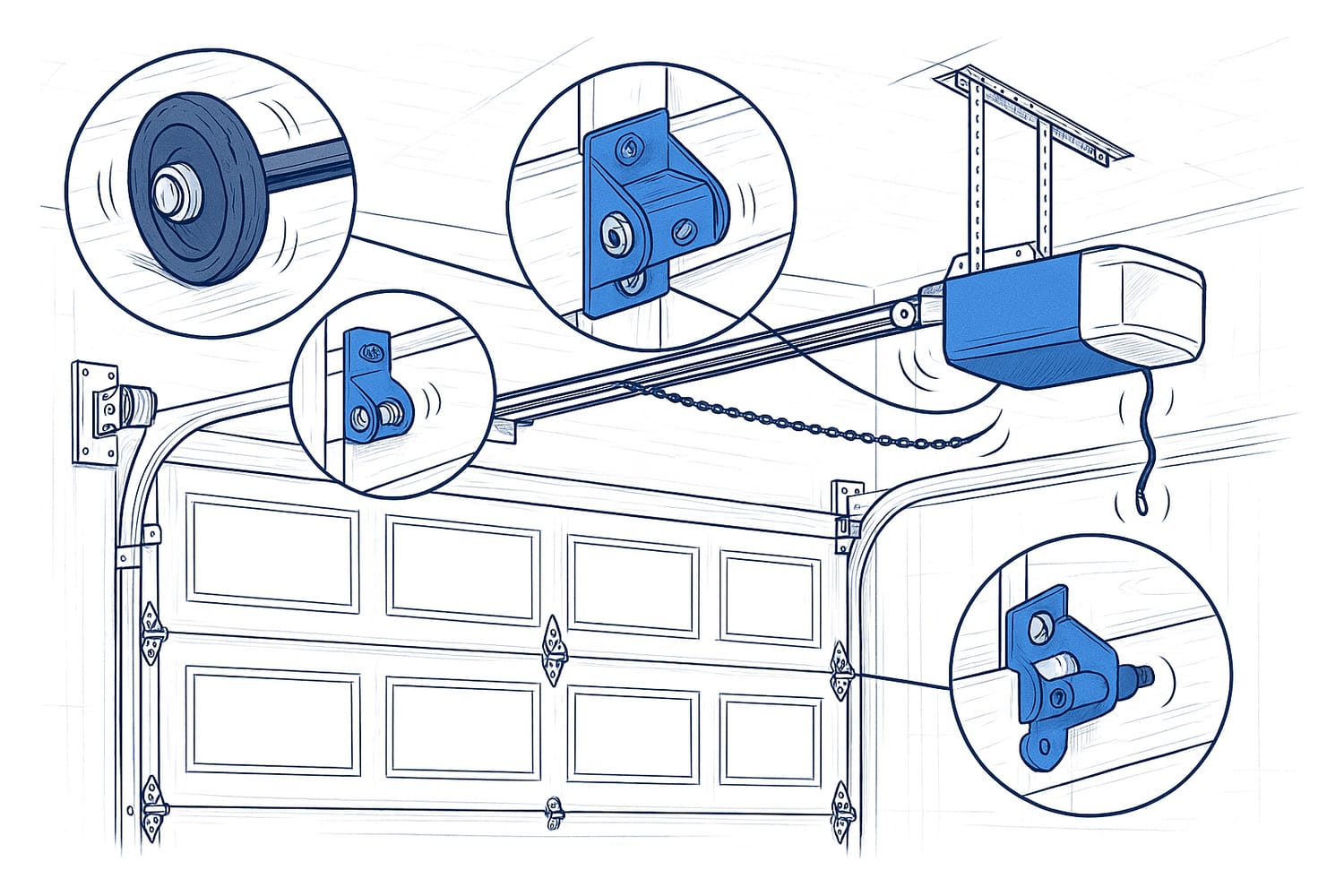 Why Is My Garage Door So Loud? Matching the Noise to the PartSqueaking and squealing usually means dry or worn rollers and hinges. Rattling is loose hardware or a slack opener chain. Grinding points at misaligned track or worn opener gears. A single loud bang is a spring breaking. Most noise is fixable in an hour, and some of it you can fix yourself.Read the guide
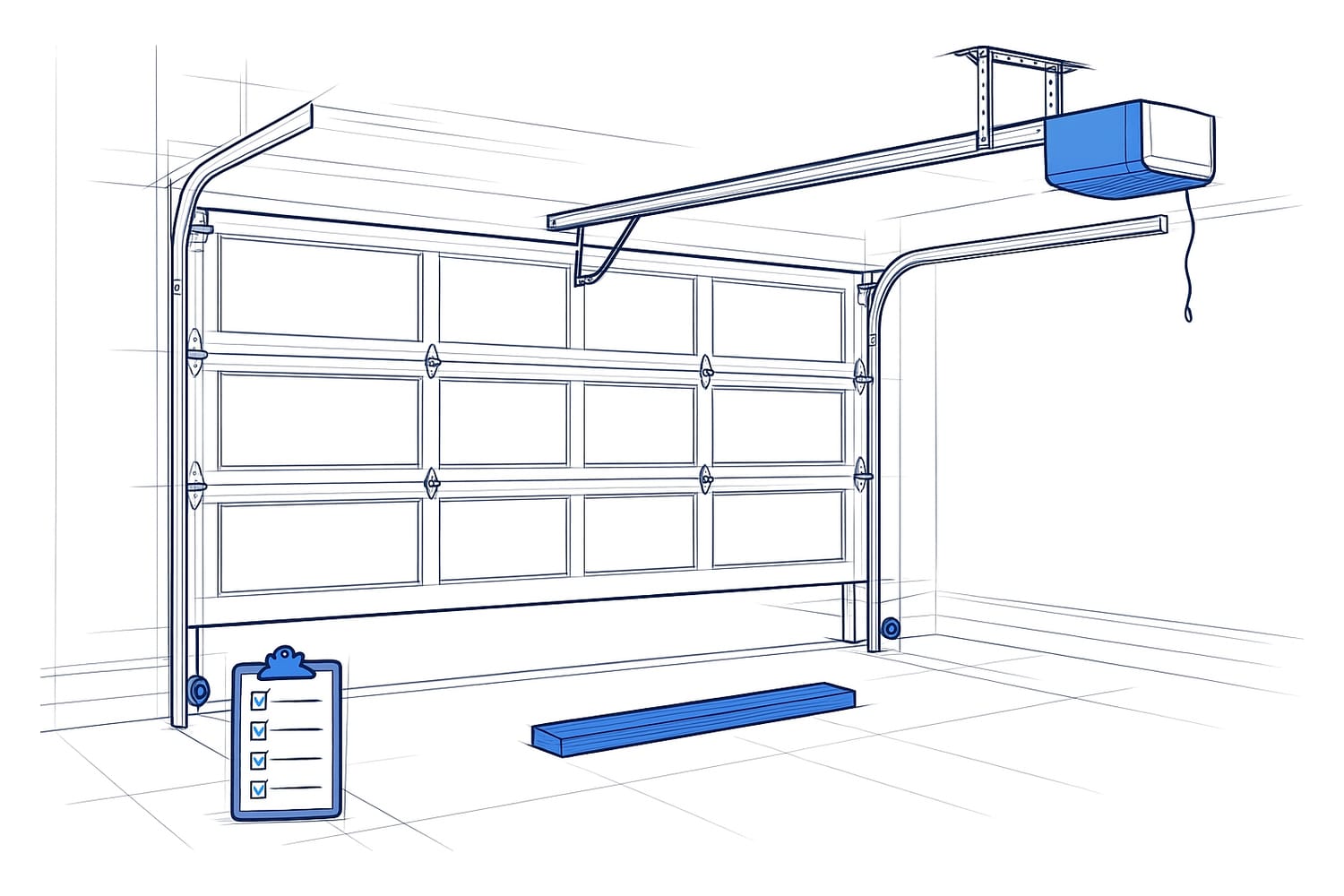 Garage Door Maintenance Checklist: Monthly, Twice a Year, and YearlyOnce a month: watch and listen to a full cycle, test the auto-reverse with a 2x4, and check the photo eyes. Twice a year: lubricate, test the balance, and look over the seals, cables, and rollers. Once a year: book a professional tune-up. The whole monthly check takes five minutes.Read the guide
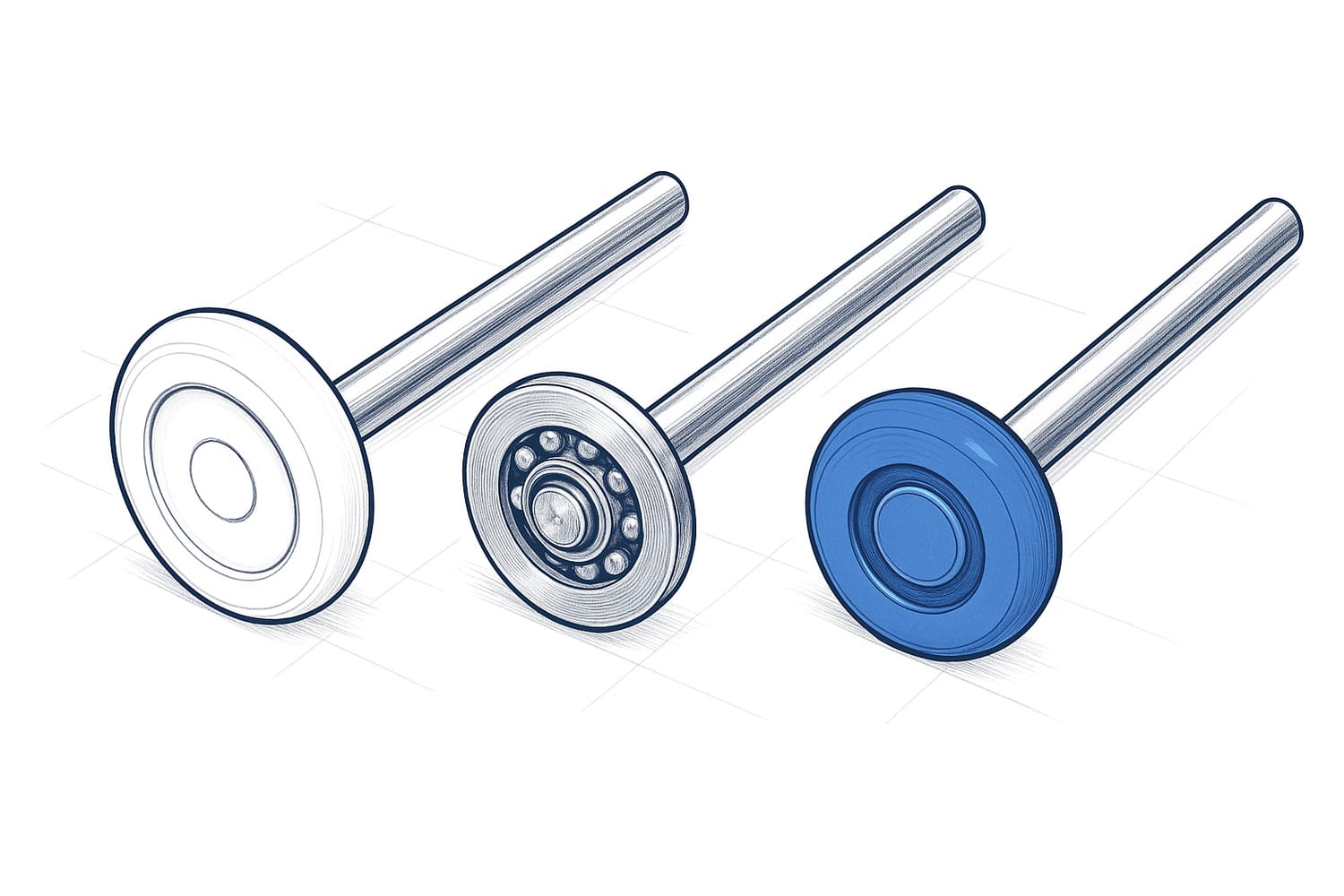 Garage Door Rollers: Types, Signs of Wear, and When to Replace ThemRollers are the wheels that carry the door along the track, one at every hinge. Builder-grade plastic rollers crack, steel rollers get loud and rust, and sealed-bearing nylon rollers run quietly for ten years or more. Cracks, chips, a roller that slides instead of turning, or squealing that lubrication doesn't fix all mean it's time for a set.Read the guide
Buying a new door
Measuring, insulation, and how to compare quotes when it's time for a new door.
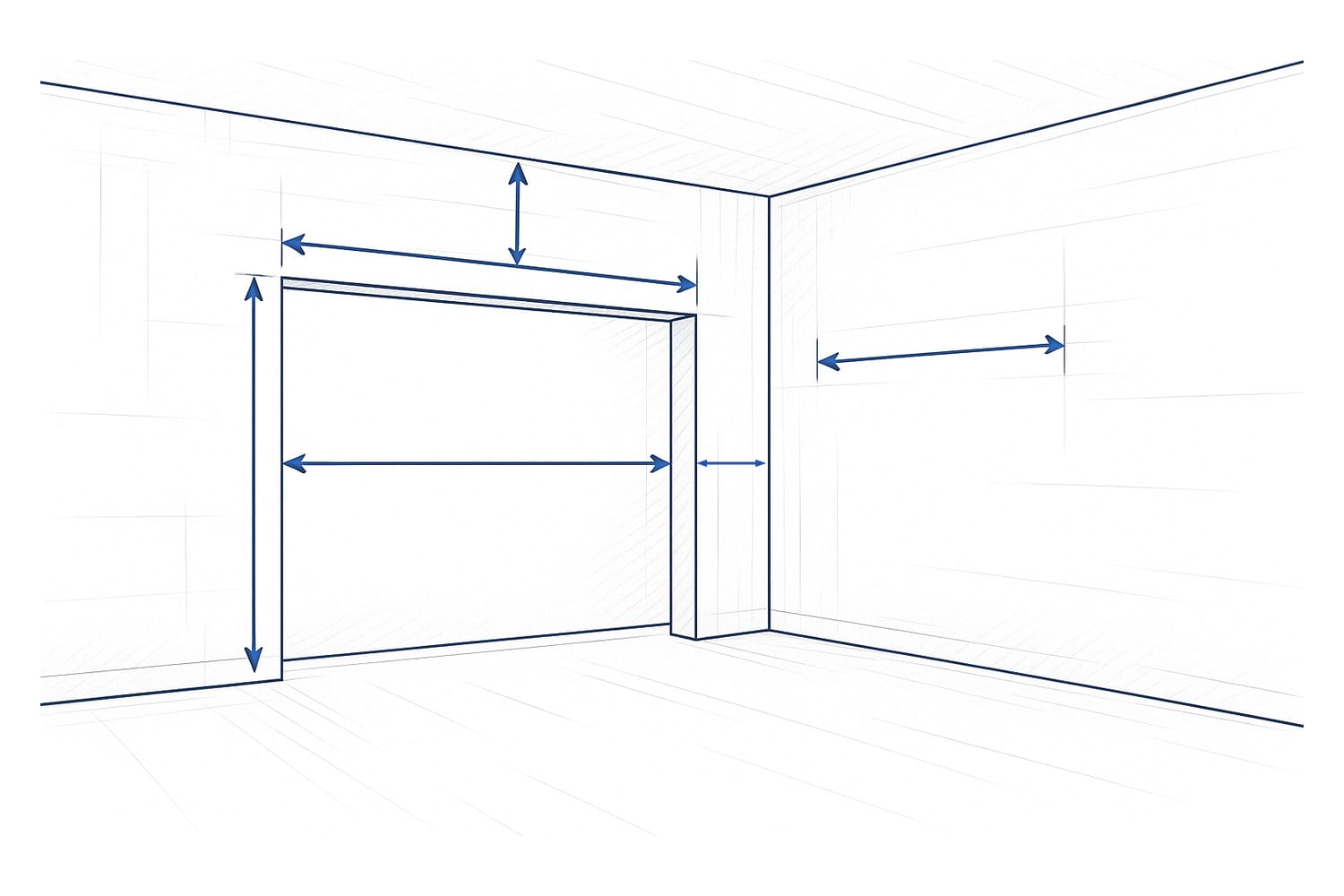 How to Measure for a New Garage DoorMeasure the opening's width and height in two places, then the headroom above it, the sideroom on each side, and the backroom into the garage. Those five numbers, plus a note of anything in the way, are what a quote is built on. We confirm every one on site before a door is ordered.Read the guide
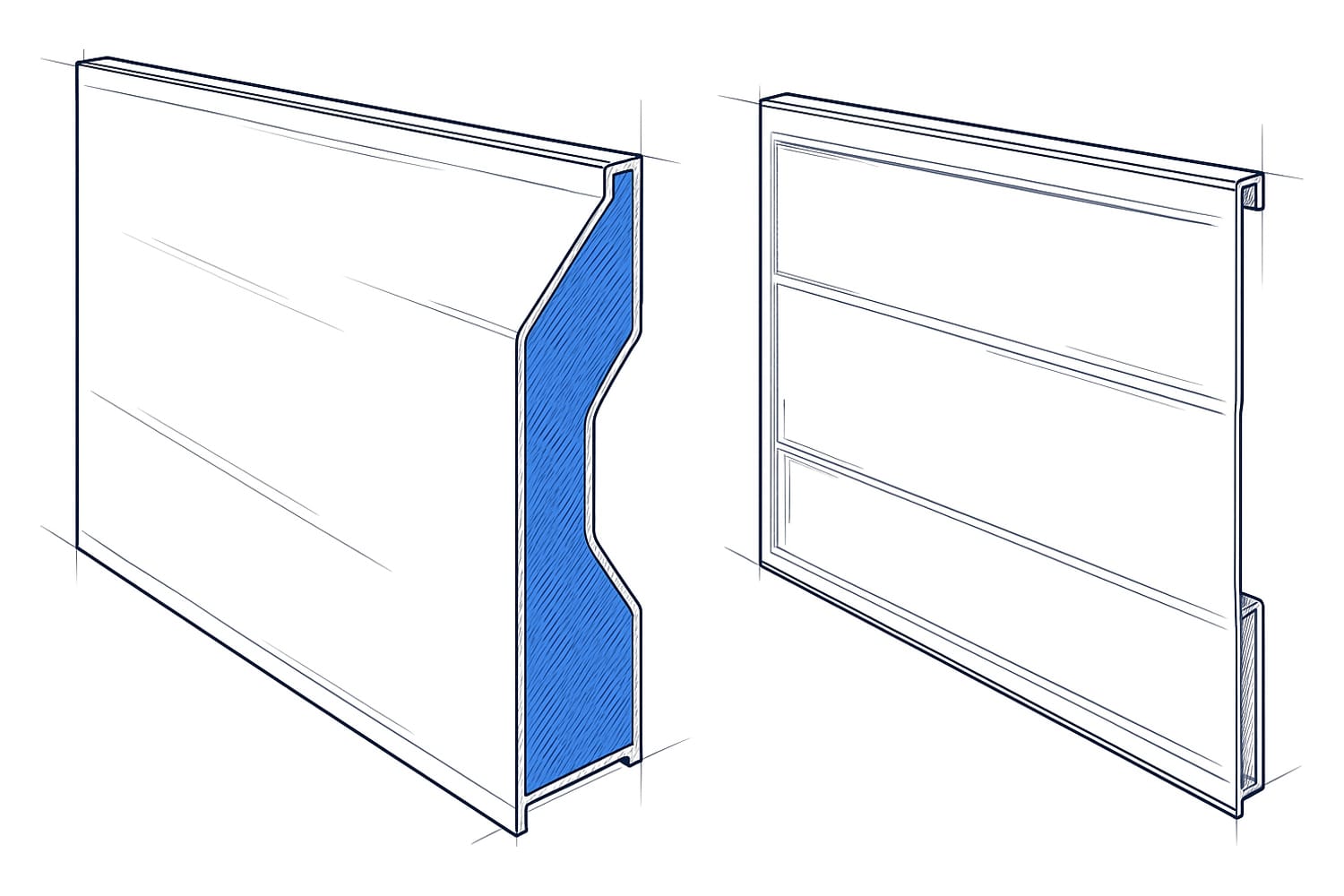 Garage Door Insulation and R-Value: What the Numbers Mean in WinnipegR-value measures how well the middle of a door section resists heat flow, and it's calculated, not tested. For a detached unheated garage, R-6 or less is fine. For an attached garage, aim for R-10 to R-12. For a heated garage or shop, R-16. The seals and the joints between sections matter as much as the number.Read the guide
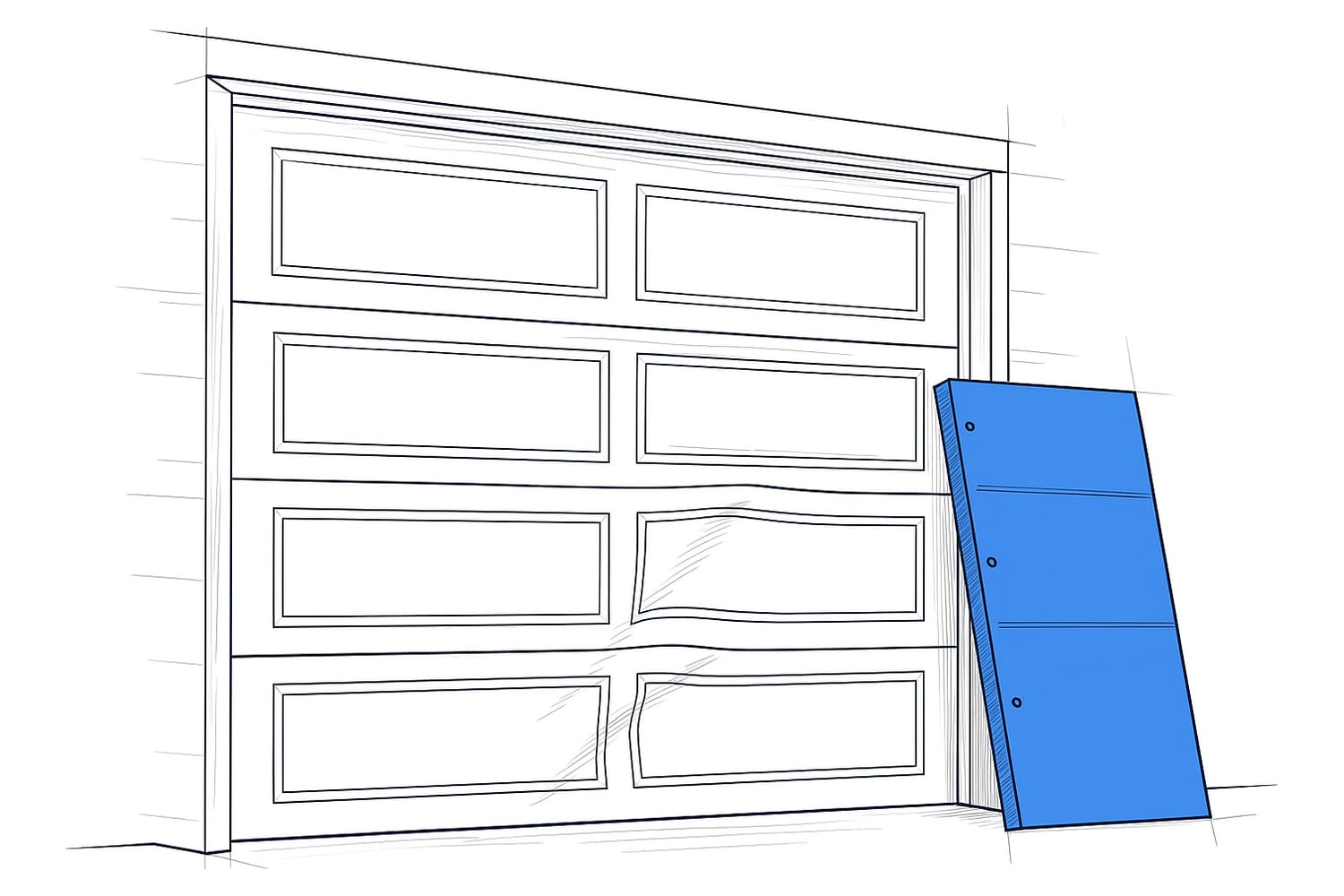 Dented Garage Door Panel: Repair One Section or Replace the Door?A shallow dent on an otherwise sound door can sometimes be pushed out, but a crease or a dent at a section edge usually means replacing that one section. If more than two sections are damaged, the bottom section is badly bent, or the door model is no longer made, a new door is often the better value.Read the guide
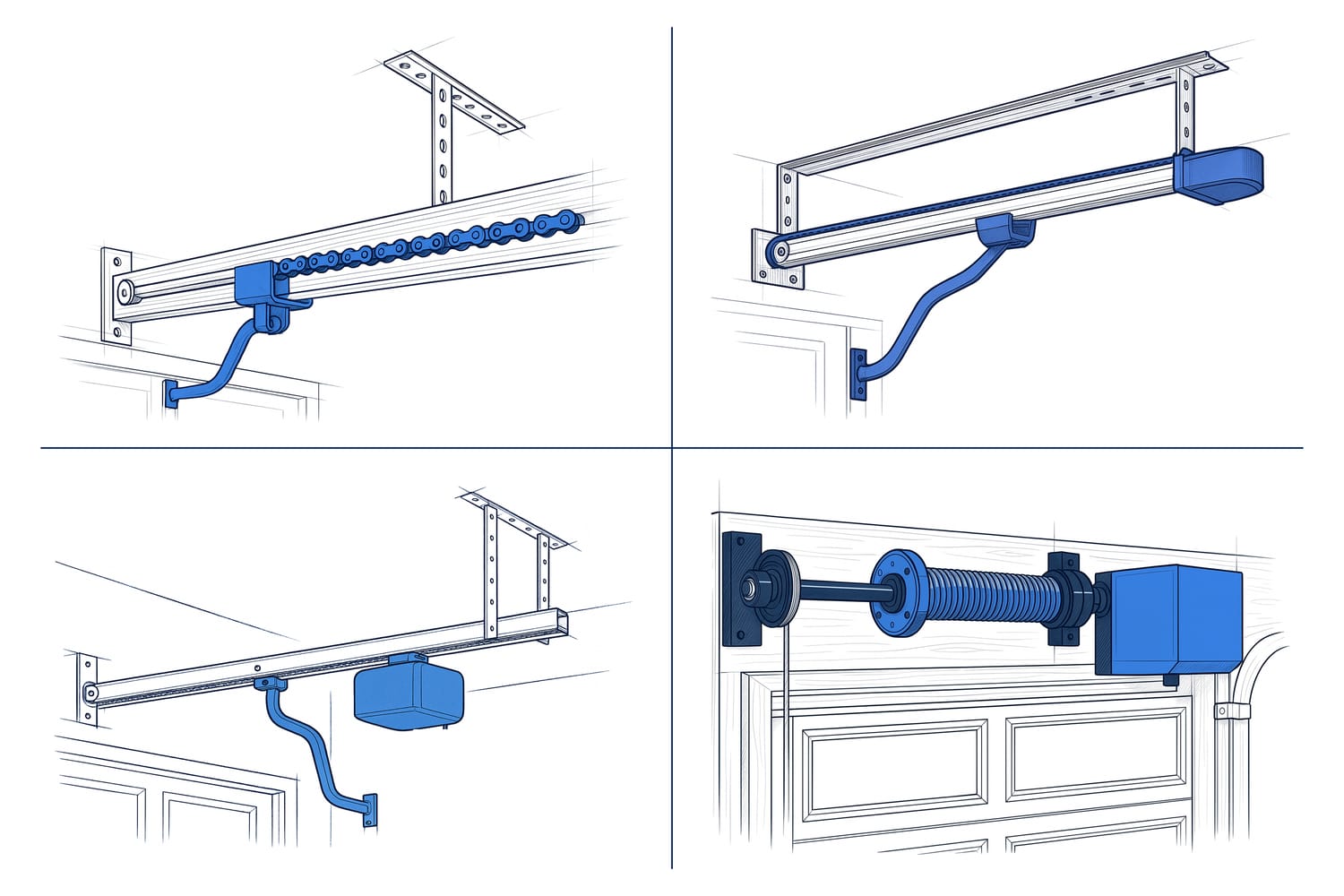 How to Choose a Garage Door Opener: Chain, Belt, Direct Drive, or Wall-MountFor most attached garages, a belt-drive opener with battery backup is the easy call. Chain drive is the budget choice for a detached garage where noise doesn't matter. Direct drive is the quiet upgrade, and a wall-mount opener is the answer when you want the ceiling free or the door runs under a bedroom.Read the guide
Ready to Book?
Same-day service across Winnipeg and nearby communities. Free on-site diagnosis on every residential repair.