
Garage Door Rollers: Types, Signs of Wear, and When to Replace Them
Rollers are the wheels that carry the door along the track, one at every hinge. Builder-grade plastic rollers crack, steel rollers get loud and rust, and sealed-bearing nylon rollers run quietly for ten years or more. Cracks, chips, a roller that slides instead of turning, or squealing that lubrication doesn't fix all mean it's time for a set.
- Works for:
- Any sectional door. Almost every residential door uses 2-inch rollers; the differences are in the wheel material and the bearings.
Written by the ClearTech Garage Doors team in Winnipeg and checked against manufacturer documentation. Updated .
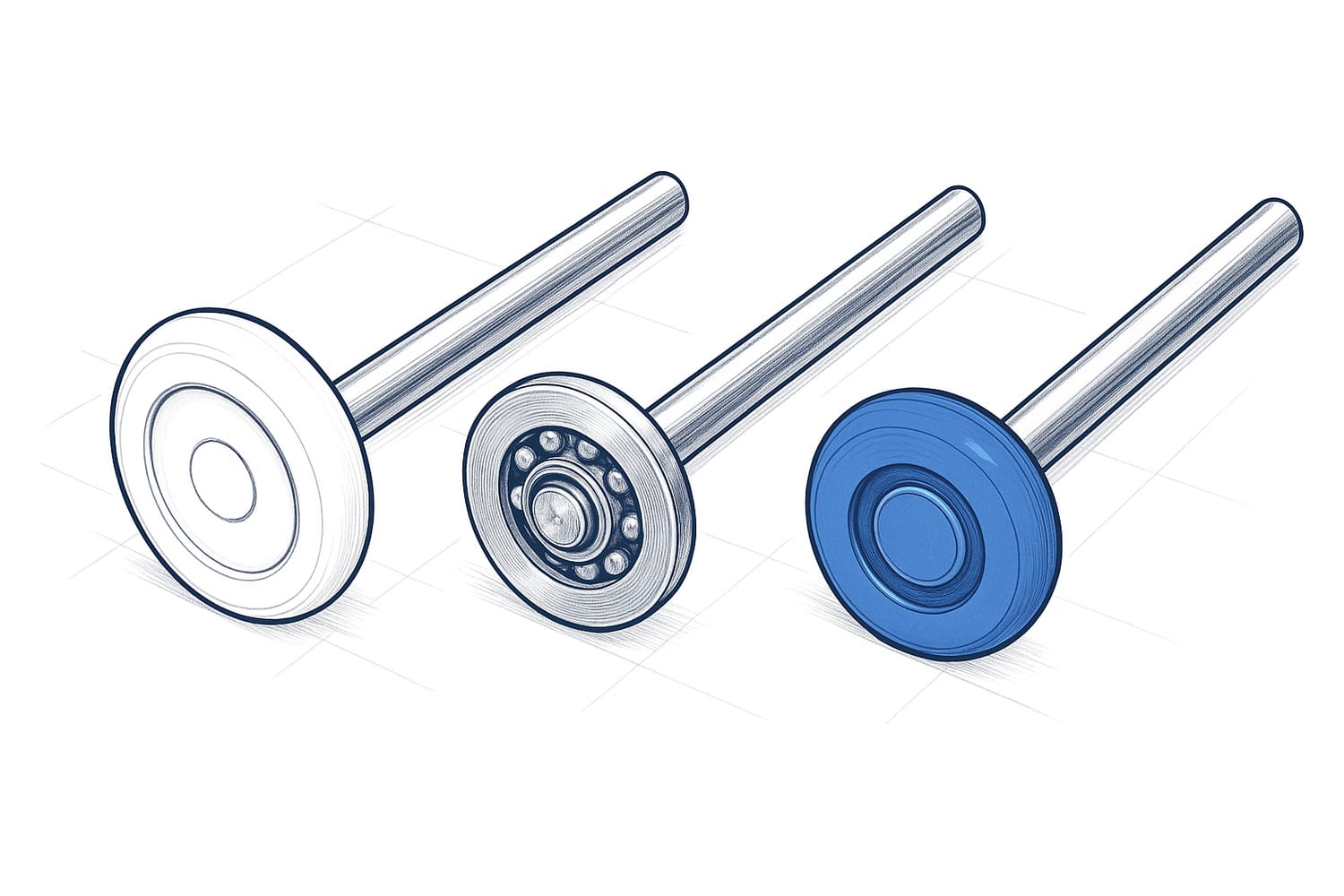
What kinds of rollers are there?
Three, broadly. Plastic or basic nylon rollers with no bearings are common on new builds: cheap, quiet when new, and the wheel wears, chips, and cracks after a few years. Steel rollers with ball bearings are tougher and carry more weight, but they're the loud ones, the bearings need regular lubrication, and they rust. Nylon-wheel rollers on a steel stem with a sealed ball-bearing race are the upgrade: quiet, no lubrication needed on the sealed types, and Garaga puts their life at over ten years against three to five for steel.
Within nylon, the bearing count is the mark of quality. Garaga's advice is at least ten ball bearings; we stock and install 10 and 11-ball rollers for typical doors and 13-ball for heavy or high-use doors, which is the same position on our cable and roller page. Stems come in short and long versions to suit the hinge they sit in.
How do I know my rollers are worn?
Look at them with the door closed. A cracked or chipped wheel, a wheel worn down toward the stem, a bent stem, or rust around the bearing are all done. Then watch the door move: a roller should roll, not slide. One that drags leaves a shiny streak in the track and makes the door hesitate or wobble on that side. Squealing that comes back right after lubricating is a bearing that has worn out.
Genie's maintenance guidance is to inspect rollers for cracks, wear, and bent shafts and to expect replacement around every five to seven years on a typical door. Garaga's figures are three to five years for steel and more than ten for nylon. If your door is on its original builder rollers and the house is ten years old, you're due.
Why does it matter beyond the noise?
Because a roller that doesn't roll loads everything else. The opener pulls harder every cycle, which wears its drive gear. The hinges flex. The track takes side load it wasn't designed for, and a roller that finally lets go is how a door ends up off its track. Worn rollers are also a common reason a door fails the balance test by sticking rather than by dropping.
Why replace the whole set?
They're the same age and have done the same cycles, so replacing the one that failed means the others are next. The labour is mostly in being there with the door secured, and the cost difference per roller is small once we're on site. A full set also gives you a door that runs evenly, which one new roller among nine old ones doesn't.
We don't recommend doing this yourself. Swapping a roller means taking a hinge off the door, and the bottom rollers sit in the brackets that the lift cables attach to, which are under full spring tension. Garaga's own instruction is never to loosen the bottom bracket bolts. We change rollers with the door held and the tension managed, and it takes under an hour.
Need this fixed?
Cable & Roller Repair
A noisy, drifting, or sticking door usually traces back to worn cables or rollers. Same-day garage door cable repair in Winnipeg, plus full roller replacement with sealed-bearing nylon and a fresh door rebalance.
More about Cable & Roller RepairWhen to call us
- The rollers are cracked, chipped, rusted, or sliding in the track. A full set of sealed nylon rollers is a one-visit job.
- The door wobbles, lags on one side, or has jumped the track. Rollers and track get checked together, because worn rollers bend track and bent track eats rollers.
- The door is loud and lubrication didn't fix it. The noisy door guide narrows it down, and rollers are the usual answer.
- A roller has come out of the track. Stop using the door; that's the start of an off-track door and it needs a repair visit, not a push.
We look at the whole door, not just the part that failed, and tell you plainly what it needs.
Common Questions
Do nylon rollers need lubrication?
- Sealed-bearing nylon rollers don't. Nylon rollers with exposed bearings get a light spray on the stem and where the stem meets the wheel, not on the wheel itself. Steel rollers need their bearings lubricated a couple of times a year. The lubrication guide covers each type.
Are nylon rollers really worth the upgrade?
- Noticeably, yes. They run quieter and smoother, they don't rust, and in our experience they handle Winnipeg cold better than steel or cheap plastic. On a newer house with builder rollers, it's the single biggest improvement in how the door sounds and runs.
Can worn rollers damage the opener?
- Yes. Every roller that drags adds load the opener has to overcome on every cycle, and the drive gear is what wears first. A stripped gear is one of the most common opener repairs we do, and worn rollers or an unbalanced door are usually behind it.
Sources
This guide was checked against the following manufacturer and industry documents.
Related guides
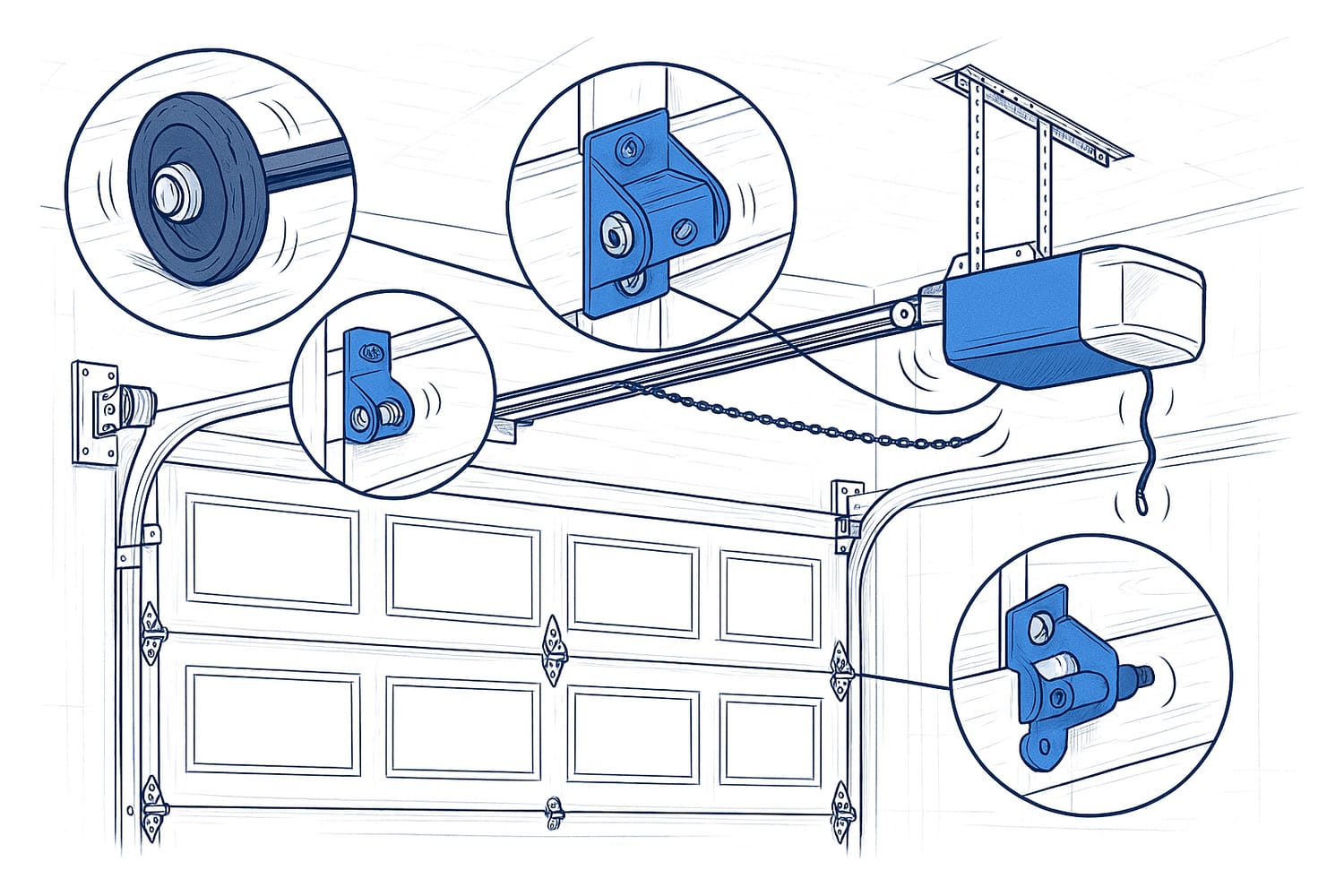 Why Is My Garage Door So Loud? Matching the Noise to the PartSqueaking and squealing usually means dry or worn rollers and hinges. Rattling is loose hardware or a slack opener chain. Grinding points at misaligned track or worn opener gears. A single loud bang is a spring breaking. Most noise is fixable in an hour, and some of it you can fix yourself.Read the guide
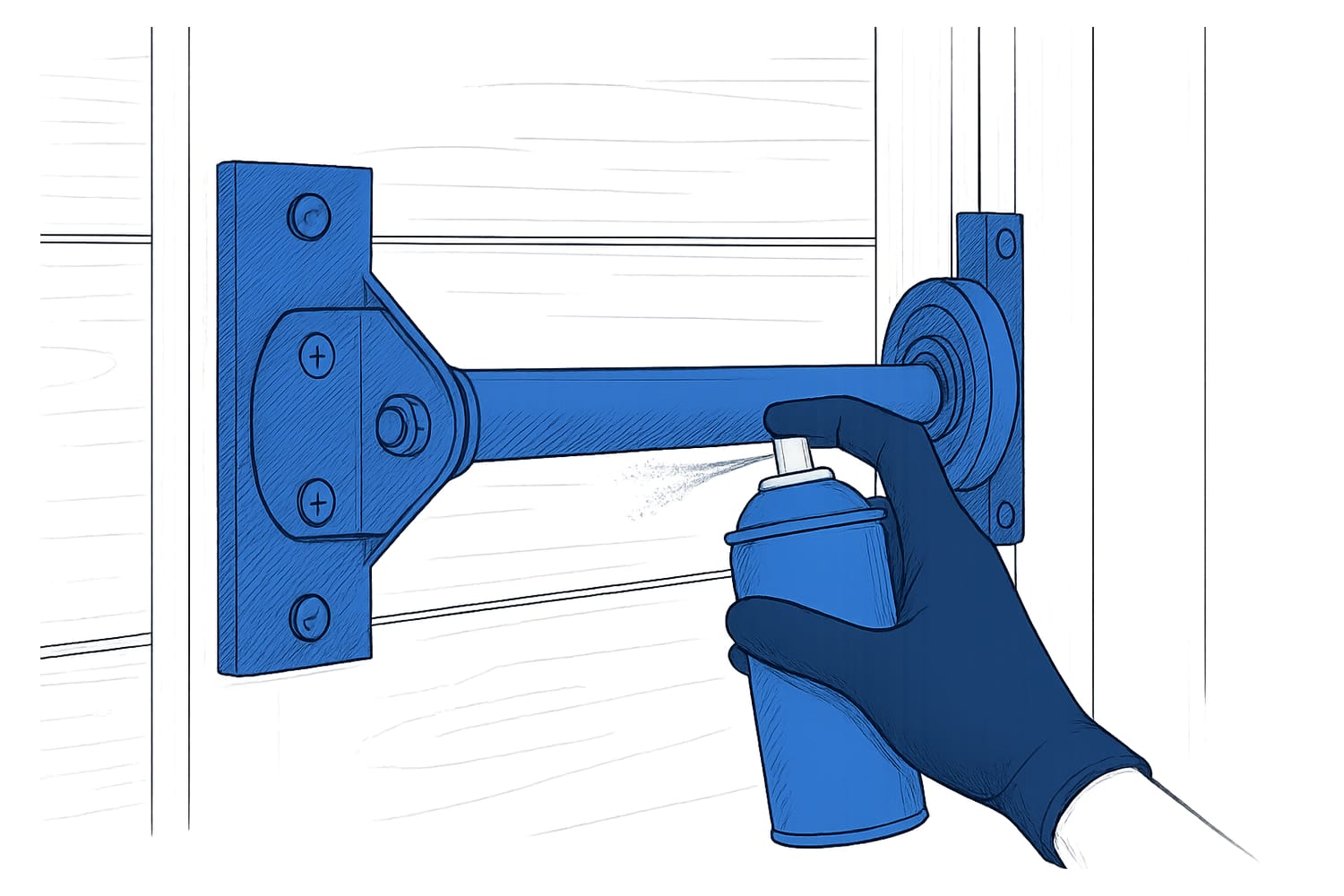 How to Lubricate a Garage Door (and What Not to Spray)Use a silicone spray or white lithium grease on the hinges, the bearings of steel rollers, the torsion spring coils, the bearing plates at each end of the spring shaft, and the lock. Keep it off the tracks and off nylon rollers. Twice a year is plenty for most homes.Read the guide
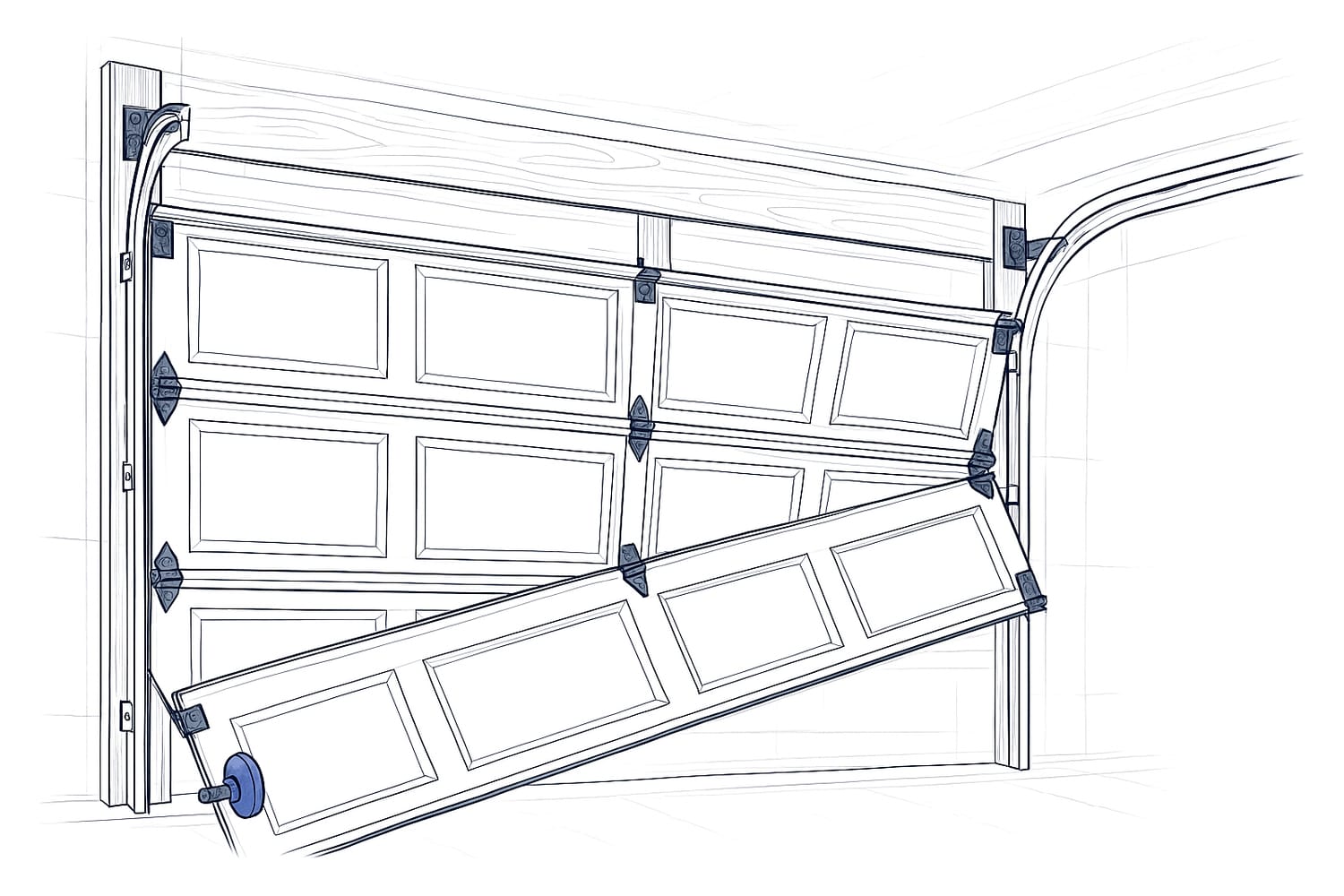 Garage Door Off Track: Causes, Dangers, and What Not to DoA door comes off its track when a roller leaves the rail: after a vehicle bump, a broken cable, worn rollers, bent or loose track, or being forced while frozen. The door is then heavy, crooked, and held by very little. Don't push it back, don't run the opener, and don't pull the release. Call.Read the guide
Ready to Book?
Same-day service across Winnipeg and nearby communities. Free on-site diagnosis on every residential repair.