
How to Lubricate a Garage Door (and What Not to Spray)
Use a silicone spray or white lithium grease on the hinges, the bearings of steel rollers, the torsion spring coils, the bearing plates at each end of the spring shaft, and the lock. Keep it off the tracks and off nylon rollers. Twice a year is plenty for most homes.
- Works for:
- Any sectional door. Takes about ten minutes with a stepladder and a can of the right spray. If the door has a chain-drive opener, the rail gets a different treatment, covered below.
Written by the ClearTech Garage Doors team in Winnipeg and checked against manufacturer documentation. Updated .
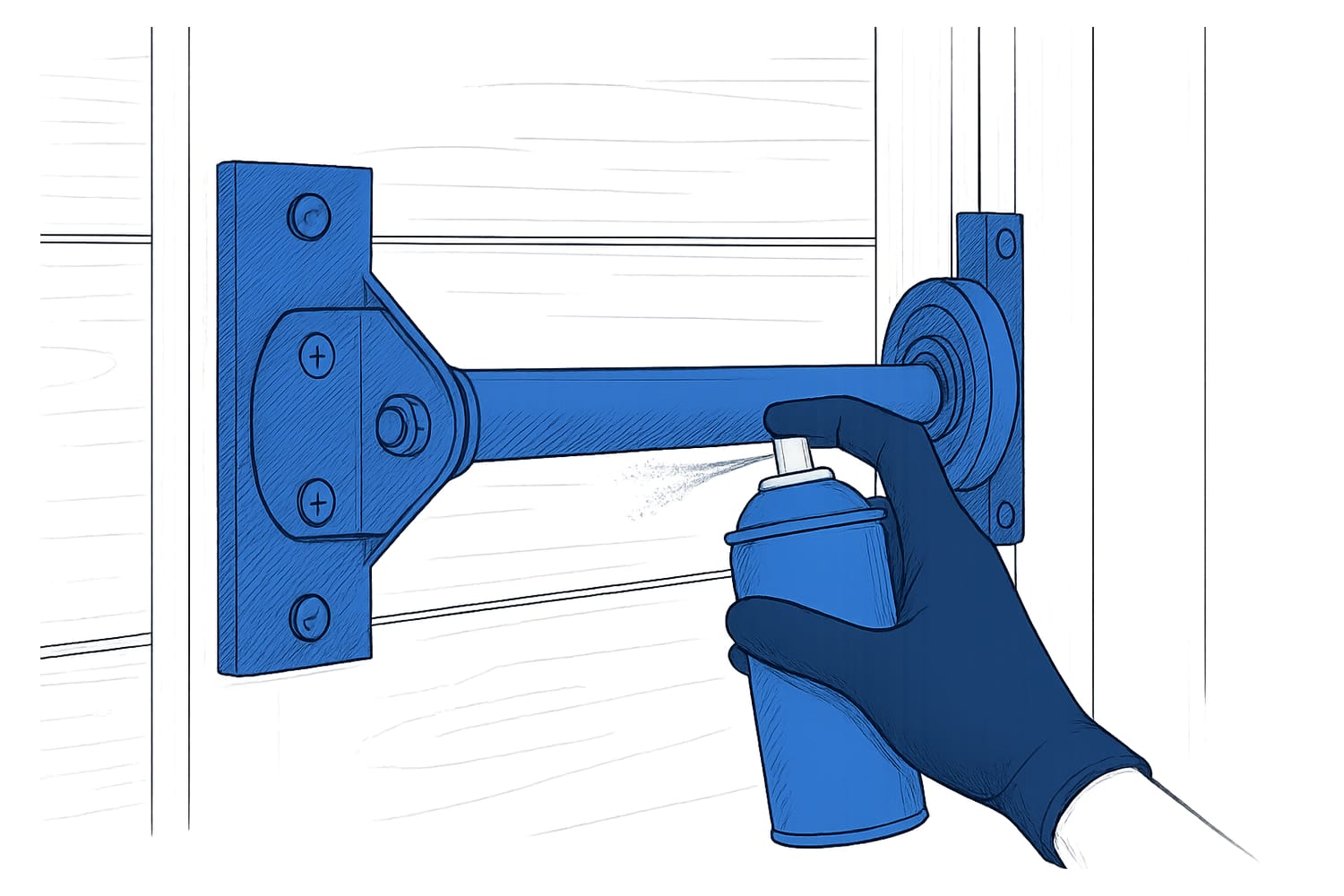
Before you start
- A silicone spray or white lithium grease made for garage doors. The WD-40 Specialist silicone and white lithium cans are fine. The blue-can WD-40 Multi-Use is not what door manufacturers recommend for this job.
- A rag for wiping off excess
- A stepladder
- Safety glasses if you're spraying overhead
Step by step
Step 1: Close the door and unplug the opener, or pull the red release cord so nobody can run the door while you're on the ladder.
Step 2: Wipe the tracks out with a damp rag. Tracks get cleaned, never lubricated: grease in the track collects grit and makes the rollers slide instead of roll, which is harder on the opener.
Step 3: Spray each hinge where the pin passes through the knuckle. There's a hinge at every section joint on both edges, and one or two in the middle on wider doors. A short burst each and wipe the drips.
Step 4: Do the rollers. If they're steel, spray into the bearing where the wheel meets the stem. If they're nylon, leave the wheel alone and put a little on the stem only, where it turns in the hinge. Nylon rollers with sealed bearings need nothing at all.
Not sure which you have? Nylon rollers are usually black or white and quiet; steel rollers are bare metal, often with visible ball bearings, and they rust.
Step 5: Spray along the full length of the torsion spring coils above the door. Enough to coat the steel, not enough to drip. A lubricated spring runs with less friction between coils and resists rust, which DASMA says seeds the fatigue cracks that shorten spring life.
Don't touch, adjust, or try to clean a spring. Spray from a short distance and leave it.
Step 6: Put a little on the bearing plates at each end of the spring shaft, where the shaft turns. Skip the cables themselves: our advice, and Genie's, is that heavy lubricant on a cable just attracts dirt.
Step 7: Lubricate the lock and the handle mechanism if the door has them, and run the door up and down by hand a couple of times to spread everything. Reconnect the opener and run a full cycle.
Step 8: Opener rail, only if it's a chain drive: wipe the old grease off the rail where the trolley slides and apply a thin layer of white lithium grease to the top and underside. LiftMaster puts this on a two-to-three-year schedule, not every visit. Belt drives get nothing on the rail or belt.
Need this fixed?
Annual Tune-Up
Annual garage door tune up in Winnipeg: a yearly check-up that catches small issues before they fail. Lubrication, hardware tightening, balance check, auto-reverse test, manual release verification, about an hour on site.
More about Annual Tune-UpStill stuck? Here is what it usually is.
- The door is still noisy after lubricating. Worn rollers, loose hardware, or a chain that needs adjusting are the usual suspects, and the noisy door guide walks through which sound is which.
- The spring coils are rusty or you can see a gap in them. Rust seeds the cracks that break springs, and a gap means it's already broken. That's a spring repair.
- You'd rather have it done with everything else checked. Lubrication is part of our annual tune-up, along with the balance test, the reversal test, and a look at the cables and rollers.
We look at the whole door, not just the part that failed, and tell you plainly what it needs.
Common Questions
Can I use regular WD-40?
- Clopay and Garaga, two of the biggest door makers, both say to keep it off garage door hardware, and that's our advice too. WD-40's own garage door recommendation is to pair it with a silicone lubricant, which tells you the blue can isn't doing the job on its own. Use the silicone or white lithium products made for doors, including WD-40's Specialist line, and you're fine.
How often should I do this?
- Twice a year suits most Winnipeg homes: once in the fall before the cold, once in spring. Clopay suggests every three to six months depending on use. A door that opens a dozen times a day, or a garage that sees a lot of road salt and grit, sits at the shorter end.
Should I oil the opener chain?
- LiftMaster's current manuals say the opener needs no lubrication beyond a thin coat of white lithium grease on the rail every few years, while Garaga suggests white lithium on a chain. Check your own opener's manual, since advice varies. Belt drives need nothing, and Garaga says not to put any grease or lubricant on a belt drive.
Sources
This guide was checked against the following manufacturer and industry documents.
Related guides
 Garage Door Maintenance Checklist: Monthly, Twice a Year, and YearlyOnce a month: watch and listen to a full cycle, test the auto-reverse with a 2x4, and check the photo eyes. Twice a year: lubricate, test the balance, and look over the seals, cables, and rollers. Once a year: book a professional tune-up. The whole monthly check takes five minutes.Read the guide
 Why Is My Garage Door So Loud? Matching the Noise to the PartSqueaking and squealing usually means dry or worn rollers and hinges. Rattling is loose hardware or a slack opener chain. Grinding points at misaligned track or worn opener gears. A single loud bang is a spring breaking. Most noise is fixable in an hour, and some of it you can fix yourself.Read the guide
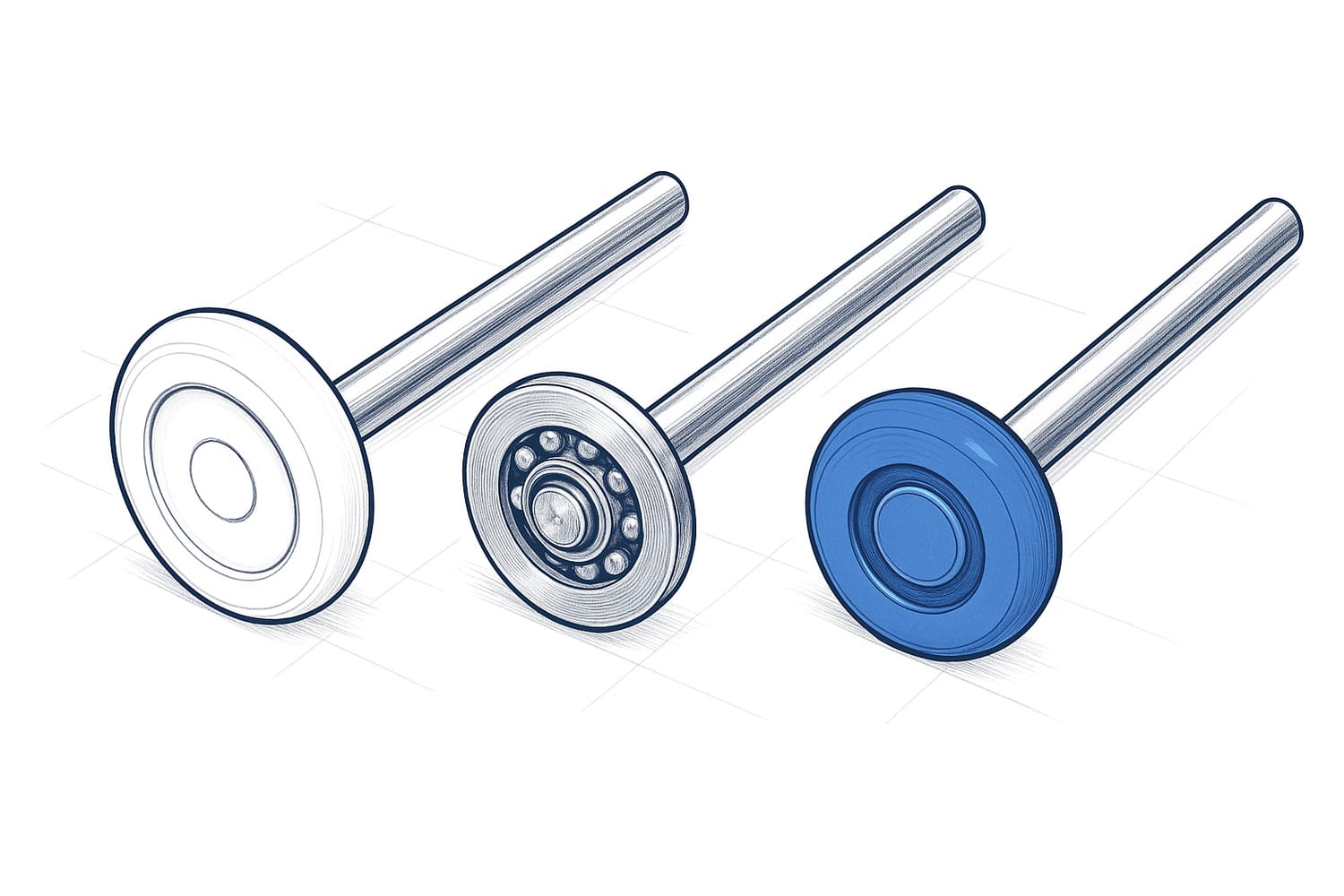 Garage Door Rollers: Types, Signs of Wear, and When to Replace ThemRollers are the wheels that carry the door along the track, one at every hinge. Builder-grade plastic rollers crack, steel rollers get loud and rust, and sealed-bearing nylon rollers run quietly for ten years or more. Cracks, chips, a roller that slides instead of turning, or squealing that lubrication doesn't fix all mean it's time for a set.Read the guide
Ready to Book?
Same-day service across Winnipeg and nearby communities. Free on-site diagnosis on every residential repair.