
Why Is My Garage Door So Loud? Matching the Noise to the Part
Squeaking and squealing usually means dry or worn rollers and hinges. Rattling is loose hardware or a slack opener chain. Grinding points at misaligned track or worn opener gears. A single loud bang is a spring breaking. Most noise is fixable in an hour, and some of it you can fix yourself.
- Works for:
- Any sectional door with an opener. Listen with the door moving both ways, and note whether the noise comes from the door or from the opener on the ceiling.
Written by the ClearTech Garage Doors team in Winnipeg and checked against manufacturer documentation. Updated .
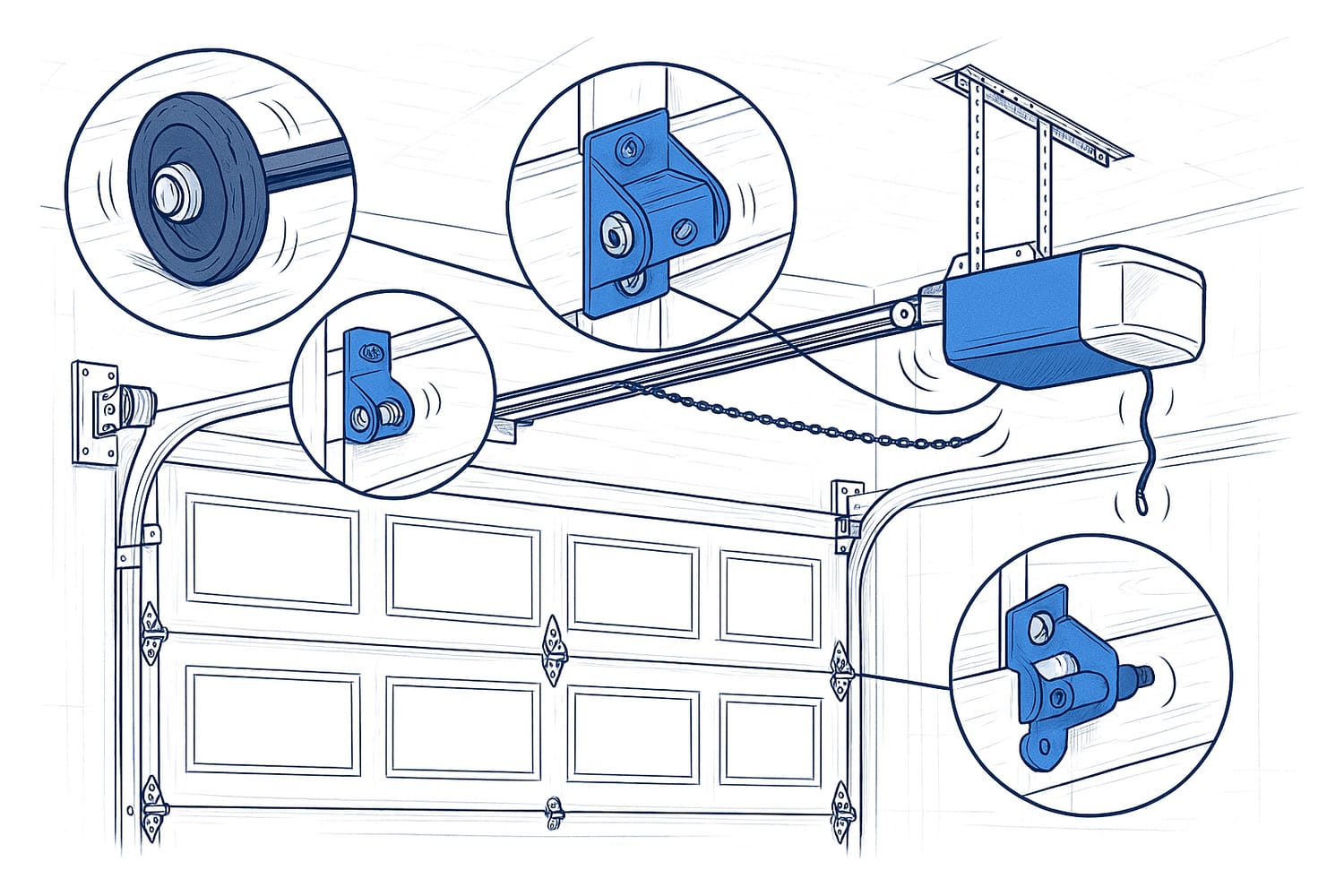
Squeaking, squealing, or creaking
Dry metal. Hinges, steel roller bearings, and the torsion spring coils all squeak when the lubricant is gone, and in a Winnipeg garage that happens every winter. The lubrication guide fixes most of this in ten minutes.
If the squeal stays after lubricating, the rollers are worn. Steel rollers wear their bearings out in a few years and start to drag instead of turn; cheap no-bearing plastic rollers wear out quickly. Either way the door is sliding on the track rather than rolling on it, and that's both the noise and the extra load on the opener. The rollers guide covers what to look for, and swapping the set for sealed-bearing nylon is the single biggest quieting upgrade a door can get.
Rattling or clattering
Something loose. A door moves more than a thousand times a year and the vibration backs off nuts and bolts over time: roller bracket bolts, hinge bolts, the bolts that hold the track brackets to the wall, and the hangers that hold the horizontal track and the opener to the ceiling. Going round with a socket wrench and snugging everything, without overtightening, is a reasonable homeowner job on the hinges and brackets. Leave the bolts on the spring, drums, bearing plates, and bottom brackets alone; those hold tension.
On a chain-drive opener, a chain that has gone slack slaps the rail and makes the sprocket noisy. LiftMaster's spec is the chain sitting about half an inch above the base of the rail at its midpoint, and some slack with the door closed is normal and isn't a reason to tighten. Adjusting it means pulling the release first and following the opener's manual, or leaving it for us.
Grinding or scraping
From the door: the track is out of line or bent, and the rollers are being forced through it, or a roller has worn down to its stem. You'll usually see the door wobble side to side, lag on one side, or show a gap between a roller and the track. Don't hammer on a track or force the door; that's how a noisy door becomes an off-track door.
From the opener: the drive gear is worn. Chain and belt openers turn a plastic gear inside the motor head, and when it strips the motor runs and grinds but the door doesn't move, or moves in jerks. In our experience it's a common opener repair on older units, and a door that's out of balance is usually what wore it out.
A single loud bang
A torsion spring breaking. It sounds like something heavy fell over in the garage, and the next time you press the button the door won't lift or rises a few inches and stops. Leave the door closed, don't run the opener, and read the broken spring guide. A door that closes with a thud rather than settling can also mean a cable or spring has let go.
Noise that comes through the house
Some of it is vibration rather than sound. An opener bolted straight to the ceiling joists, or track hangers screwed into the roof trusses, carry the motor's hum into the rooms above. Garaga suggests a strip of rubber between the horizontal track supports and the ceiling, and we do the same under the opener's hanger brackets; it makes a surprising difference. An uninsulated single-skin door also drums more than an insulated one.
If the opener itself is the problem, a belt drive is quieter than a chain, and a direct drive quieter again in our experience. The opener guide compares them.
Need this fixed?
Cable & Roller Repair
A noisy, drifting, or sticking door usually traces back to worn cables or rollers. Same-day garage door cable repair in Winnipeg, plus full roller replacement with sealed-bearing nylon and a fresh door rebalance.
More about Cable & Roller RepairWhen to call us
- Lubricating didn't help and the rollers look worn, chipped, or cracked. A full set of nylon rollers is a one-visit job and the noise usually goes with them.
- The door wobbles, lags on one side, or shows a gap between roller and track. The track needs realigning before a roller comes out of it.
- The opener grinds and the door doesn't move. That's a stripped gear, and an opener repair call.
- You heard a bang and now the door is heavy. Broken spring. Don't run the opener.
- You'd like the whole thing gone through. Noise is one of the main reasons people book a tune-up, and we check all of the above in one visit.
We look at the whole door, not just the part that failed, and tell you plainly what it needs.
Common Questions
Is it always the rollers?
- Most often, but not always. Dry hinges, loose hardware, a chain that needs adjusting, a door out of balance, and a worn opener gear all add to it. When we come out for a noise call we check all of them, and sometimes the right answer is rollers plus a hinge or two, or a tune-up rather than new parts.
Will a new opener make the door quiet?
- Only if the opener is the noise. A belt drive on a door with worn rollers and dry hinges is still a loud door. Fix the door first; it's cheaper, and a new opener lasts longer on a door that rolls freely.
The noise started suddenly. Should I worry?
- Yes, more than with a door that's slowly got louder. A new grind, scrape, or clunk usually means something has moved: a roller out of the track, a cable off its drum, a bracket come loose. Stop using the door and have it looked at.
Sources
This guide was checked against the following manufacturer and industry documents.
Related guides
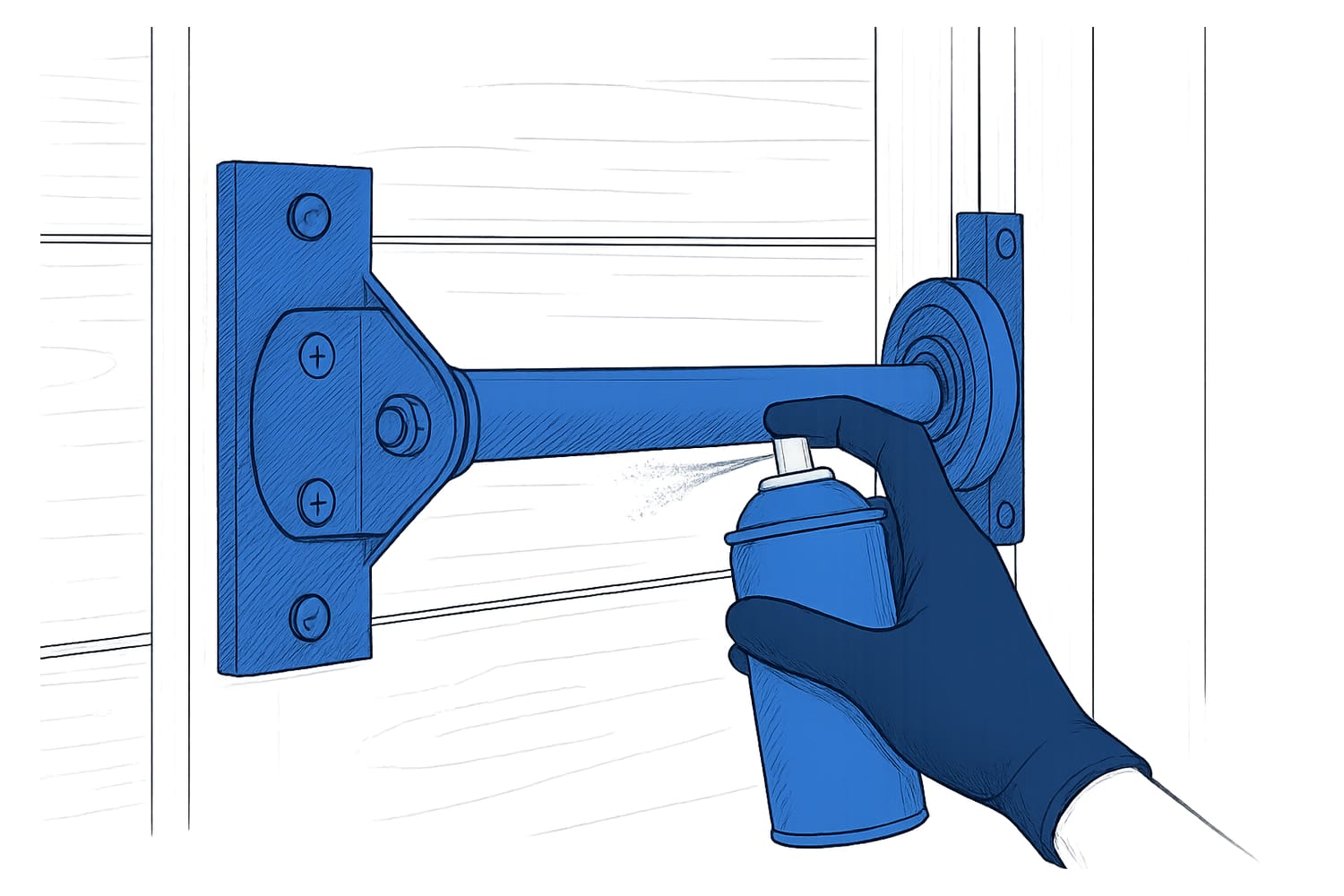 How to Lubricate a Garage Door (and What Not to Spray)Use a silicone spray or white lithium grease on the hinges, the bearings of steel rollers, the torsion spring coils, the bearing plates at each end of the spring shaft, and the lock. Keep it off the tracks and off nylon rollers. Twice a year is plenty for most homes.Read the guide
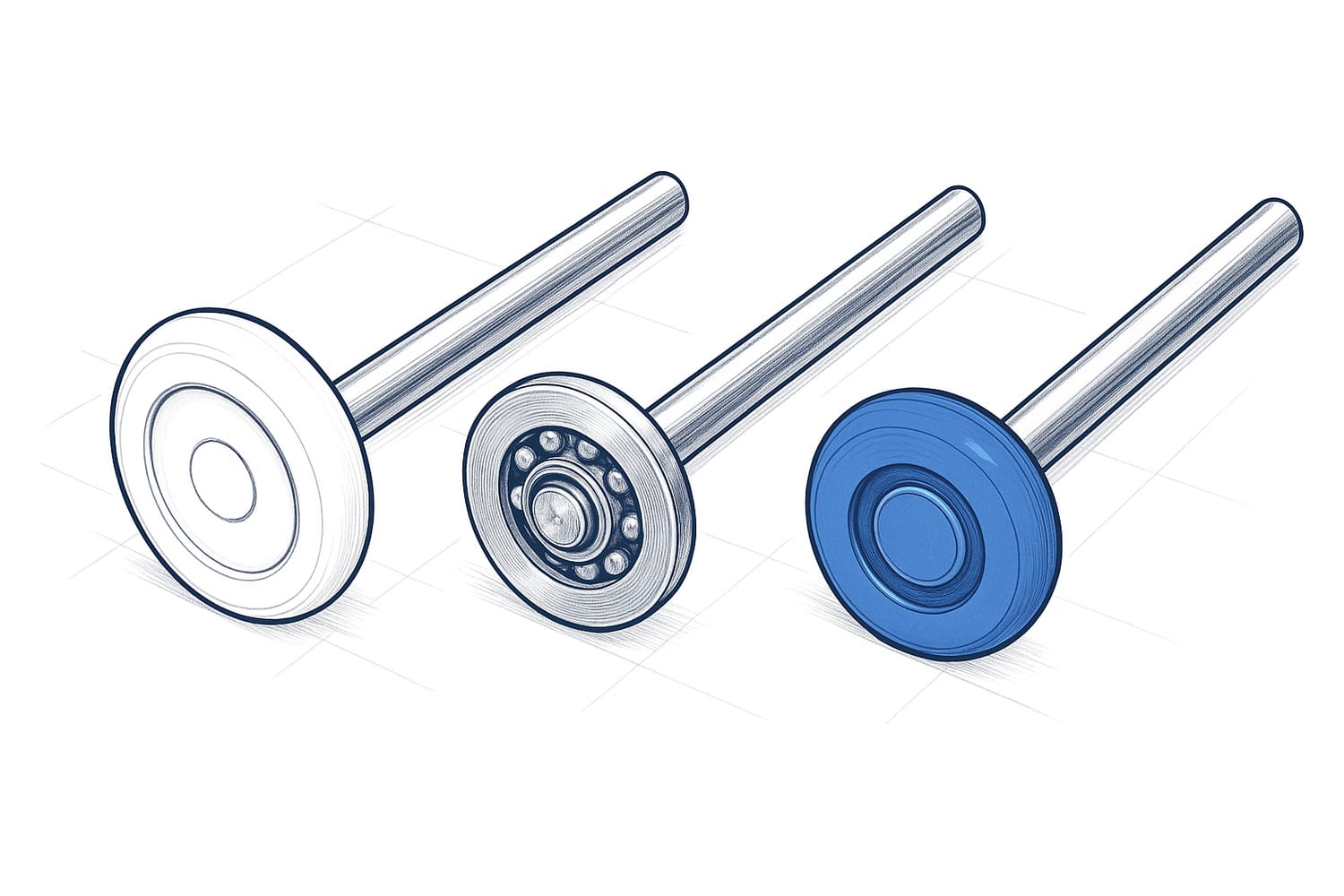 Garage Door Rollers: Types, Signs of Wear, and When to Replace ThemRollers are the wheels that carry the door along the track, one at every hinge. Builder-grade plastic rollers crack, steel rollers get loud and rust, and sealed-bearing nylon rollers run quietly for ten years or more. Cracks, chips, a roller that slides instead of turning, or squealing that lubrication doesn't fix all mean it's time for a set.Read the guide
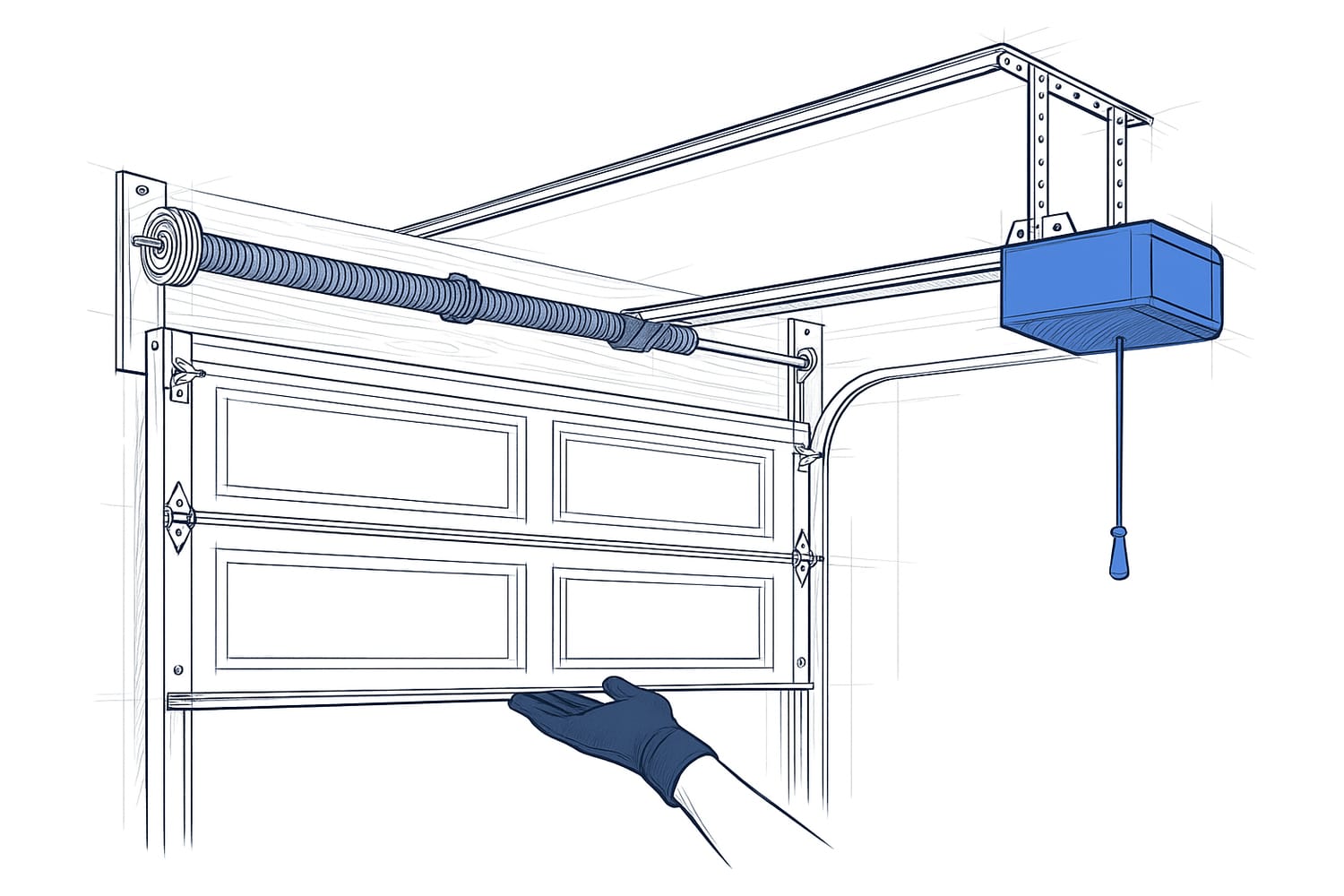 How to Test Your Garage Door's BalanceClose the door, pull the red release cord, lift the door by hand to about waist height, and let go. A balanced door stays put or drifts slowly. A door that drops or shoots up has a spring problem, and the opener has been covering for it.Read the guide
Ready to Book?
Same-day service across Winnipeg and nearby communities. Free on-site diagnosis on every residential repair.