
How to Choose a Garage Door Opener: Chain, Belt, Direct Drive, or Wall-Mount
For most attached garages, a belt-drive opener with battery backup is the easy call. Chain drive is the budget choice for a detached garage where noise doesn't matter. Direct drive is the quiet upgrade, and a wall-mount opener is the answer when you want the ceiling free or the door runs under a bedroom.
- Works for:
- Anyone replacing a worn-out opener or picking one for a new door. The opener repair and installation page lists the models we install.
Written by the ClearTech Garage Doors team in Winnipeg and checked against manufacturer documentation. Updated .
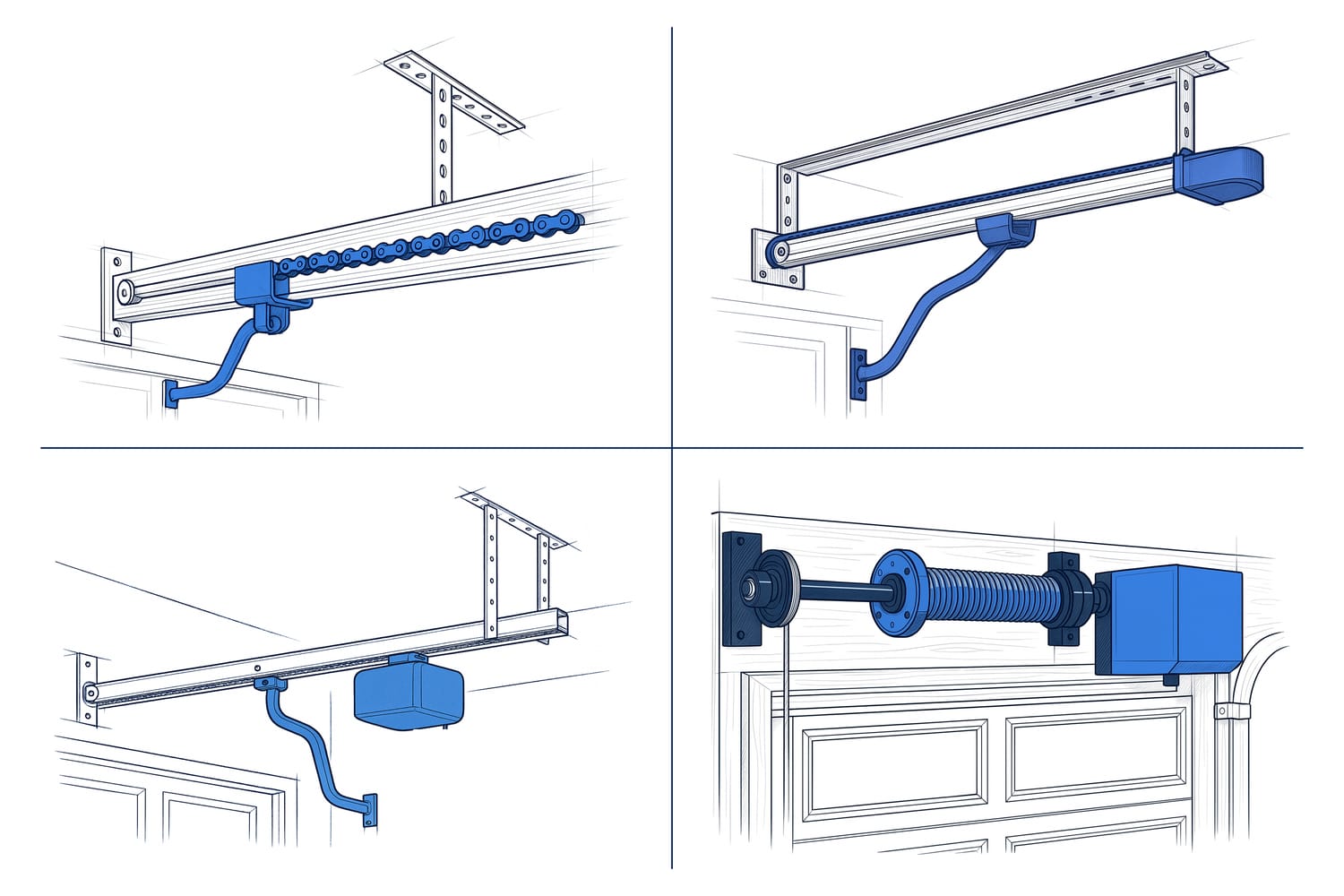
Chain, belt, direct drive, or wall-mount?
Chain drive is the workhorse: a steel chain pulls a trolley along the rail. It's the least expensive, it handles heavy doors, and it's louder than the others, though current DC models with soft start and stop are quieter than the chain openers of twenty years ago. It suits a detached garage, or an attached one with nothing living above it.
Belt drive replaces the chain with a steel-reinforced rubber belt. It's noticeably quieter and smoother, and it's the manufacturers' own recommendation for attached garages with bedrooms nearby. It costs a little more than chain. For most Winnipeg homes this is where we start.
Direct drive, which Sommer makes, turns the idea around: the chain stays still inside a sealed rail and the motor itself travels along it. One moving part, very little vibration, and Sommer calls it extremely quiet. In our experience it's at least as quiet as a good belt drive. It's the upgrade when belt isn't quiet enough and the price is acceptable.
Wall-mount, also called jackshaft, does away with the rail entirely. The motor bolts to the wall beside the door and turns the torsion shaft directly. It frees the ceiling for storage or a car lift, suits high and cathedral ceilings, and it's very quiet because nothing runs overhead. It's the most expensive option and it has requirements, covered below.
How much power do I need?
Less than the horsepower numbers suggest. Most current openers use DC motors, and DC lift capacity isn't really measured in horsepower; manufacturers quote equivalents (you'll see HPS, HPc, or HP-equivalent on the box) and warn that these are for comparison only. Chamberlain's own tiers run from a half-horsepower equivalent for a standard sectional door, through three-quarter for a heavily used garage, to one and a quarter for heavier or one-piece doors. Wood doors usually want the three-quarter class.
What actually matters is the door's weight and balance. A balanced door, which is what properly sized springs give you, lifts with one hand, and the opener only has to move it, not carry it. An insulated steel double door can weigh a few hundred pounds, and a new insulated door is often heavier than the one it replaces, so the springs and the opener get checked together on an install. If an opener strains, the fix is usually the balance, not a bigger motor.
Do I need battery backup?
In Winnipeg, we'd say yes for an attached garage. A winter outage with the car inside and the door frozen to the floor is the exact moment you want the opener to still work. Battery backup is built into several current LiftMaster models, including the 8500W wall-mount and the 87504 belt drive, and is an add-on for some Genie units. A full battery gives roughly a day of standby and about 20 open-and-close cycles on the LiftMaster units, less in a cold garage, and the battery itself lasts one to two years before it needs replacing.
If you skip it, know how the manual release works. The power outage guide covers it for every opener type.
What about Wi-Fi and the app?
Most current LiftMaster and Chamberlain openers have myQ built in, and Genie's current wall-mount and higher-end units have Aladdin Connect built in. Both let you open and close from your phone, get an alert when the door opens, and set schedules. Neither needs extra hardware on a new opener. Our setup guides for LiftMaster myQ and Genie Aladdin Connect walk through pairing.
Two practical notes: the opener needs a 2.4 GHz Wi-Fi signal in the garage, and on battery power during an outage the myQ connection and the opener light are off until the power returns.
What does a wall-mount opener need?
A torsion spring system with the springs mounted directly above the opening, on a standard shaft the opener can grip. It won't work with extension springs, with low-headroom track, or with a one-piece door. Wayne Dalton TorqueMaster doors need Genie's adapter kit, and LiftMaster doesn't support them at all, so if the door is being converted to standard torsion anyway that solves it. It needs sideroom on the mounting side, roughly 7 to 8.5 inches depending on the model, and an outlet within reach.
The door also has to be balanced and in good shape, because a wall-mount drives the shaft from one end. The LiftMaster 8500W ships with an automatic door lock, battery backup, a cable tension monitor, and the safety sensors, and the manufacturer calls it a job for a trained technician. Genie's 6170H and 6172H wall-mounts carry Aladdin Connect, with a lock included on the 6170H and battery backup included on the 6172H. If the door doesn't already have a strut across the top section, we add one.
What gets replaced, and what stays?
Chamberlain's advice, which we follow, is to replace the whole opener: motor head, rail, trolley, wall control, and remotes, rather than bolting a new motor to a twenty-year-old rail. The safety sensors come with the new unit and are required on every opener; the existing sensor wiring and mounting positions can be reused if the wire is in good condition. Sensors sit no higher than 6 inches off the floor.
We also remove any rope pull and disable the door's manual lock, since either will fight the opener, and we test the auto-reverse on a 2x4 before we leave. What stays is the door, the springs, the track, and the seals, provided they're sound. If the springs are weak, that's the time to replace them, because a new opener on an unbalanced door doesn't last.
Need this fixed?
Opener Repair & Installation
Same-day garage door opener repair in Winnipeg, plus new installs across both overhead and wall-mount (jackshaft) openers. LiftMaster, Chamberlain, Genie, and Sommer. Legacy Wayne Dalton iDrive and Quantum openers still serviced in the field.
More about Opener Repair & InstallationWhen to call us
- You're not sure which type suits your garage. The site visit looks at the ceiling, the springs, the door weight, and where the bedrooms are, and we'll say which one we'd put in our own house.
- Your current opener strains, runs slowly, or reverses on its own. That's often the door's balance rather than the opener, and it's worth knowing before you buy.
- You want a wall-mount. The spring system and sideroom have to be checked first, and some doors need a torsion conversion to take one.
- The door is being replaced too. The new door's weight decides the springs and the opener, so they should be sized together.
We look at the whole door, not just the part that failed, and tell you plainly what it needs.
Common Questions
Is a screw-drive opener a good choice here?
- We don't install them. Genie, which made the best-known screw drives, says they're sensitive to temperature and doesn't recommend them where the seasons swing hard. Winnipeg is the definition of that. Belt or direct drive gives you the quiet without the cold-weather trouble.
Can I keep my old remotes and keypad?
- Only if they use the same security technology as the new opener, which usually isn't the case across a generation gap. New openers come with a remote and usually a keypad, and the programming guides show how to add more. Your car's HomeLink buttons can usually be re-paired.
How long does an opener last?
- Ten to fifteen years is the usual rule of thumb in the trade for a well-installed opener on a balanced door. A door that's out of balance, or a chain-drive that's never been serviced, shortens that. Most of the openers we replace early died of the door, not of the motor.
Sources
This guide was checked against the following manufacturer and industry documents.
Related guides
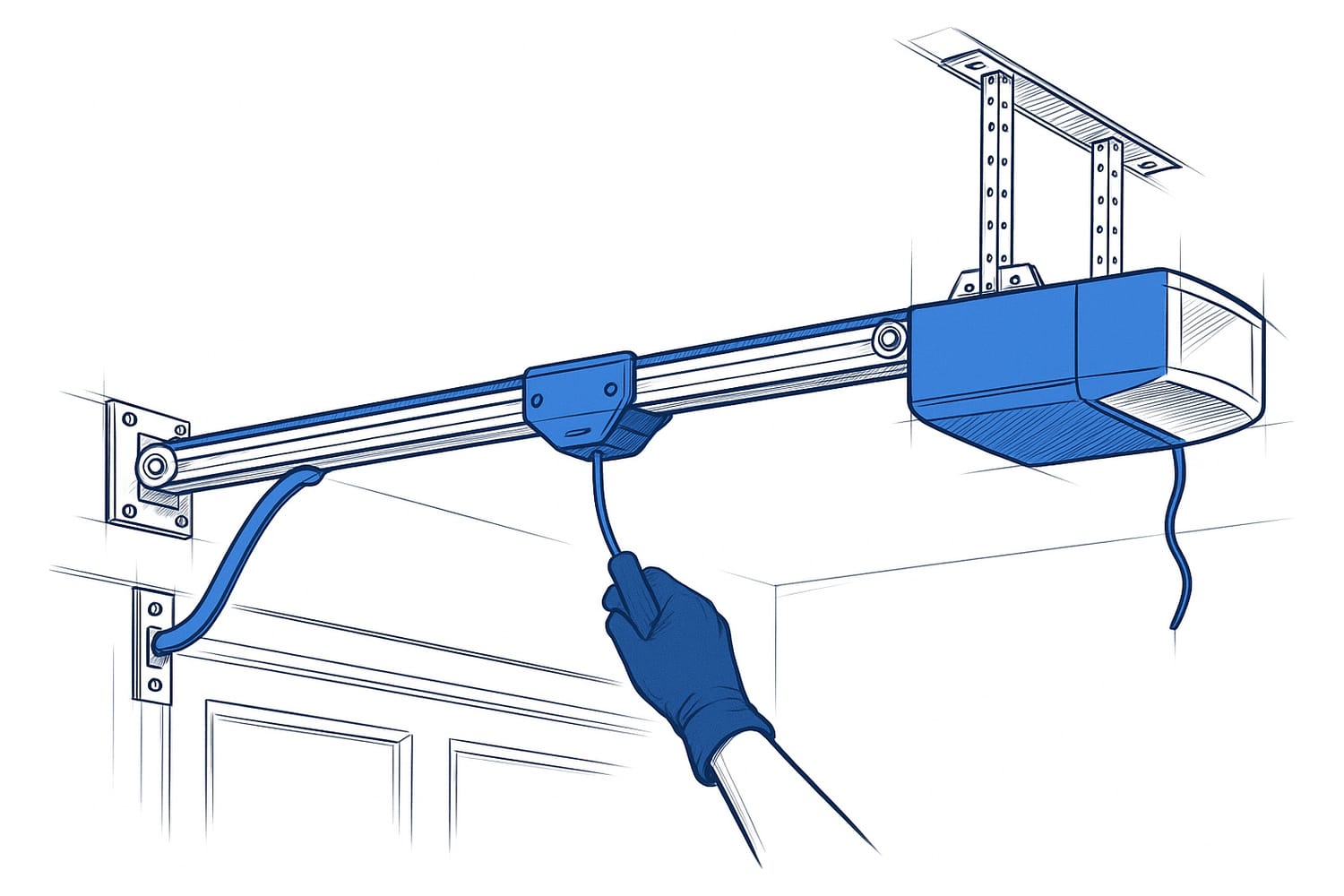 How to Open Your Garage Door in a Power Outage, and Reconnect It AfterWith the door closed, pull the red cord hanging from the opener rail to disconnect the door, then lift it by hand. When the power is back, pull the cord toward the motor (or straight down on some models) and run one cycle so the opener picks the door up again.Read the guide
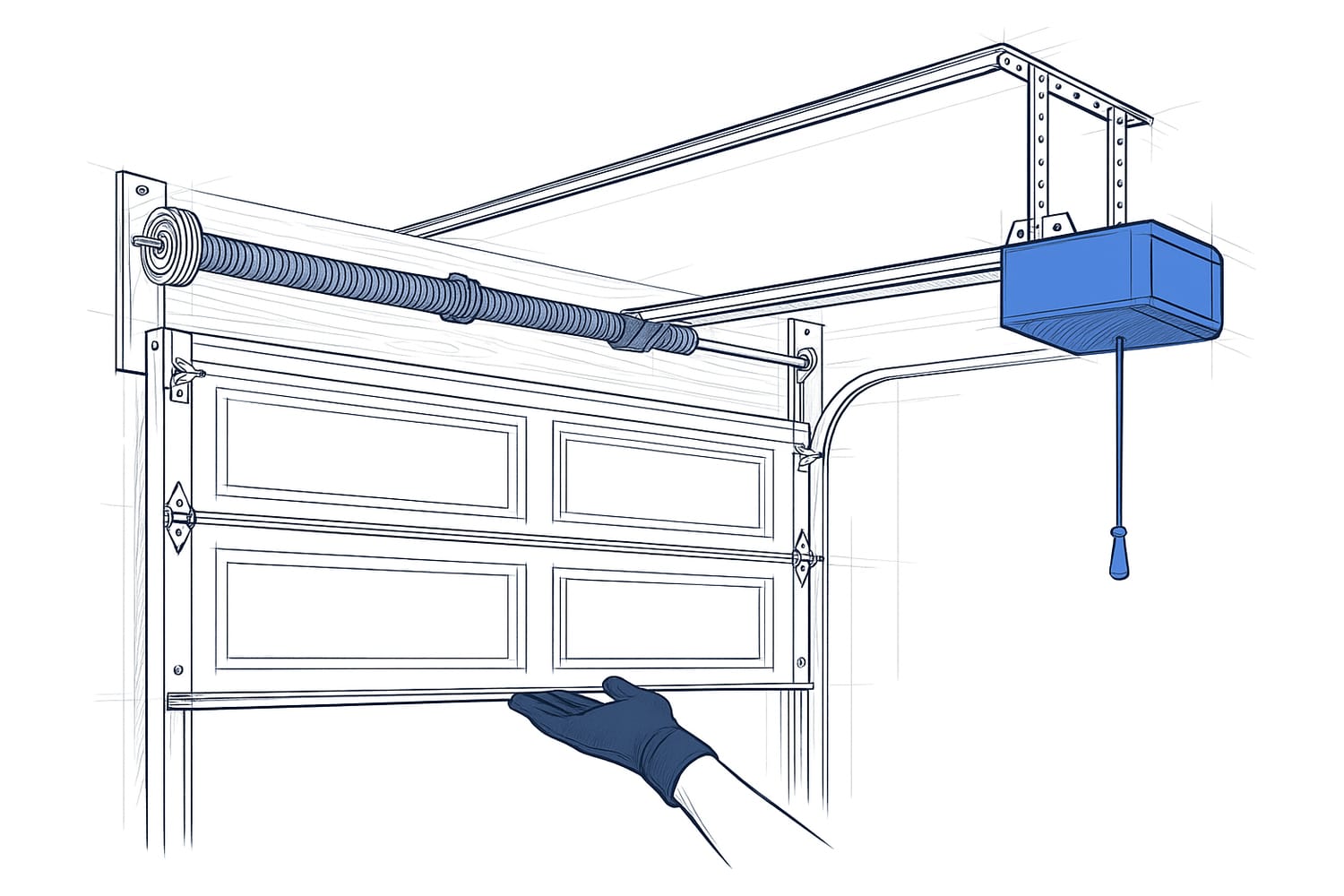 How to Test Your Garage Door's BalanceClose the door, pull the red release cord, lift the door by hand to about waist height, and let go. A balanced door stays put or drifts slowly. A door that drops or shoots up has a spring problem, and the opener has been covering for it.Read the guide
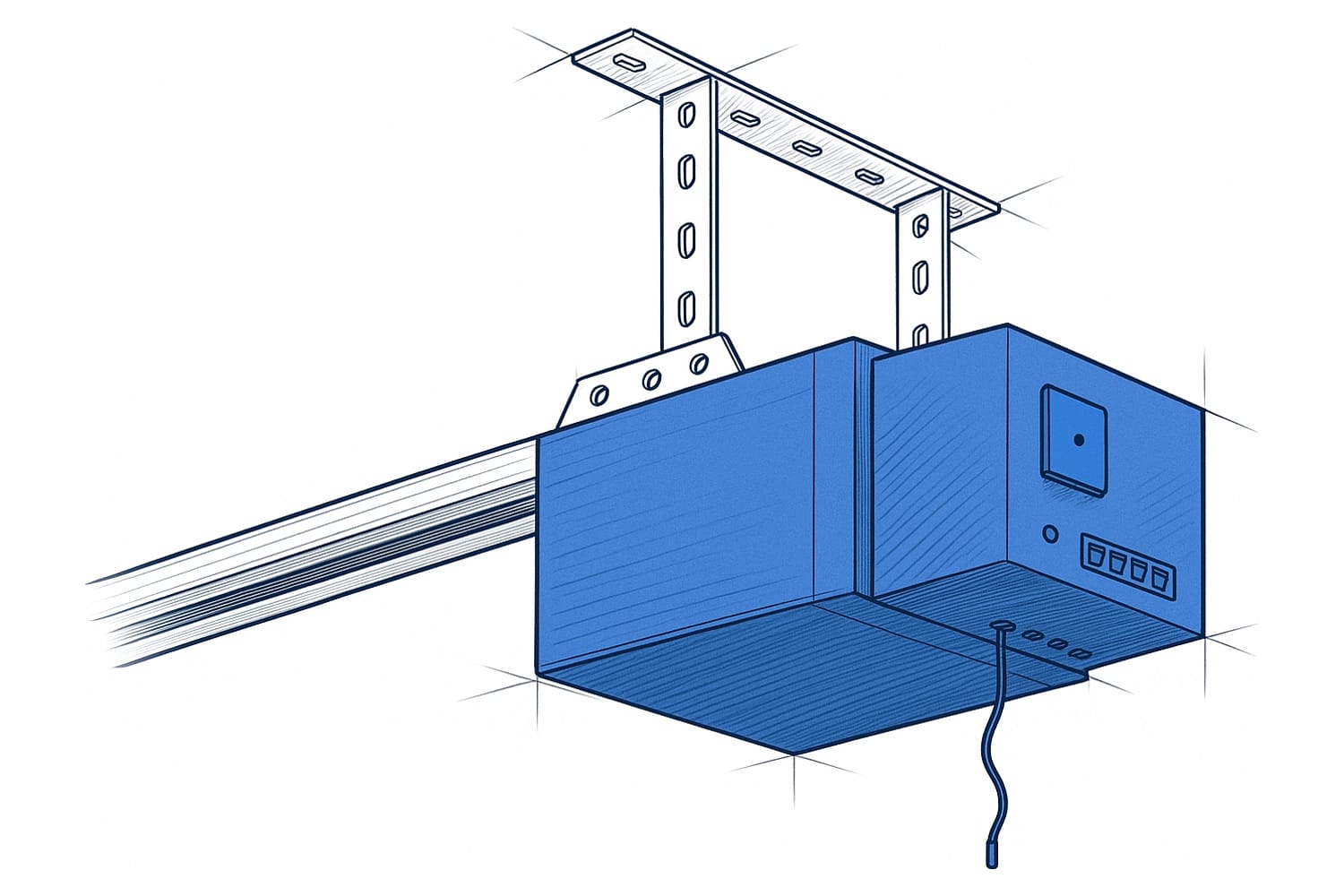 How to Connect a LiftMaster or Chamberlain Opener to myQInstall the myQ app and add a new device. On current openers the app connects over Bluetooth and asks for one press of the learn button. If it asks you to put the opener in Wi-Fi mode instead, press the yellow learn button three times. Older openers need a myQ hub.Read the guide
Ready to Book?
Same-day service across Winnipeg and nearby communities. Free on-site diagnosis on every residential repair.