
Is My Garage Door Spring Broken? The Signs, and What to Do Next
A loud bang from the garage, a door that's suddenly too heavy to lift, an opener that raises the door a few inches and stops, a visible gap in the spring coil, or slack cables all point to a broken spring. Leave the door closed, don't run the opener, and book a spring repair.
- Works for:
- Any sectional garage door. Springs break most often in the cold, so Winnipeg sees a run of them every January.
Written by the ClearTech Garage Doors team in Winnipeg and checked against manufacturer documentation. Updated .
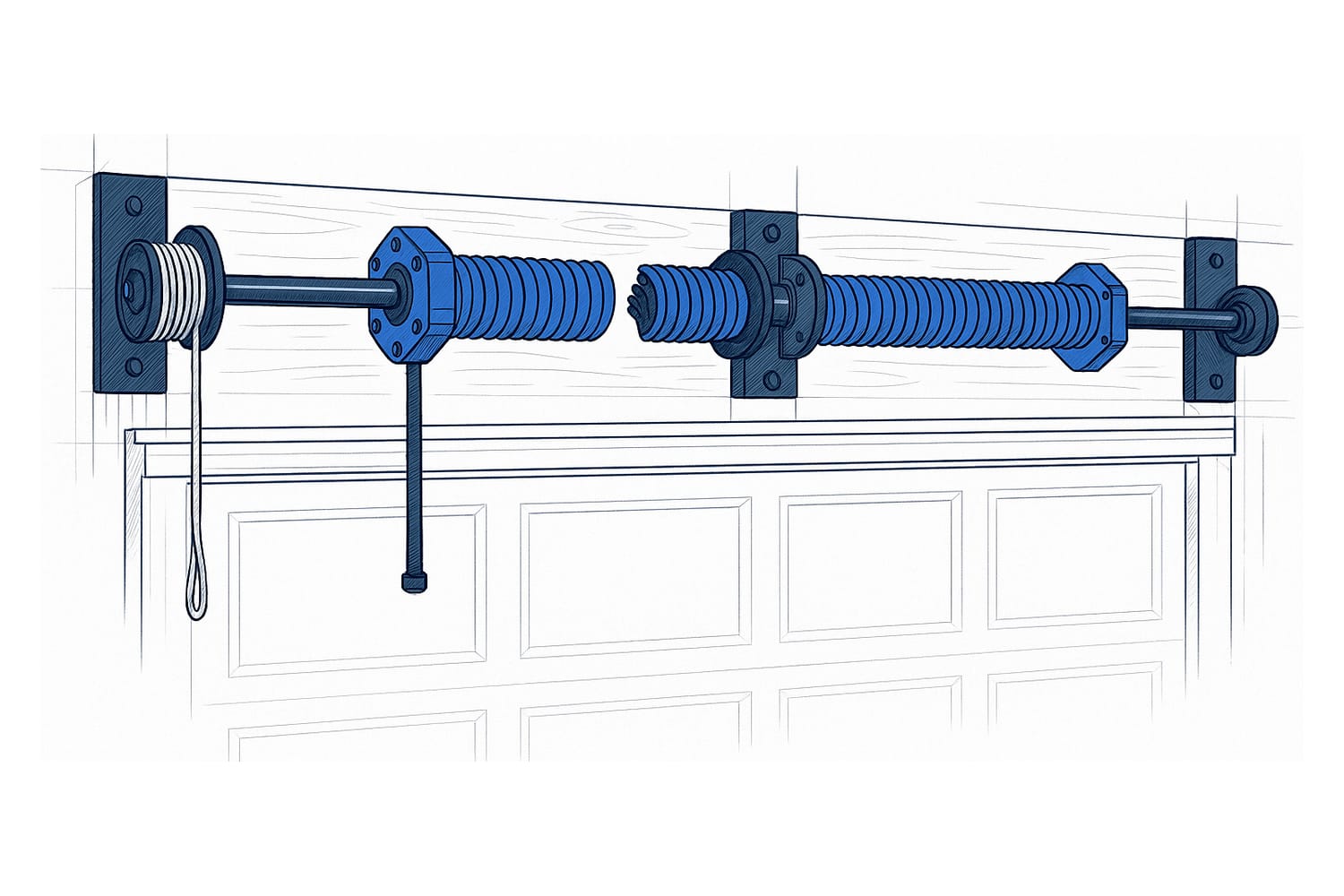
What are the signs of a broken garage door spring?
The classic one is the noise. A torsion spring lets go with a bang loud enough to hear from inside the house, and people often think something fell over in the garage. The next morning the door won't open.
Look at the spring itself. A torsion spring sits on a bar above the door, and a broken one has a clear gap of a few centimetres somewhere along the coil. Extension springs run along the horizontal tracks on either side, and a broken one hangs loose or lies on the floor. On a Wayne Dalton TorqueMaster door the springs are inside the tube, so you won't see anything.
Then there's what the door does. The opener lifts the door a few inches and stops, or strains and reverses. The top panel bends where the opener arm pulls on it. The lift cables on one or both sides hang slack, or one has jumped off its drum and the door sits crooked. By hand, the door feels like dead weight: 150 to 400 pounds, depending on its size, which is what the springs were carrying for you.
Why do garage door springs break?
Springs wear out by cycles. A standard torsion spring is rated for about 10,000 open-and-close cycles, which is seven to ten years for most households and much less for a door that opens a dozen times a day. Every cycle flexes the steel, and eventually it fatigues and snaps.
Cold speeds it up. Steel gets more brittle in deep cold, and a cold door is harder to lift: the rubber seals stiffen, lubricant thickens, and ice adds weight. A spring that was close to the end of its life often goes in the first hard freeze of the year.
Rust, a spring that was sized for a lighter door, and a door that was never balanced properly all shorten the count. Our spring repair page covers what we do to get the next set to last.
Spring or opener? How to tell
With the door fully closed, pull the red release cord on the opener rail and try to lift the door by hand.
If it's heavy, won't budge, or you can only get it up with real effort, it's the spring. If it lifts with normal effort and stays where you put it, the springs are fine and the problem is the opener, the sensors, or something the opener is seeing. The balance test walks through this properly, and the opener guides cover the opener side.
What should I do right now?
Leave the door closed and don't run the opener. Every attempt pulls the full weight of the door through the opener's gear and the top panel, and that's how a spring repair turns into a spring repair plus a new opener or a new panel.
If you absolutely have to get a car out, two adults can usually lift the door together: one holds it open while the other moves the car. Don't try it alone, don't let the door drop, and don't drive under a door that's being held by hand. Then book the repair. Spring replacement is a same-day call for us in most of Winnipeg.
What does the repair involve?
We replace both springs on a two-spring door, even when only one has broken. They were installed together, they've done the same cycles, and the second one is close behind. We size the new springs to the door's weight rather than copying whatever was there, check the cables, drums, and bearings while the tension is off, balance the door, and test the opener's force and reversing afterward. Most spring repairs take about an hour.
Need this fixed?
Spring Repair
Most garage door failures start with a broken spring. Same-day garage door spring repair in Winnipeg, with residential torsion replacement and a safer extension-to-torsion conversion when your door has the headroom for it.
More about Spring RepairWhen to call us
- The door won't open, or opens a few inches and stops. Leave it closed and book a spring repair.
- The door still opens but the opener strains and runs slowly. One spring on a two-spring door has gone and the other is carrying double. Running it like that wears out the opener.
- A cable is slack or off its drum and the door hangs crooked. That needs cable and drum work along with the spring.
- The top panel bowed or the opener bracket tore loose. That's a panel replacement and a reinforcement strut on top of the spring.
We look at the whole door, not just the part that failed, and tell you plainly what it needs.
Common Questions
My door has two springs and still opens. Do I really need to call?
- Yes. If one spring has a gap in it, the other is lifting a door built for two. The opener works twice as hard, the safety reverse may not trigger when it should, and the second spring is likely to go soon. Booking now means one visit instead of an emergency call.
Can you replace just the broken spring?
- We can, but we recommend against it and we'll say so. Springs on the same door have done the same number of cycles, so the survivor is near the end of its life, and mismatched springs leave the door out of balance. Our spring repair page explains the pricing.
Is it safe to walk or drive under the door while I wait?
- Not if it's open. A door with a broken spring is held up only by the opener's grip, and that can let go. Leave it closed until it's fixed.
Sources
This guide was checked against the following manufacturer and industry documents.
Related guides
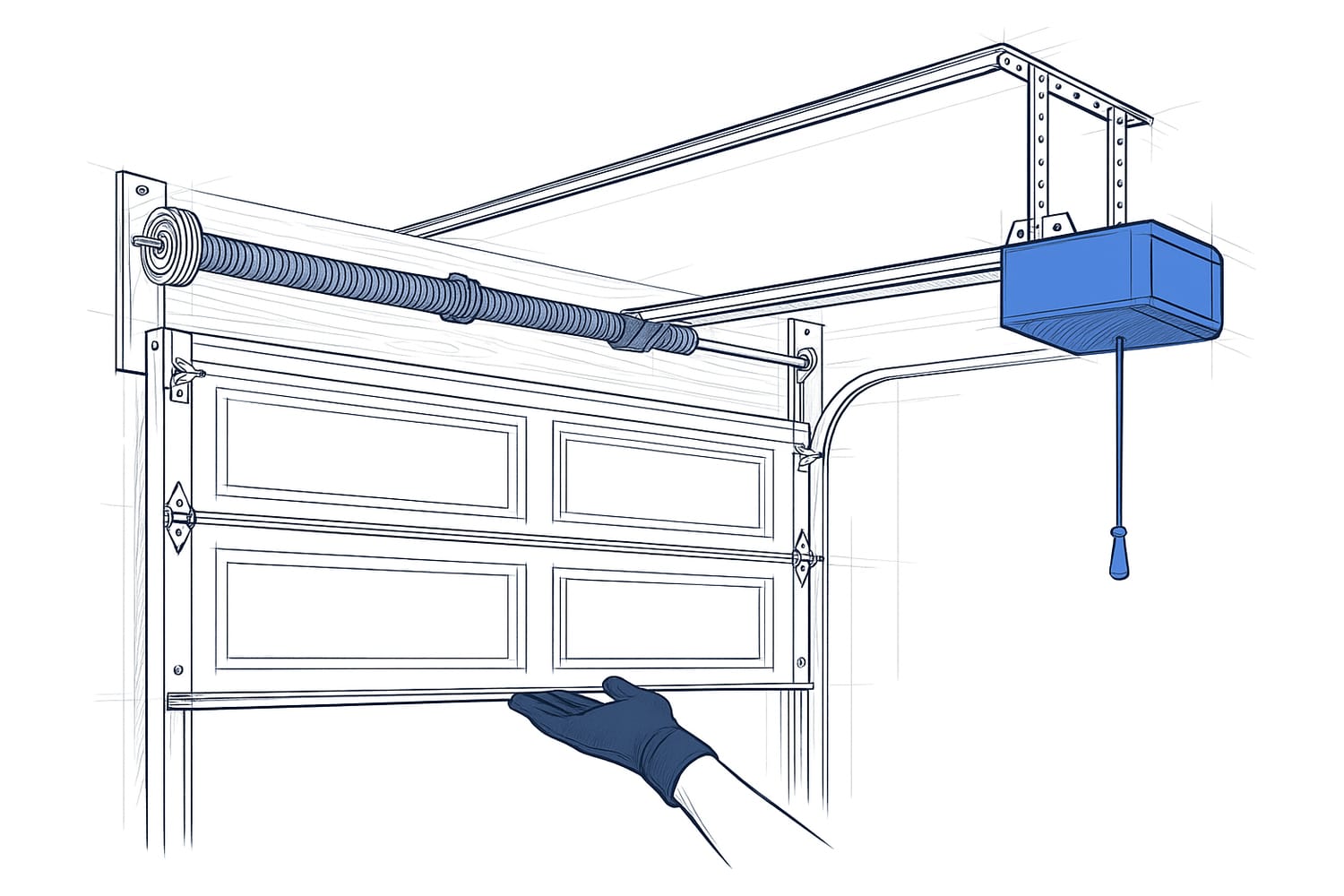 How to Test Your Garage Door's BalanceClose the door, pull the red release cord, lift the door by hand to about waist height, and let go. A balanced door stays put or drifts slowly. A door that drops or shoots up has a spring problem, and the opener has been covering for it.Read the guide
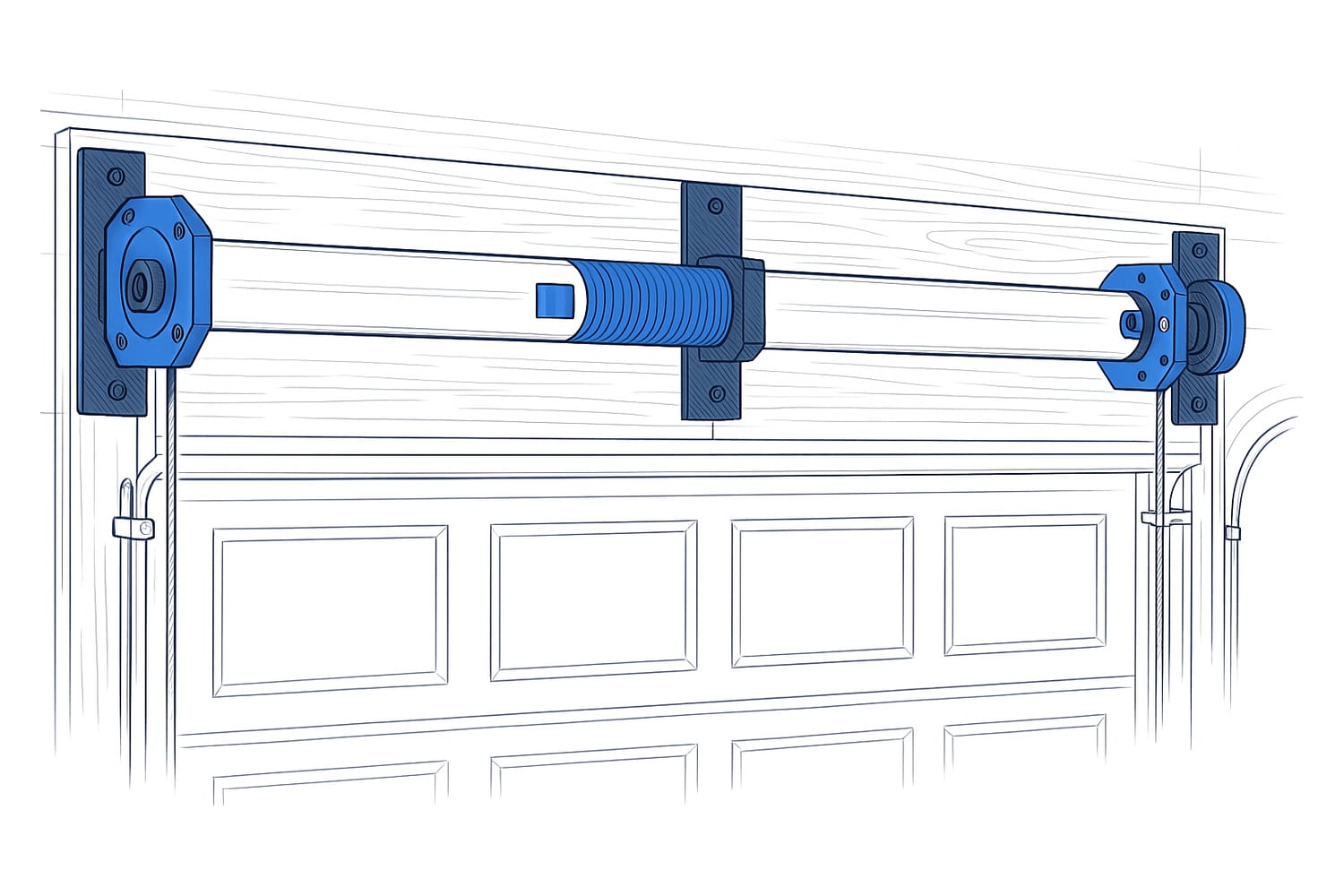 Wayne Dalton TorqueMaster Springs: What They Are and What to Do When One BreaksTorqueMaster is Wayne Dalton's spring system with the springs sealed inside the tube above the door. When one breaks you can't see it, but the door turns to dead weight and the opener stops after a few inches. We normally replace the system with standard torsion springs, which are easier to service for the rest of the door's life.Read the guide
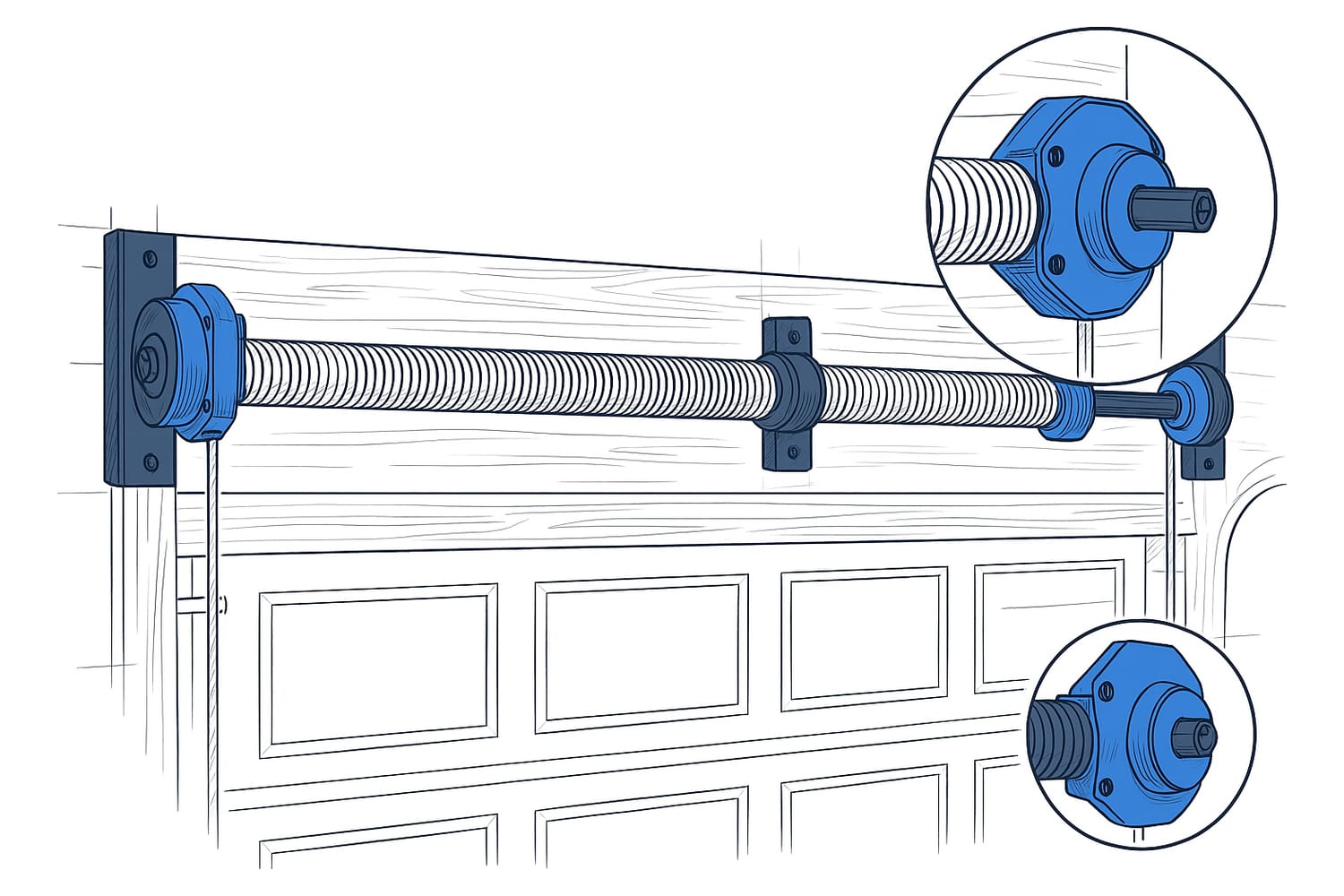 Clopay EZ-Set Torsion Springs: What They Are and What to Do When One BreaksEZ-Set is the spring system on many Clopay, Ideal, and Holmes doors. The springs sit above the door like standard torsion springs, but each is wound by a winder unit at the end of the shaft instead of at the centre. When one breaks, we normally convert the door to standard torsion springs rather than fit another EZ-Set spring.Read the guide
Ready to Book?
Same-day service across Winnipeg and nearby communities. Free on-site diagnosis on every residential repair.