
Torsion vs Extension Garage Door Springs: How to Tell Them Apart and Which Is Safer
Torsion springs sit on a shaft above the door and twist to lift it. Extension springs run along the horizontal tracks on each side and stretch. Torsion is safer, lasts longer, and lifts more evenly, which is why we convert most extension doors when a spring goes. If you keep extension springs, they need a safety cable through each one.
- Works for:
- Any sectional door. Single doors under 8 feet wide may have either; wider doors are almost always torsion.
Written by the ClearTech Garage Doors team in Winnipeg and checked against manufacturer documentation. Updated .
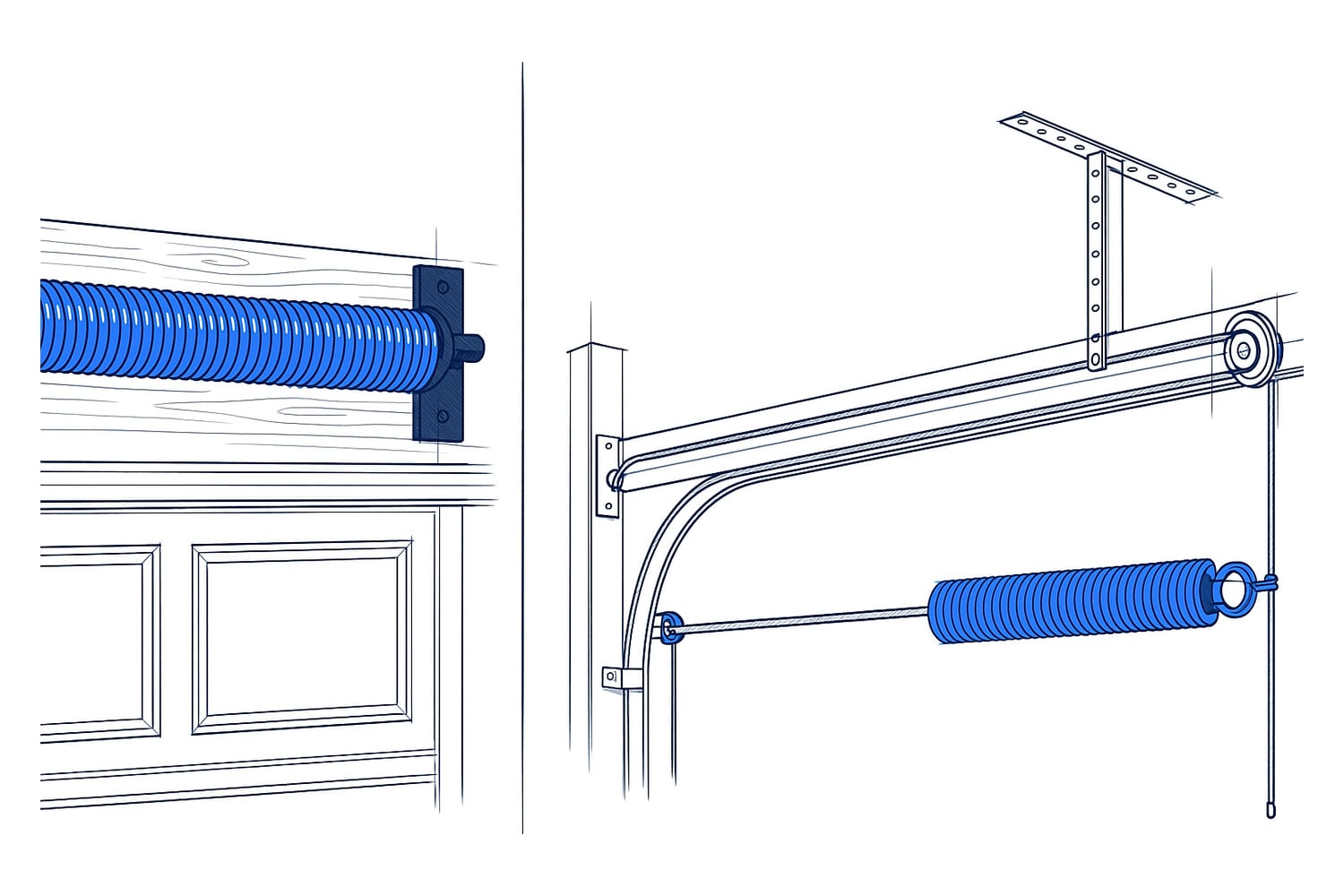
Which type do I have?
Look above the door with it closed. A torsion system is a steel shaft running across the top of the opening with one or two tightly wound springs on it, cable drums at each end, and cables running down to the bottom corners of the door. On a Wayne Dalton TorqueMaster door the springs are inside the tube and you'll see only the tube; on a Clopay or Ideal EZ-Set door there are winding units at the ends of the shaft.
An extension system has no shaft. Instead, a long spring runs beside each horizontal track, parallel to the ceiling, with a pulley at the end and a cable that runs over it down to the door. When the door closes, the springs stretch; when it opens, they contract and pull. Extension doors are common on older Winnipeg houses and on single doors, and they need about 10 inches of headroom against 12 for standard torsion.
What's the difference in how they work?
A torsion spring stores energy by twisting. It drives the door from a central shaft through the drums, so both cables are pulled by the same shaft and the door rises level. The spring is also fixed to the shaft, which means that when it breaks it breaks in place: a bang, a gap in the coil, and a door that's suddenly heavy, but nothing flies.
An extension spring stores energy by stretching, and each side works on its own. Because the two sides aren't tied together, the door can lift unevenly, and Garaga notes the springs stretch and contract more with every use. When an extension spring breaks it's a stretched steel coil letting go, and without containment the broken end can travel across the garage. That's why the industry body DASMA tells inspectors to check that every extension spring has a safety cable running through its centre, anchored at both ends: the cable catches the pieces.
Which should I have?
Torsion, where the headroom allows it, and standard torsion hardware needs about 12 inches of clear space above the door, a bit more with an opener. Low-headroom torsion kits work down to around 5 inches. Our position on the spring repair page is that when an extension spring breaks, the two safer routes are a proper containment cable through each spring, or converting the door to torsion. We quote both and recommend the conversion on most doors, because it also sorts out the uneven lift and the pulley wear.
If your extension springs are fine and you're not changing them, the one thing to check today is the safety cable. No cable through the spring is a call for an inspection, whichever company you use.
How long do springs last, and why both at once?
Standard residential springs of either type are rated around 10,000 cycles, an open and a close being one cycle, which works out to roughly seven years at average use and less for a busy door. Garaga offers higher-cycle springs, 20,000 to 25,000 cycles, that roughly double that. Rust, a spring sized for the wrong door weight, and a door that's out of balance all shorten the count, and a Winnipeg winter is hard on all three.
On a two-spring door we replace both when one breaks, which is DASMA's guidance as well as ours. They were installed together and have done the same cycles, so the survivor is close behind, and a mismatched pair leaves the door out of balance. Spring replacement, winding, and tension adjustment are not homeowner jobs on either system; the balance test is as far as a homeowner should go.
Need this fixed?
Spring Repair
Most garage door failures start with a broken spring. Same-day garage door spring repair in Winnipeg, with residential torsion replacement and a safer extension-to-torsion conversion when your door has the headroom for it.
More about Spring RepairWhen to call us
- A spring has broken on either system. Leave the door closed and book a spring repair. We'll quote like-for-like and the conversion.
- Your extension springs have no safety cable through them. That's an inspection and a short visit to add them.
- The door lifts crooked or one side lags. On extension doors that's usually a pulley, a stretched cable, or unmatched springs; on torsion doors a cable off the drum.
- You want to add a wall-mount opener. Those need a standard torsion shaft, so an extension or TorqueMaster door gets converted first.
We look at the whole door, not just the part that failed, and tell you plainly what it needs.
Common Questions
Is a torsion conversion expensive?
- It costs more than a straight extension-spring swap and less than most people expect, because the labour overlaps with the spring replacement you were already paying for. We quote it on the spot next to the like-for-like price so you can see the difference.
Can I convert if I have low headroom?
- Often, yes. Low-headroom torsion kits work in roughly 5 to 12 inches of clearance. Under about 5 inches it gets difficult, and we'll say so after measuring.
Can I lubricate or adjust the springs myself?
- Lubricate, yes: a light coat of silicone or white lithium spray along the coils is in the lubrication guide. Adjust, no. Torsion springs are wound with bars under hundreds of pounds of force, and extension springs still store enough energy to injure. Both are how people get hurt.
Sources
This guide was checked against the following manufacturer and industry documents.
Related guides
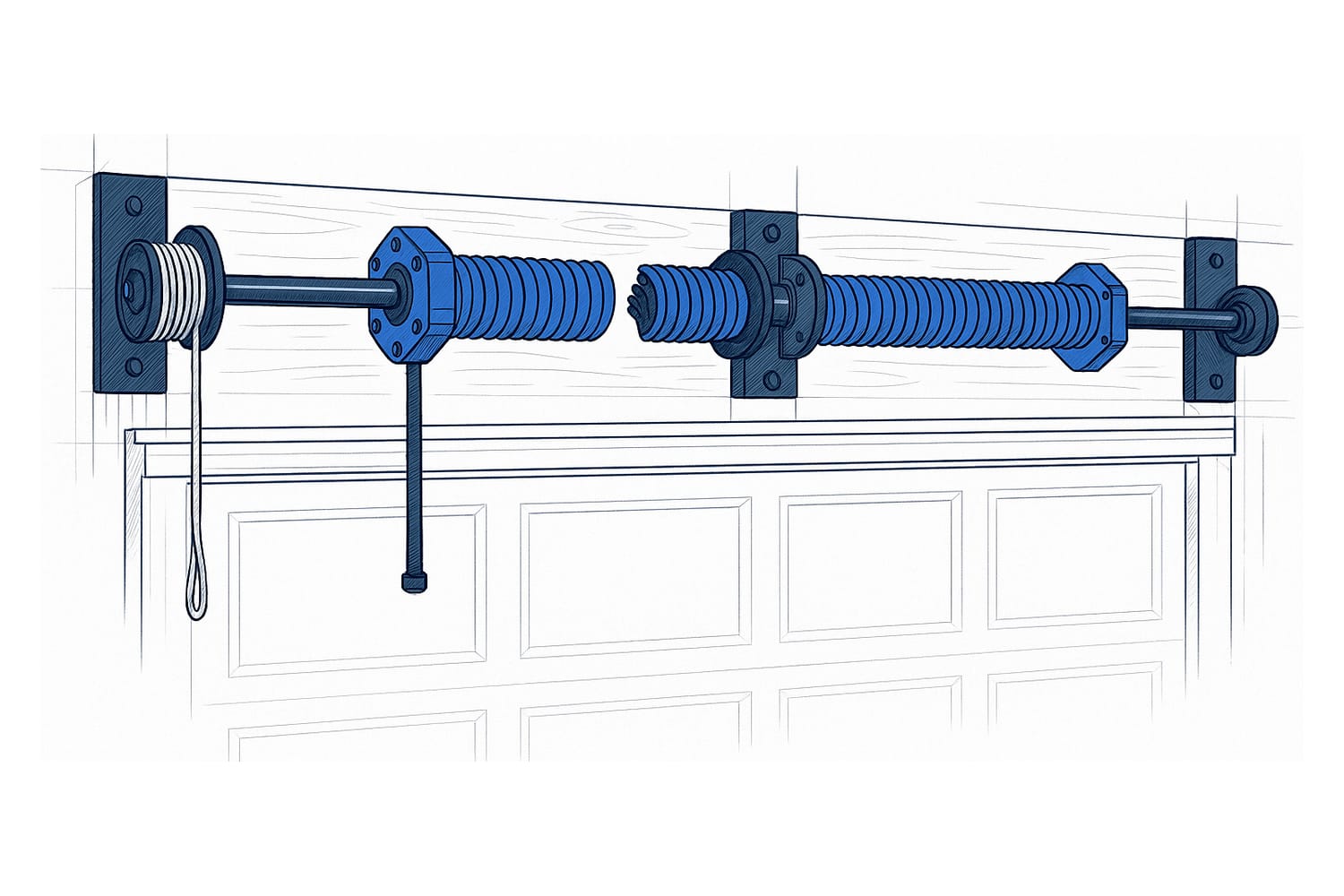 Is My Garage Door Spring Broken? The Signs, and What to Do NextA loud bang from the garage, a door that's suddenly too heavy to lift, an opener that raises the door a few inches and stops, a visible gap in the spring coil, or slack cables all point to a broken spring. Leave the door closed, don't run the opener, and book a spring repair.Read the guide
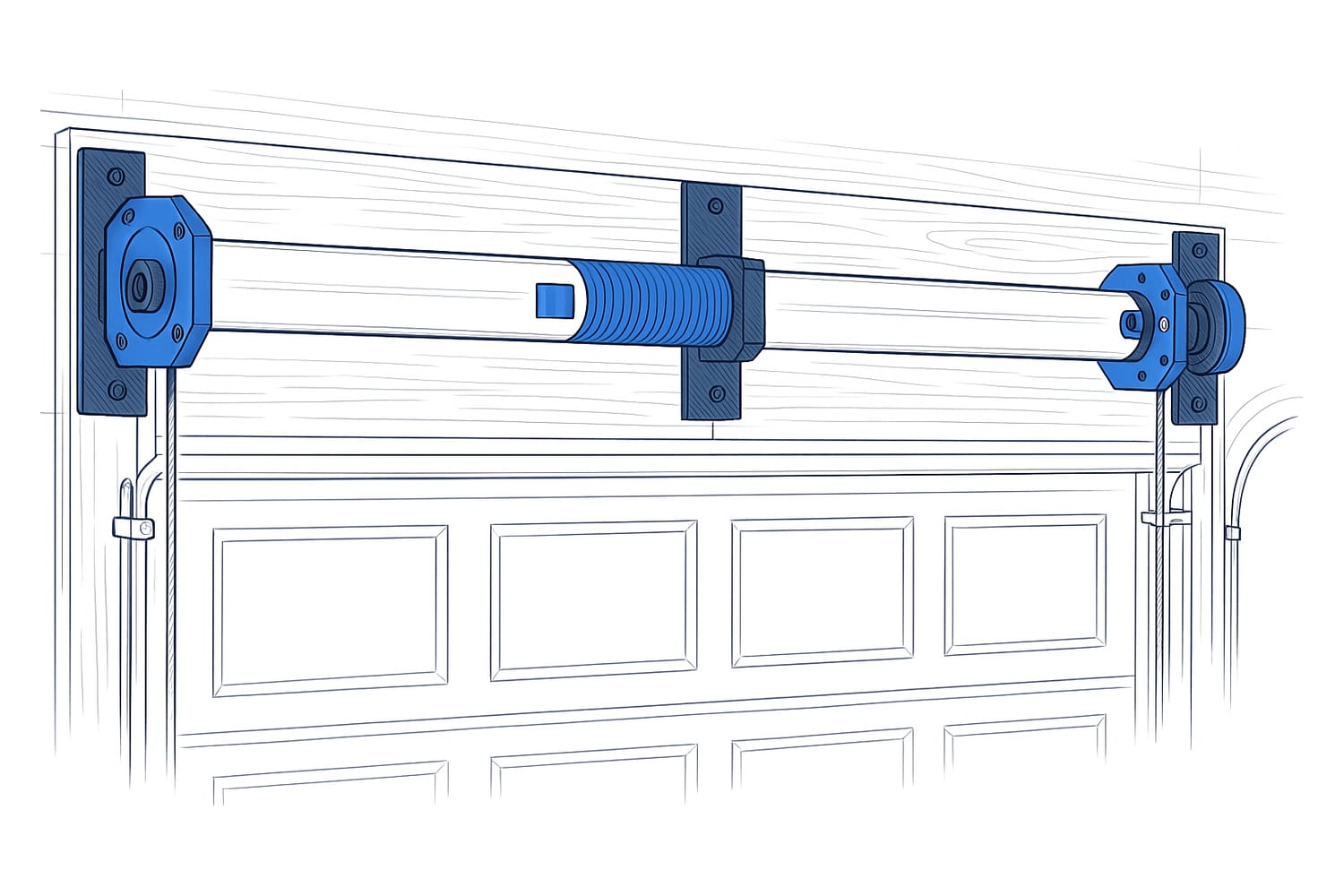 Wayne Dalton TorqueMaster Springs: What They Are and What to Do When One BreaksTorqueMaster is Wayne Dalton's spring system with the springs sealed inside the tube above the door. When one breaks you can't see it, but the door turns to dead weight and the opener stops after a few inches. We normally replace the system with standard torsion springs, which are easier to service for the rest of the door's life.Read the guide
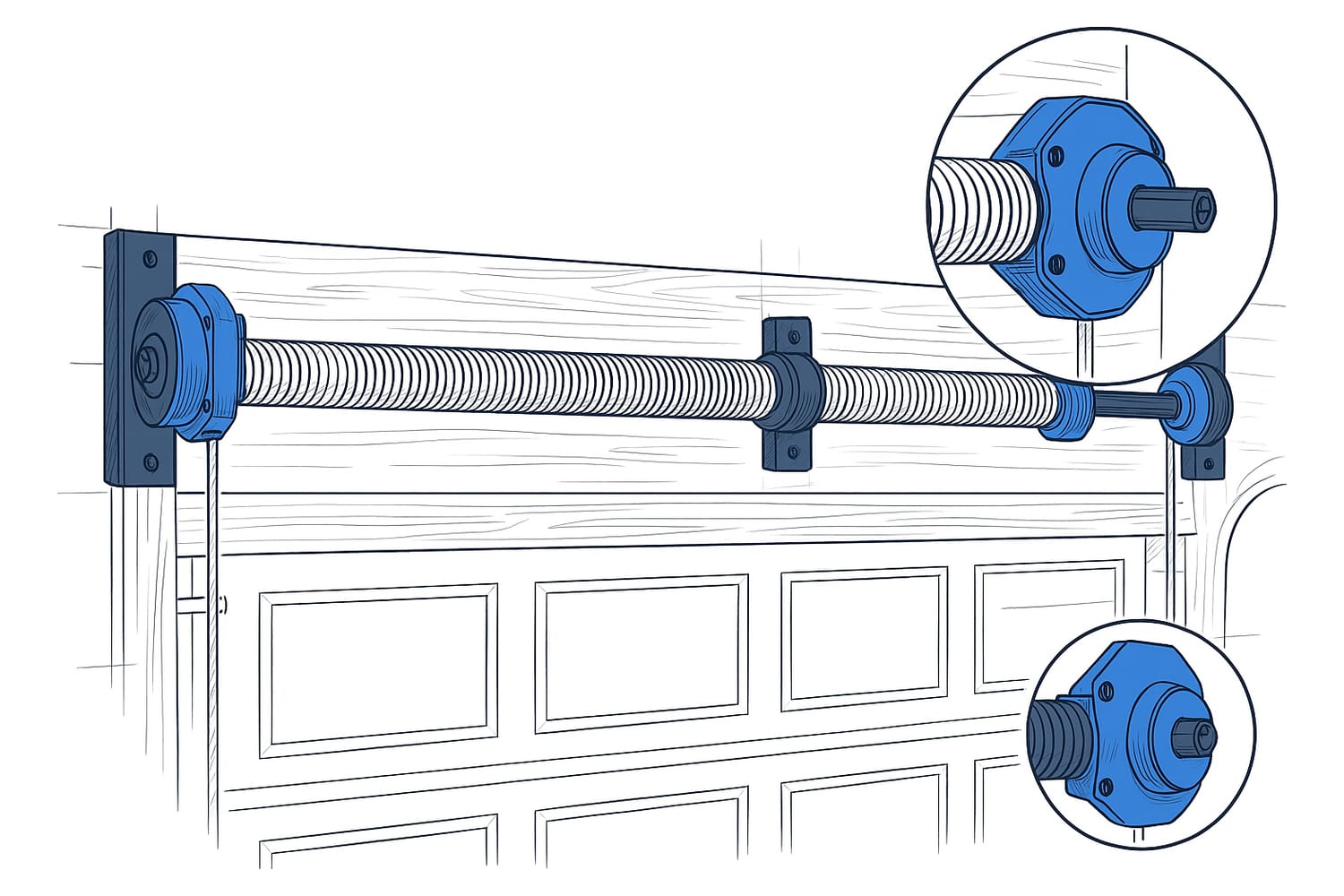 Clopay EZ-Set Torsion Springs: What They Are and What to Do When One BreaksEZ-Set is the spring system on many Clopay, Ideal, and Holmes doors. The springs sit above the door like standard torsion springs, but each is wound by a winder unit at the end of the shaft instead of at the centre. When one breaks, we normally convert the door to standard torsion springs rather than fit another EZ-Set spring.Read the guide
Ready to Book?
Same-day service across Winnipeg and nearby communities. Free on-site diagnosis on every residential repair.