
Garage Door Insulation and R-Value: What the Numbers Mean in Winnipeg
R-value measures how well the middle of a door section resists heat flow, and it's calculated, not tested. For a detached unheated garage, R-6 or less is fine. For an attached garage, aim for R-10 to R-12. For a heated garage or shop, R-16. The seals and the joints between sections matter as much as the number.
- Works for:
- Anyone comparing quotes for an insulated door, or wondering whether their current door is the reason the back hall is cold.
Written by the ClearTech Garage Doors team in Winnipeg and checked against manufacturer documentation. Updated .
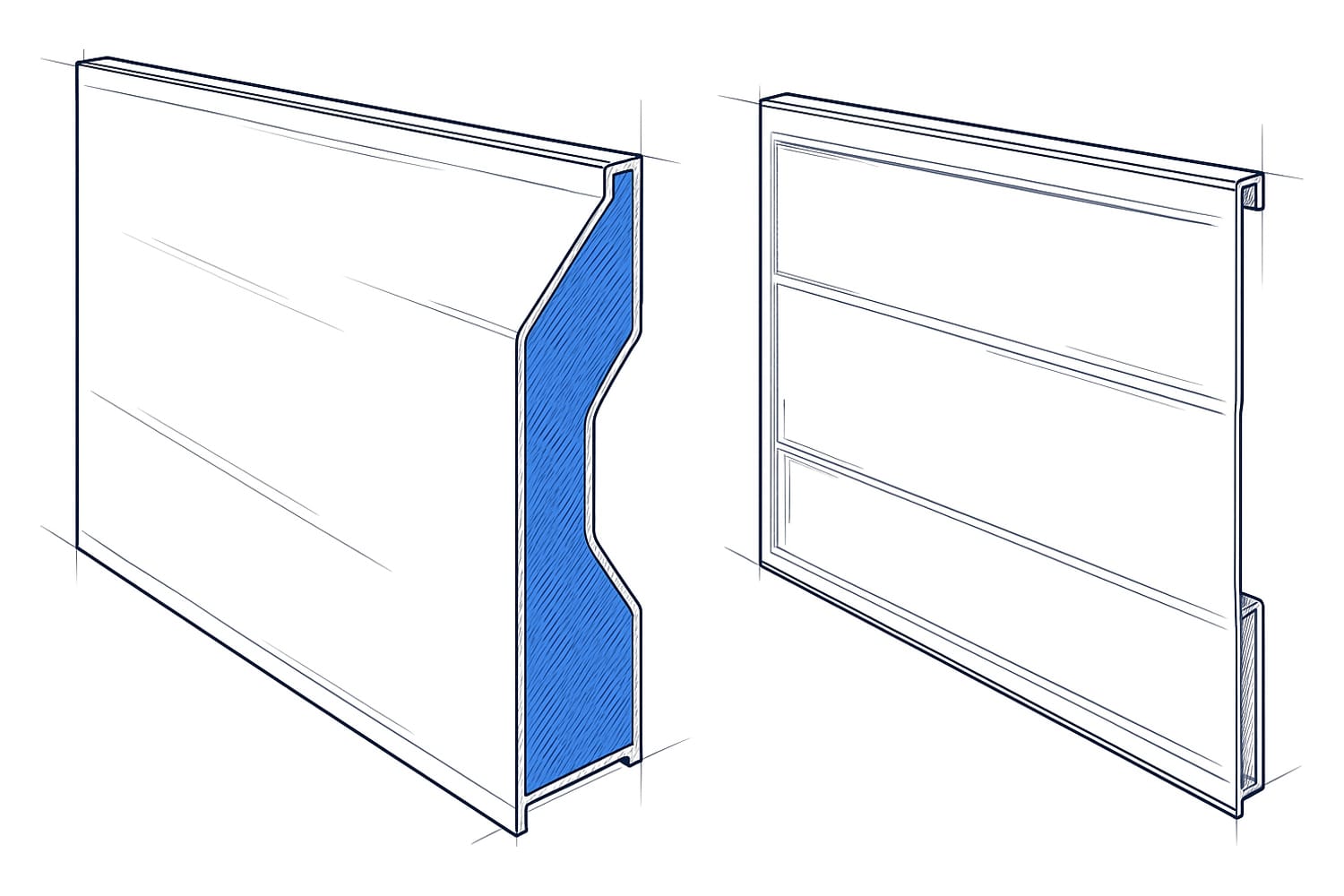
What does R-value actually measure on a garage door?
R-value is thermal resistance: the higher the number, the more slowly heat passes through. On a garage door the published R-value is a calculation for the centre of one section, done by the industry method in DASMA's technical sheet 163. It adds up the insulation's thickness divided by its conductivity, plus a small allowance for the air films on each face. The steel skins contribute almost nothing.
What the calculation leaves out is everything that makes a door a door: the joints between sections, the end stiles, the hinges, the perimeter seals, and the air that leaks around all of them. DASMA says plainly that the section R-value should not be used to describe a whole door assembly. The number that does describe the whole door is the U-factor, which comes from testing a complete installed door. Lower is better there, and it is not simply one divided by the R-value, however often that gets claimed.
In practice, most residential quotes still lead with an R-value, though DASMA has been pushing the industry toward published U-factors and some manufacturers now list both. It's still useful for comparing doors against each other, as long as you treat it as a comparison of panels rather than a promise about your garage.
How much insulation do I need in Winnipeg?
It depends on what's on the other side of the door.
A detached, unheated garage that just keeps the car out of the snow doesn't need much. A non-insulated steel door works, and anything up to about R-6 is plenty. Insulation here buys you a quieter, stiffer door more than a warmer one.
An attached garage shares a wall, and often a ceiling, with the house. The manufacturers' usual guideline is at least R-10, and we'd steer most people to R-12 or higher if the garage is where you come and go all winter. A warmer garage means a warmer back hall, less frost on the inside of the door, and a car that starts easier.
A heated garage, a workshop, or a gym is a room you're paying to heat. R-16 or better is what manufacturers suggest for a heated workshop, and it's what we'd put on a heated space. Doors go up to about R-18 to R-20. One honest note: the step from R-12 to R-16 does less than the numbers suggest, because heat flow is the inverse of R-value and the curve flattens quickly. Past R-12, the money is often better spent on sealing.
Polystyrene or polyurethane?
Polystyrene is rigid foam board cut to fit between the two steel skins. It's cheaper, and it insulates reasonably well, but it leaves small gaps at the edges and the section joints, and it doesn't bond to the steel. Manufacturers put it at roughly half the insulating value of polyurethane at the same thickness.
Polyurethane is injected as a liquid, expands to fill the section completely, and bonds to both skins. That gives a higher R-value in the same thickness and a much stiffer panel, which is why the stiffest and quietest steel doors are polyurethane. Every door we install above about R-12 is polyurethane. The polystyrene doors we stock are for the unheated detached garage, where the extra R-points don't buy anything.
The installation page lists the brands and insulation options we quote.
Why do the seals matter as much as the R-value?
Because R-value doesn't measure air. DASMA's thermal verification program says in so many words that air infiltration isn't covered by the ratings. A door with a high R-value and a hardened bottom seal, worn side weatherstripping, or no thermal break in the section joints will let in more cold than a lower-rated door that seals properly.
Three things to look for on a quote: a bottom seal rated for cold so it stays flexible at minus 25 or colder, side and top weatherstripping that actually touches the door, and a thermal break, meaning a non-metal separation between the outside and inside skins at the section joints and edges. Without a thermal break, the steel carries cold straight through around the insulation.
If your current door already has decent insulation and the garage is still cold, the weatherstripping guide and the bottom seal guide are the cheaper fixes to try first.
How do I compare two quotes?
Ask the same four questions of each. What's the insulation type and thickness? What's the published R-value, and is it the DASMA calculated figure? Is there a tested U-factor for the model? And what's the thermal break and seal package? Two doors with the same R-value can behave very differently on the last point.
Then look at the rest of the door: the gauge of the steel, the warranty on the skins and the hardware, and whether the quote includes new perimeter seals and a strut on the top section for the opener. Our installation page covers what's in ours.
Need this fixed?
New Door Installation
New garage door installation in Winnipeg. 16x7 and 9x7 insulated steel doors in stock, most installed within a week of your free on-site quote. Old door removed and hauled away, new door installed in one day, 1-year workmanship warranty.
More about New Door InstallationWhen to call us
- You want a number for your garage rather than a rule of thumb. The site visit looks at the whole space: attached or detached, heated or not, how the garage is used, and what the current door and seals are doing.
- The garage is cold but the door is fairly new. Seals, section joints, and a missing thermal break are the usual causes, and a weather seal replacement is a lot cheaper than a door.
- You're insulating the garage walls and ceiling. The door is the biggest single panel in the room and should match the rest of the envelope.
We look at the whole door, not just the part that failed, and tell you plainly what it needs.
Common Questions
Can I add insulation to my existing door?
- Polystyrene kits exist for uninsulated steel doors, and they help with noise and a little with heat. They also add weight, which changes the spring balance, so the door needs rebalancing afterward or the opener pays for it. If the door is otherwise sound, that's a job we can do with a tune-up. If the door is twenty years old and single-skin, the money usually goes further toward a new one.
Is a higher R-value door heavier?
- Usually, because it's thicker and has two steel skins. That's why a new insulated door sometimes needs new springs and a check that the opener can handle it. We size both to the actual door weight as part of the install.
Why does the same door show different R-values on different sites?
- Some sellers quote the centre-of-section calculation, some quote a thickness-based estimate, and some quote the number for a different thickness of the same model. Ask which method was used. The DASMA calculated figure is the one most manufacturers still publish and the fairest for comparing panels.
Sources
This guide was checked against the following manufacturer and industry documents.
Related guides
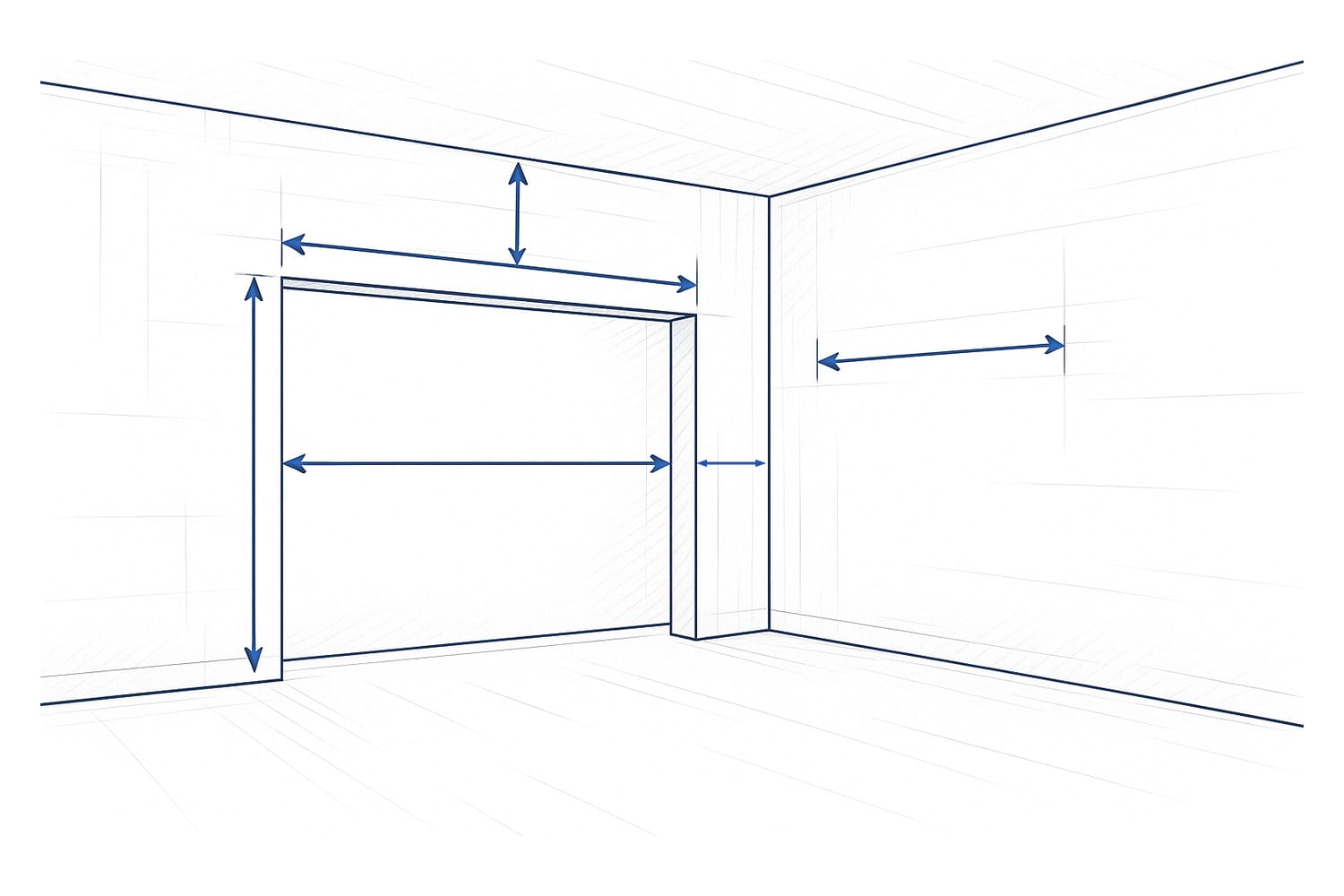 How to Measure for a New Garage DoorMeasure the opening's width and height in two places, then the headroom above it, the sideroom on each side, and the backroom into the garage. Those five numbers, plus a note of anything in the way, are what a quote is built on. We confirm every one on site before a door is ordered.Read the guide
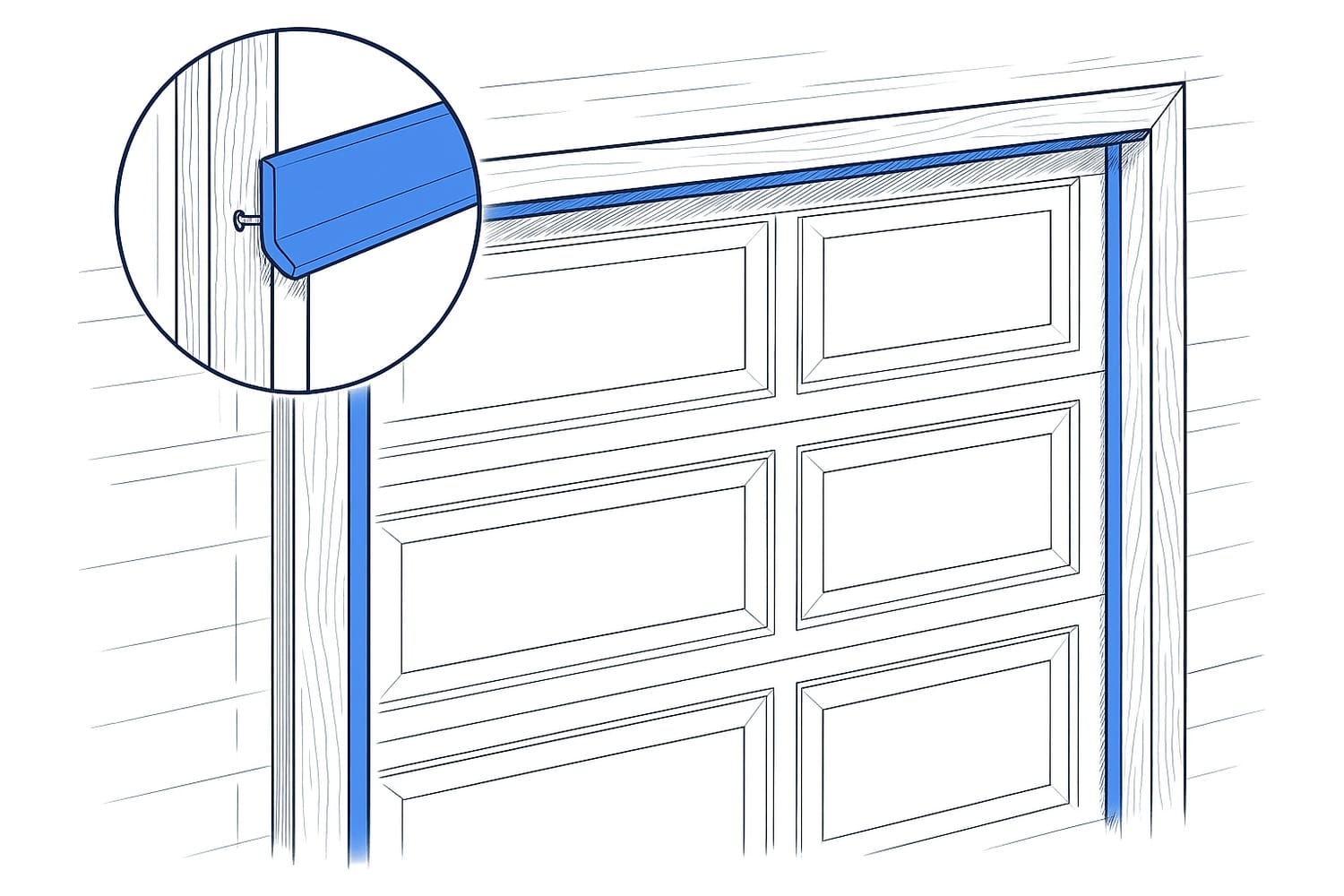 How to Replace Garage Door Weatherstripping (Sides and Top)Pry off the old stop moulding, cut new vinyl stop with a rubber flap to length, nail the top piece first and the sides last, and set the flap so it just touches the face of the closed door. It stops drafts, light, and blown snow at the edges of the door.Read the guide
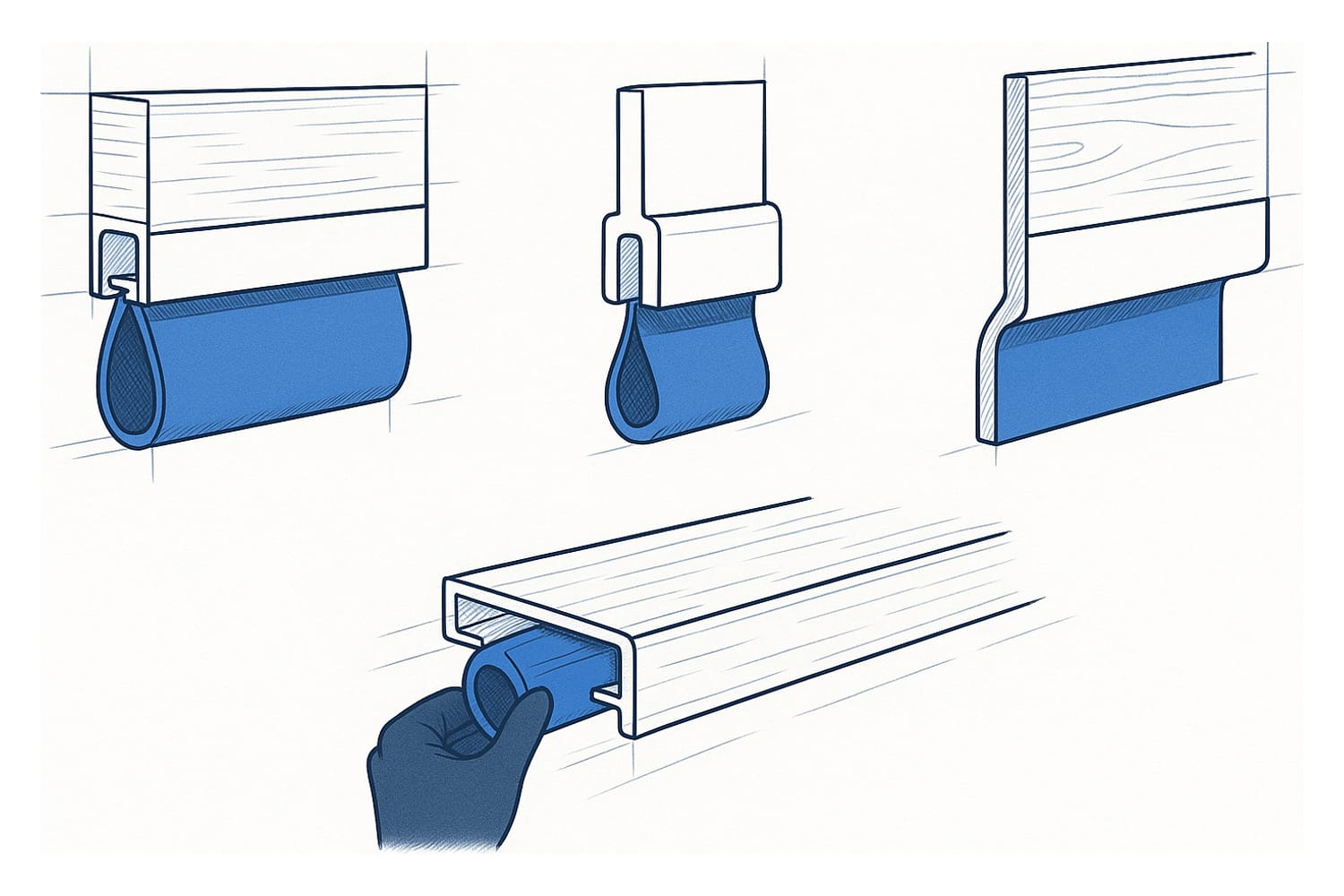 How to Replace a Garage Door Bottom SealMatch the new seal to your retainer (T-style, bead, J-style, or bulb) and buy it longer than the door, pull the old seal out of the retainer, spray the channel with soapy water, and slide the new one in. Trim the ends after it settles for a day.Read the guide
Ready to Book?
Same-day service across Winnipeg and nearby communities. Free on-site diagnosis on every residential repair.