
How to Replace a Garage Door Bottom Seal
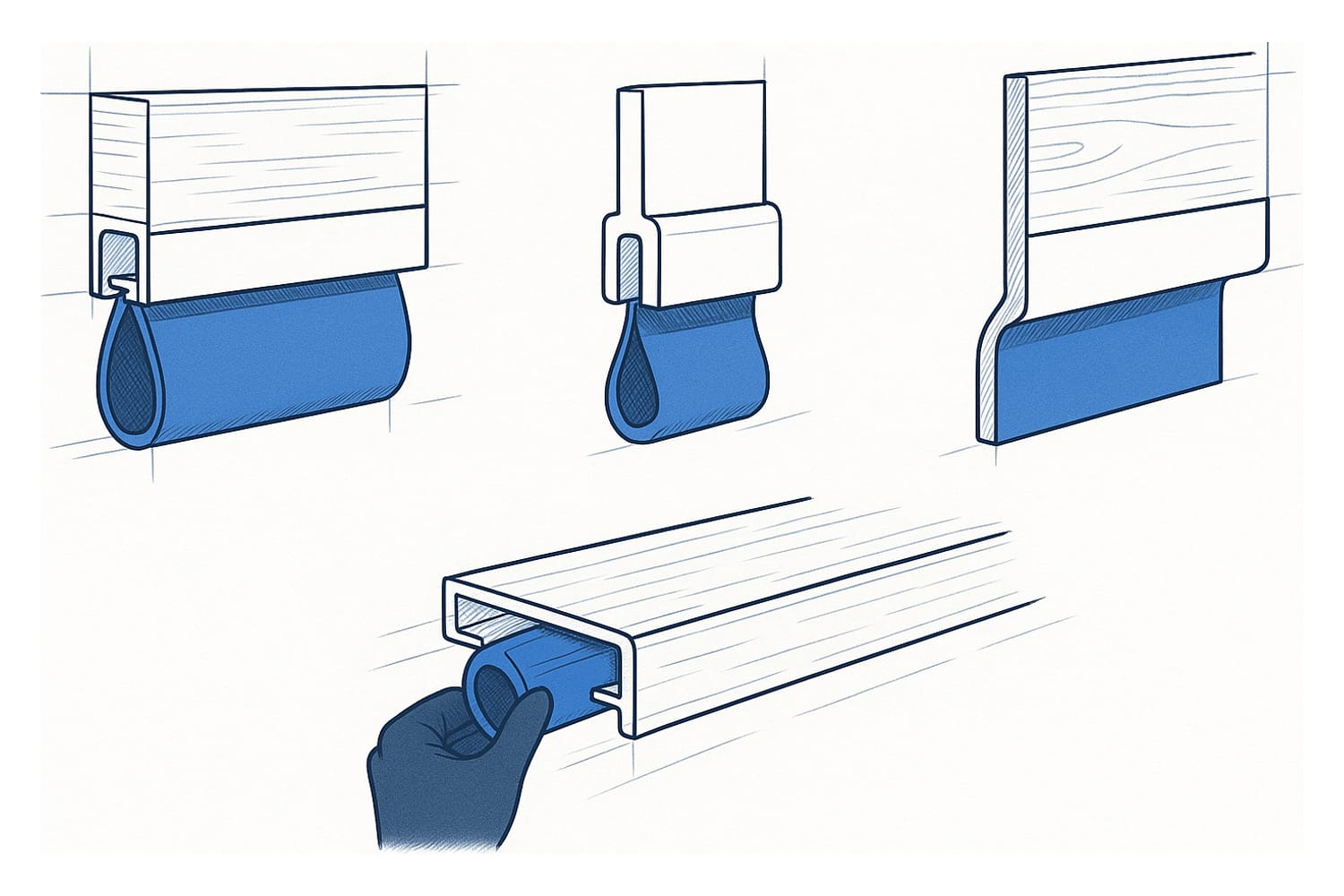
Match the new seal to your retainer (T-style, bead, J-style, or bulb) and buy it longer than the door, pull the old seal out of the retainer, spray the channel with soapy water, and slide the new one in. Trim the ends after it settles for a day.
- Works for:
- Sectional steel or wood doors with a metal or vinyl retainer along the bottom edge. A door with a flat strip nailed to the bottom has no retainer and takes a different seal.
Written by the ClearTech Garage Doors team in Winnipeg and checked against manufacturer documentation. Updated .
Before you start
- The new seal, matched to your retainer and cut at least 15 cm (6 in) longer than the door
- A tape measure and a utility knife
- Dish soap and water in a spray bottle
- A flat screwdriver and pliers for the retainer ends
- Locking pliers to hold the door in place
- A warm day or a heated garage. Rubber slides far more easily above freezing.
Step by step
Step 1: Raise the door until the bottom edge is about chest height, pull the red release cord so the opener can't move it, and clamp locking pliers on the track just under a roller so the door can't drift down.
Step 2: Identify the retainer by looking at the end of the channel. A T-shaped slot takes a T-style seal. Two round grooves take a bead seal, which forms a U under the door. A single slot holding a flap is J-style. A single round channel takes a bulb seal.
Cut a short piece off the old seal and take it to the counter. Round and T-shaped channels look alike until the wrong one won't slide in.
Step 3: Measure the width of the door and buy the seal longer than that. The seal's width has to match the retainer, not the door. If your floor has dips, a wider U-shaped seal has more rubber to compress into them.
Step 4: Remove the screws or open the crimp at one end of the retainer, if there are any, and pull the old seal out. If it has seized in the channel, cut it into sections and pull each one. Don't pry the retainer open to free it.
Step 5: Clean the channel. Scrape out old rubber, grit, and rust flakes, then spray the slots with the soapy water.
Step 6: Feed both edges of the new seal into the slots at the same time and slide it through. A second person pushing from the far end helps on a double door. Keep the seal from twisting as it goes.
Step 7: Centre it so the extra hangs past both ends equally. Leave it a day so the seal relaxes, then trim it flush and tuck the ends in, or put the end screws back so it can't creep.
Step 8: Remove the pliers, lower the door, and check that the seal meets the floor along the whole width. Reconnect the opener, run a cycle, and confirm the door still reverses when it touches a 2x4 laid flat under it.
Need this fixed?
Weather Seal Replacement
Garage door weather seal replacement in Winnipeg: bottom seals, side and top weatherstripping, and threshold seals that keep out drafts, snow, meltwater, and mice. Cold-rated rubber that stays flexible through a prairie winter.
More about Weather Seal ReplacementStill stuck? Here is what it usually is.
- The retainer is rusted, bent, or the channel has spread so the seal won't stay in. Replacing a retainer means removing the bottom bracket hardware, which is cable work. Our weather seal replacement covers it.
- The bottom panel has rusted through along the edge, usually from years of a flat strip holding water against the steel. That's a panel replacement.
- Daylight still shows under the door with a new seal. The slab has dipped or heaved. A larger U seal or a threshold seal closes most of them, and we'll tell you if the concrete is the real problem.
- The door won't reverse on the 2x4 after the new seal. The close force or travel limit needs adjusting, which is a quick opener job.
We look at the whole door, not just the part that failed, and tell you plainly what it needs.
Common Questions
Rubber or vinyl?
- Rubber. Vinyl is cheaper and fine in mild climates, but it stiffens in a Winnipeg cold snap and stops sealing in the weather that matters. Ask for a cold-rated rubber or EPDM seal.
The new seal keeps sliding out of one end. What did I miss?
- The end wasn't closed. Fold the last couple of centimetres of the seal back into the channel, or drive a self-tapping screw through the lip of the retainer at each end.
How long should a bottom seal last?
- A few years is normal, and that's by design: it's the cheap part that wears so the door doesn't. Sun, road salt, and freeze-thaw all shorten it. Replace it when you see daylight underneath, cracks, or flattened sections.
Sources
This guide was checked against the following manufacturer and industry documents.
Related guides
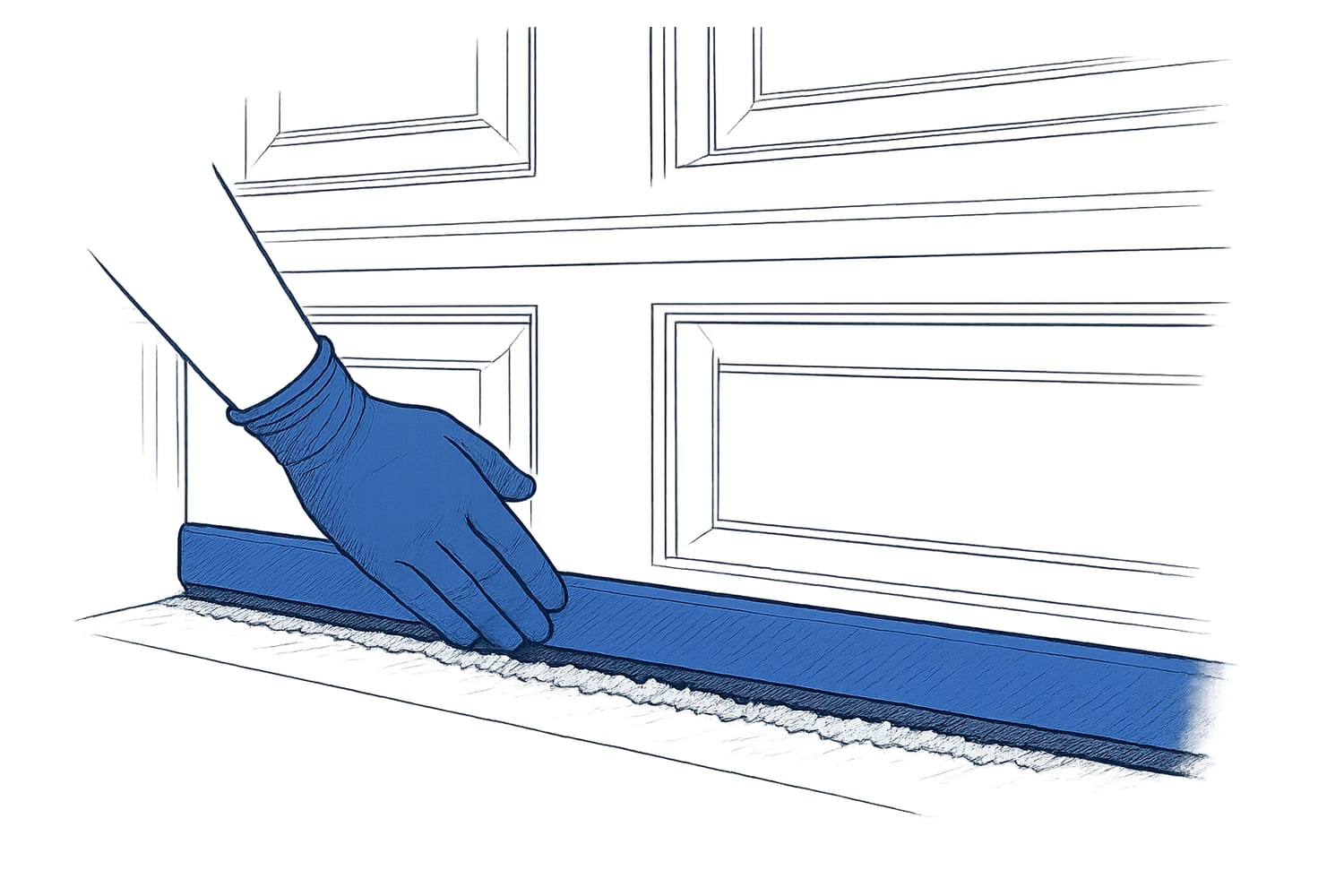 Garage Door Frozen to the Floor: How to Free It SafelyStop pressing the button. Pull the red release cord so the opener is out of the picture, warm the ice along the bottom edge with a hair dryer, and lift the door by hand. Silicone spray on the bottom seal and a cleared threshold keep it from happening again.Read the guide
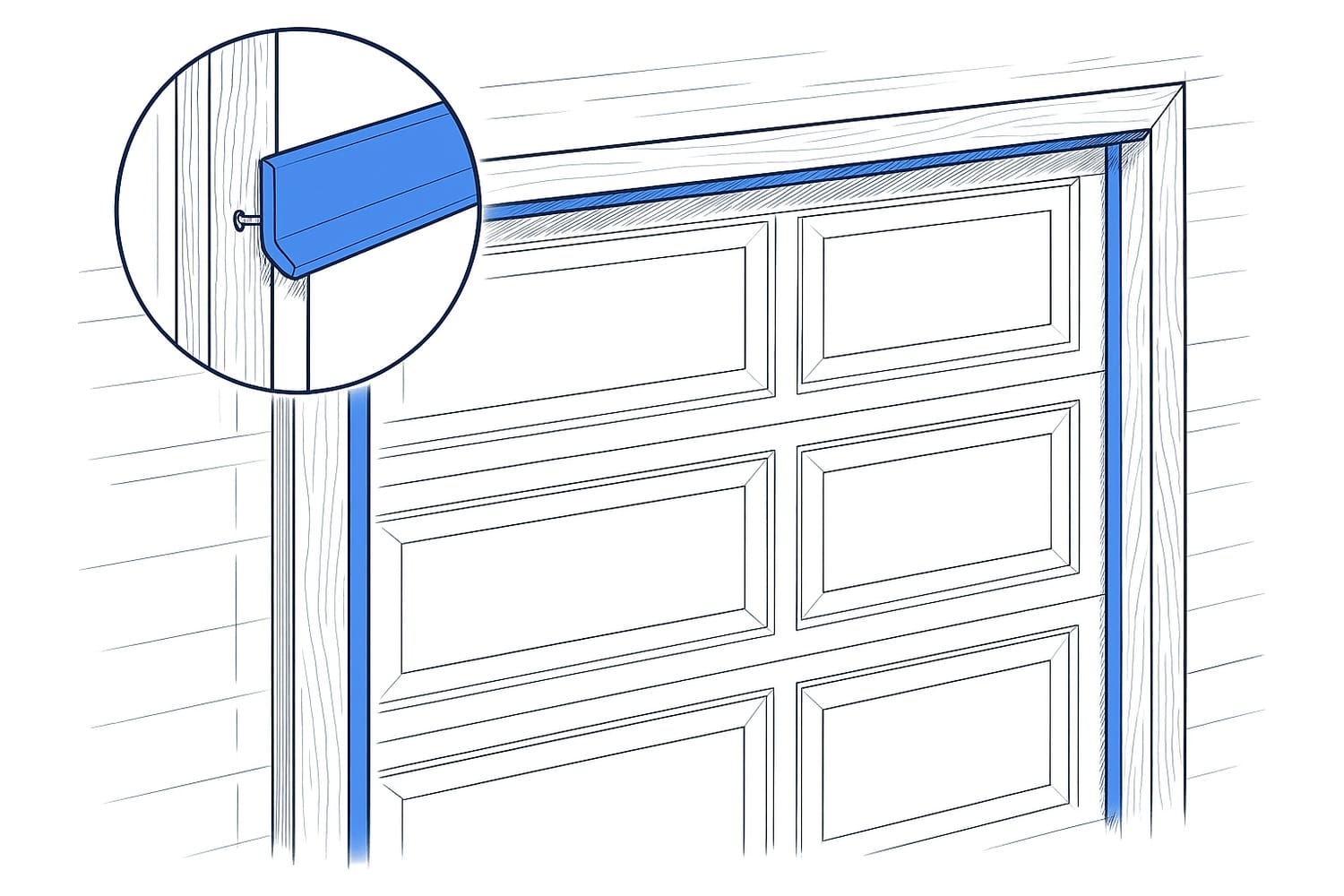 How to Replace Garage Door Weatherstripping (Sides and Top)Pry off the old stop moulding, cut new vinyl stop with a rubber flap to length, nail the top piece first and the sides last, and set the flap so it just touches the face of the closed door. It stops drafts, light, and blown snow at the edges of the door.Read the guide
Ready to Book?
Same-day service across Winnipeg and nearby communities. Free on-site diagnosis on every residential repair.